The Big Book of AA is the basic text of Alcoholics Anonymous, first published in 1939 under the title Alcoholics Anonymous. It explains the 12 Steps, describes alcoholism as an illness, and shares personal stories from people who recovered. It got its nickname from the thick paper used in the first edition. I’m Nicholas, co-founder of Hollywood Hills Recovery, and I have been sober since July 20, 2018.
Who Wrote the Big Book?
The Big Book was written mainly by Bill Wilson, one of the 2 co-founders of Alcoholics Anonymous, with input from the early members of the fellowship. The fellowship itself took its name from the book’s title.
How Widely Has the Big Book Been Read?
The Big Book is one of the most widely distributed recovery texts in history. More than 35 million copies of its first 4 English editions have been distributed, and it has been translated into more than 70 languages, according to Alcoholics Anonymous.
What Is in the Big Book?
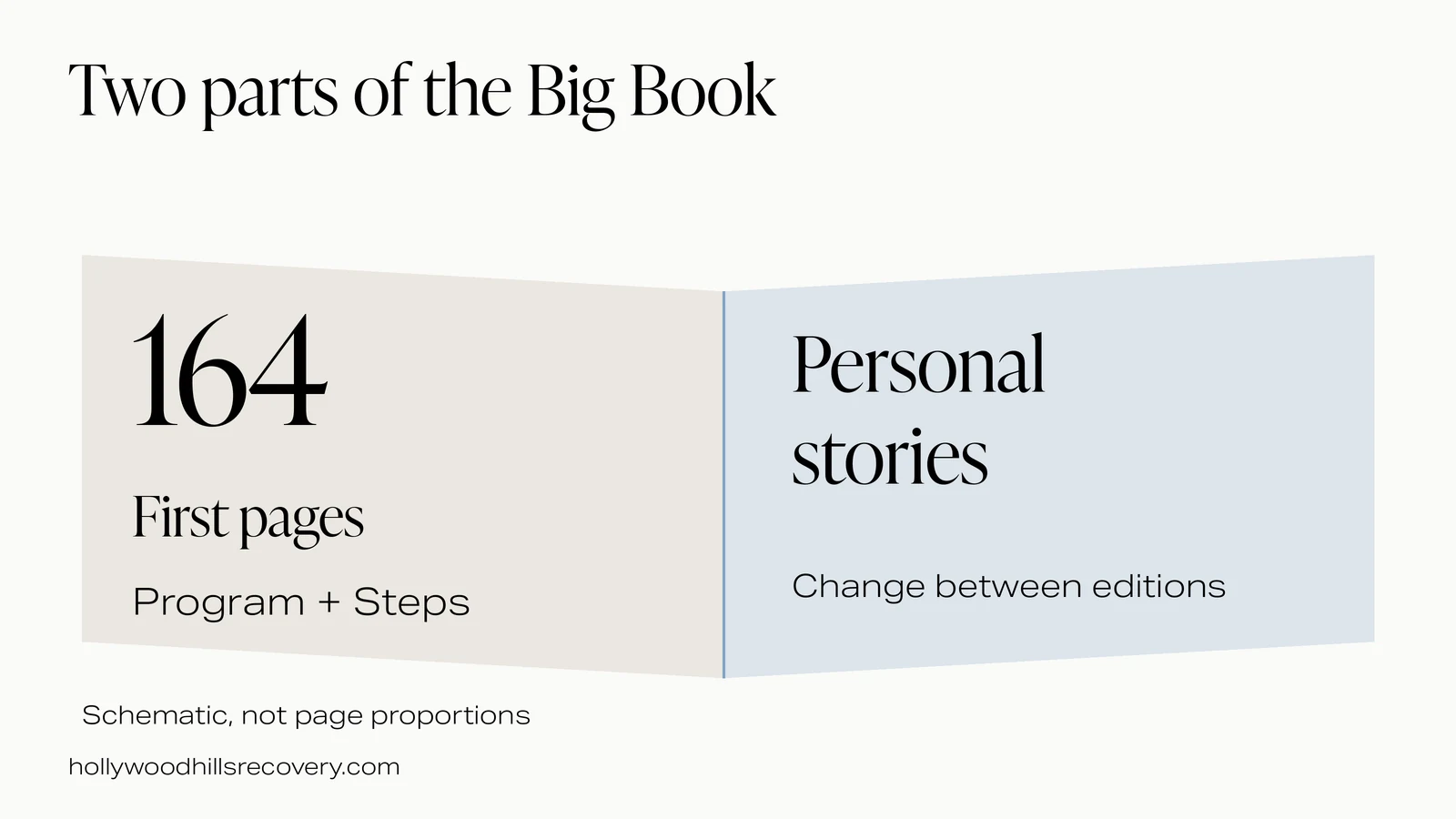
The Big Book is divided into 2 main parts:
- The first 164 pages, which explain the program, the steps, and the nature of alcoholism.
- A collection of personal stories from people who recovered, which changes between editions.
Which Chapters Matter Most?
5 chapters in the first section get the most attention:
- The Doctor’s Opinion, a physician’s view of alcoholism as an illness.
- Bill’s Story, the co-founder’s account of his own recovery.
- We Agnostics, written for people who struggle with the idea of God.
- How It Works, which lists the 12 Steps and begins Step 4.
- Into Action, which covers Steps 5 through 11, including the AA Promises.
What Does the Big Book Mean to Me?
One Big Book idea runs through my recovery: a higher power of your own understanding. The program leaves that definition to each person on purpose. In my words, my higher power is “my God of my understanding of my choice.”
Why Does That Idea Matter?
It keeps the program open to anyone, whatever they believe. For me it is a daily practice: “the morning time is for prayer and I’m connecting to my higher power.” More on finding one is in what is a higher power in recovery.
What Does the Big Book Say About Moderation?
The Big Book says people with alcoholism generally cannot return to controlled drinking. That matches what I’ve said about my own drinking: “I didn’t know how to have one drink. I didn’t know how to just have fun moderately.” Why alcoholics cannot consume in moderation covers this in depth.
Is the Big Book Only for People Who Drink?
The Big Book is written about alcohol, but its principles apply to every substance. Narcotics Anonymous and other fellowships adapted its steps for drug addiction, and treatment programs use it with clients recovering from many different substances.
Does the Big Book’s Approach Work?
The Big Book’s approach has strong research behind it. Twelve-step facilitation produced higher rates of continuous abstinence than other established treatments across 27 studies and 10,565 participants, according to a review by Cochrane.
Is the Big Book Enough on Its Own?
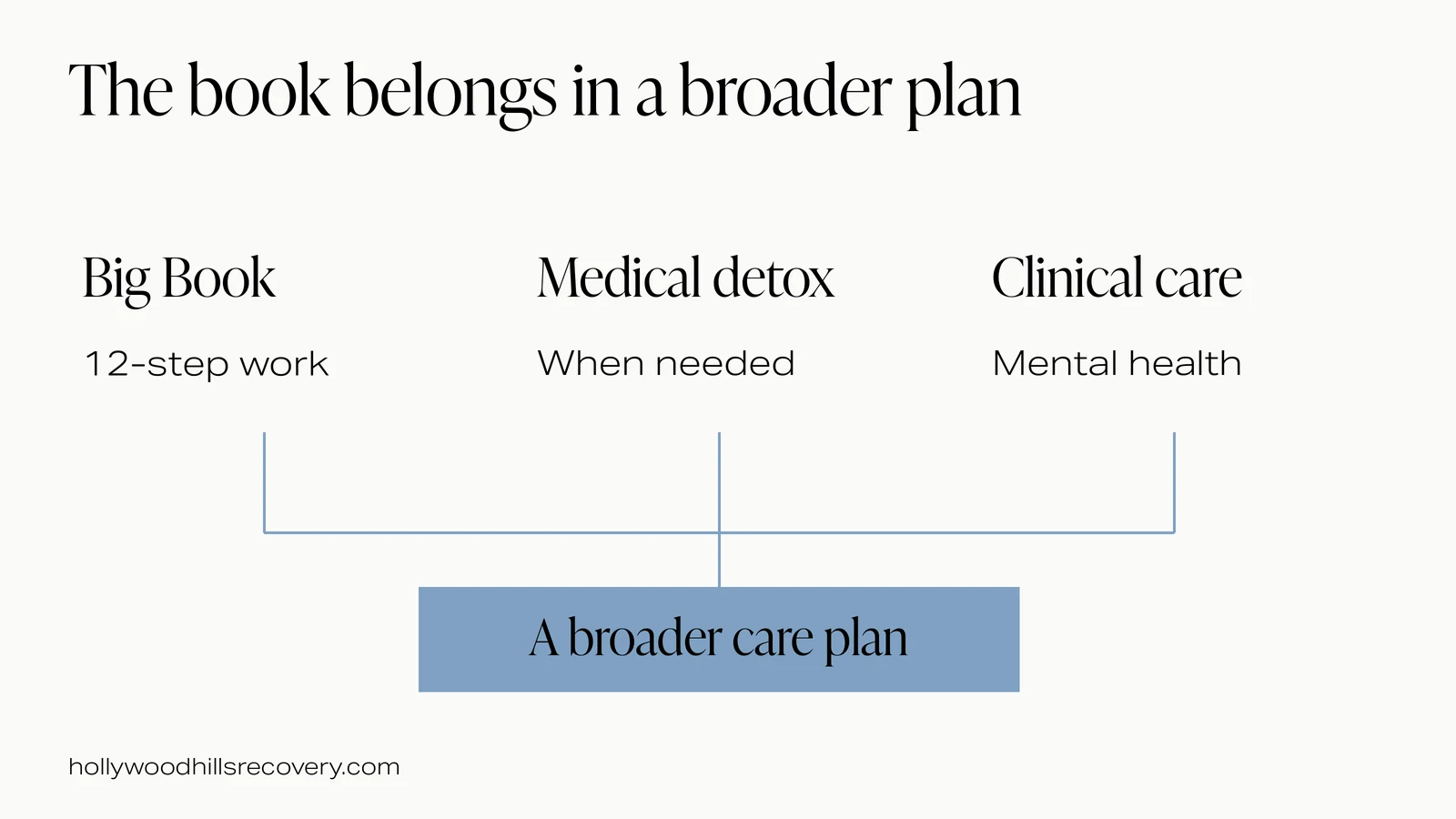
The Big Book is not enough on its own for many people. Physical dependence often requires medical detox, and co-occurring depression, anxiety, or trauma need clinical care. The book works best as one part of a broader plan.
How Should You Start Reading the Big Book?
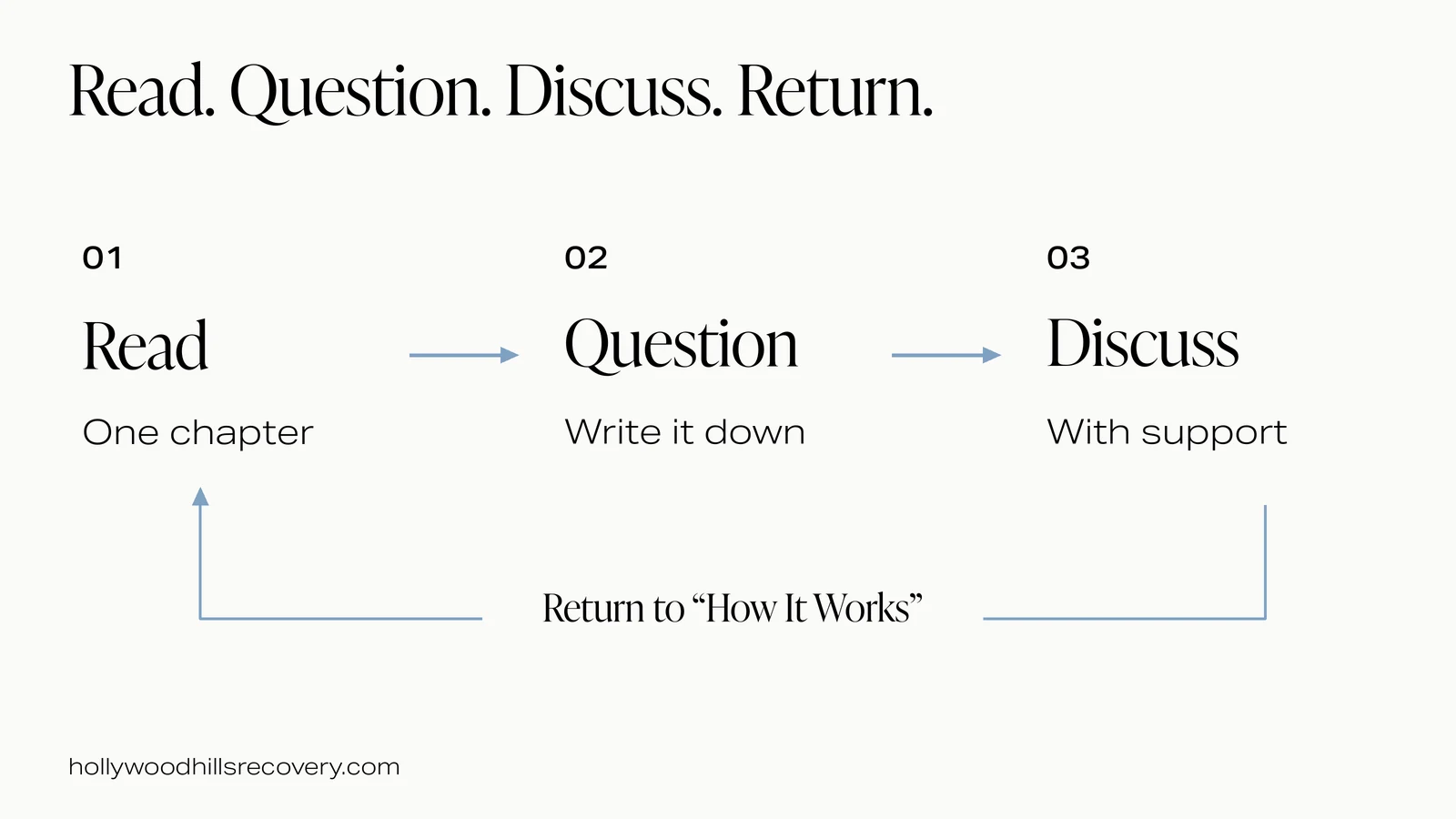
You should start with the first 164 pages and read them in order. 3 tips make the process easier:
Read one chapter at a time and write down questions as you go.
Discuss each chapter with a sponsor, counselor, or study group.
Return to “How It Works” often, since it anchors the rest.
Understanding the steps of addiction recovery outlines the clinical stages that run alongside the program, and the AA Promises describe what the book says recovery can deliver.
How Can Hollywood Hills Recovery Help?
Hollywood Hills Recovery combines 12-step facilitation with clinical treatment. Care begins with medical detox, continues through residential inpatient treatment, and extends into our aftercare program. Alcohol addiction treatment and dual diagnosis treatment are available. Call 323-709-7856.