
AI-generated illustrative scene, not Nicholas, Hollywood Hills Recovery patients or staff, or an actual recovery event.
Self-will run riot is the Big Book’s description of a life driven entirely by your own wants, plans, and demands, with no room for anyone else’s input. The Big Book calls the alcoholic “an extreme example of self-will run riot.” It names self-centeredness as the root of the problem, with drinking as one of its loudest symptoms. I’m Nicholas, co-founder of Hollywood Hills Recovery, and I have been sober since July 20, 2018.
Where Does the Phrase Self-Will Run Riot Come From?
The phrase comes from Chapter 5 of the Big Book, “How It Works,” first published in 1939. It appears in the section explaining why the steps focus so heavily on selfishness and fear rather than alcohol itself.
What Does the Big Book Mean by Self-Will?
Self-will means insisting that life go according to your own script. The Big Book compares the self-willed person to an actor who wants to run the whole show, rearranging the lights, the set, and the other actors to suit their own idea of how things should go.
What Does Self-Will Run Riot Look Like?
Self-will run riot looks like control that never stops escalating. 6 common signs:
- Making every decision without asking for input.
- Becoming angry when people do not follow your plan.
- Breaking rules because you believe they do not apply to you.
- Keeping score in relationships.
- Refusing help even when you are clearly struggling.
- Using substances to cope when control inevitably fails.
Why Does Self-Will Lead Back to Using?
Self-will leads back to using because it creates constant frustration. A person who needs everything to go their way will be disappointed every day. Substances become the fastest way to numb that disappointment, and the cycle tightens.
What Did Self-Will Run Riot Look Like in My Life?
In my own life, self-will showed up as extremes. “I didn’t know how to have one drink. I didn’t know how to just have fun moderately. I went to those extreme measures like so many of you.” The Big Book links that kind of behavior to self-centeredness.
What Replaced Self-Will?
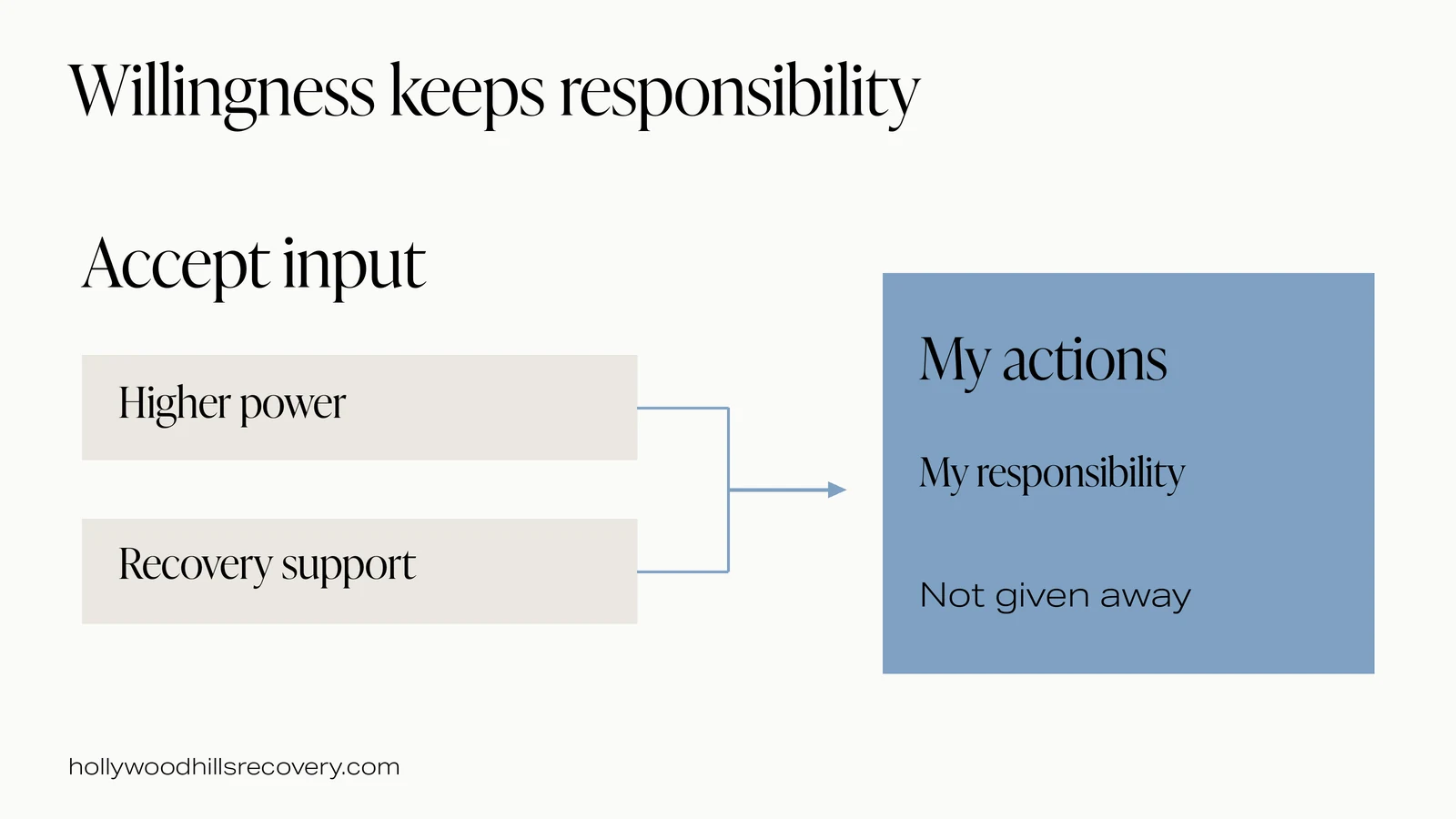
Surrender replaced self-will. “When I actually saw that there’s an actual path for me and that’s in recovery, I took it. I took that opportunity. It was the best investment of my entire life.” Surrender does not mean giving up responsibility.
How Do I Keep Self-Will in Check Today?
I keep self-will in check with structure. “The morning time is for prayer and I’m connecting to my higher power.” Then, “Throughout the day, I’m putting in the footwork. There’s action plans for me.”
How Do You Recognize Self-Will in Recovery?
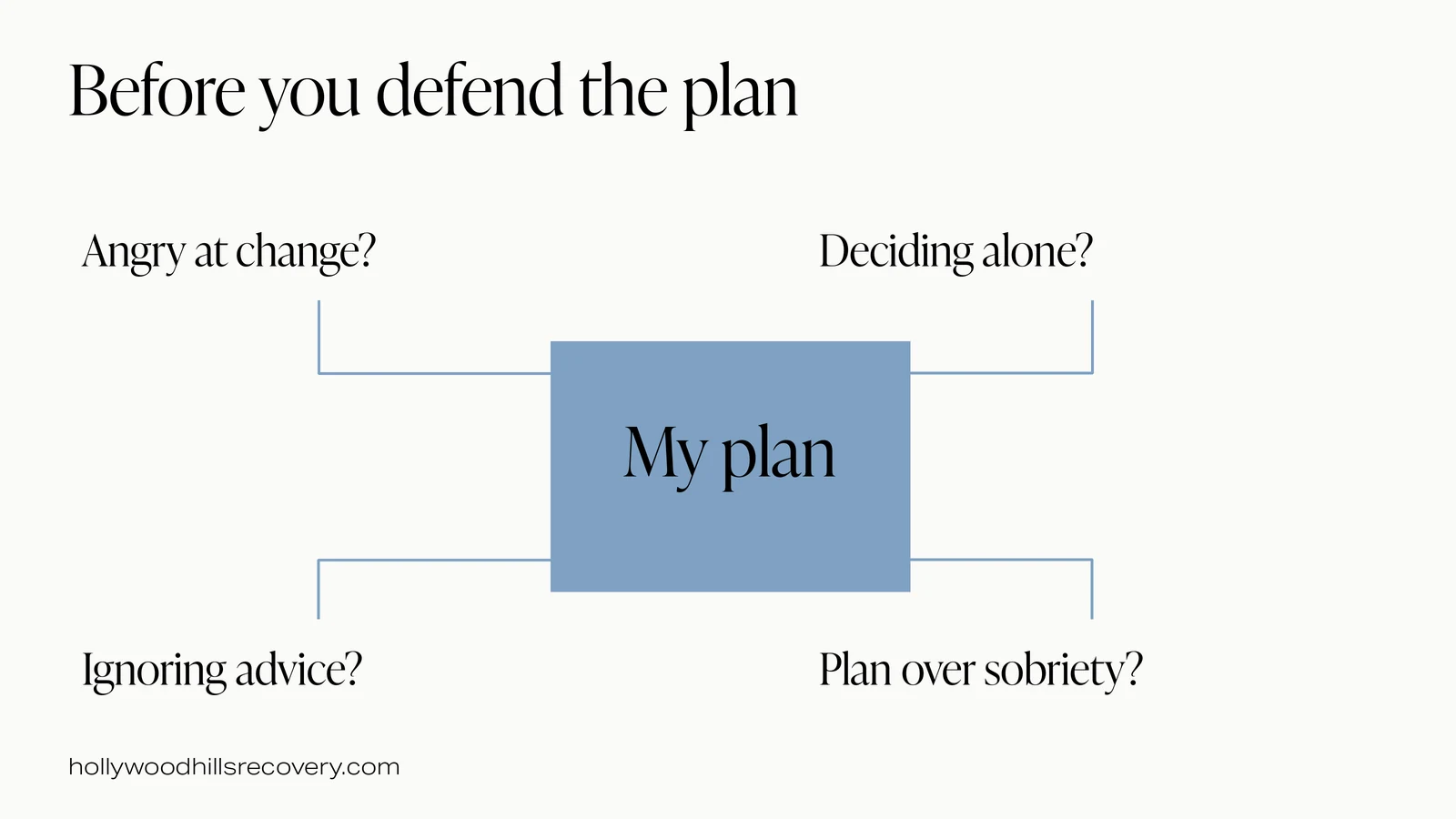
You recognize self-will by the frustration it produces. 4 questions to ask yourself:
Am I angry because things did not go my way?
Did I make a major decision without talking to anyone?
Am I ignoring advice from people with more recovery than me?
Am I treating my plan as more important than my sobriety?
Is Self-Will the Same as Confidence?
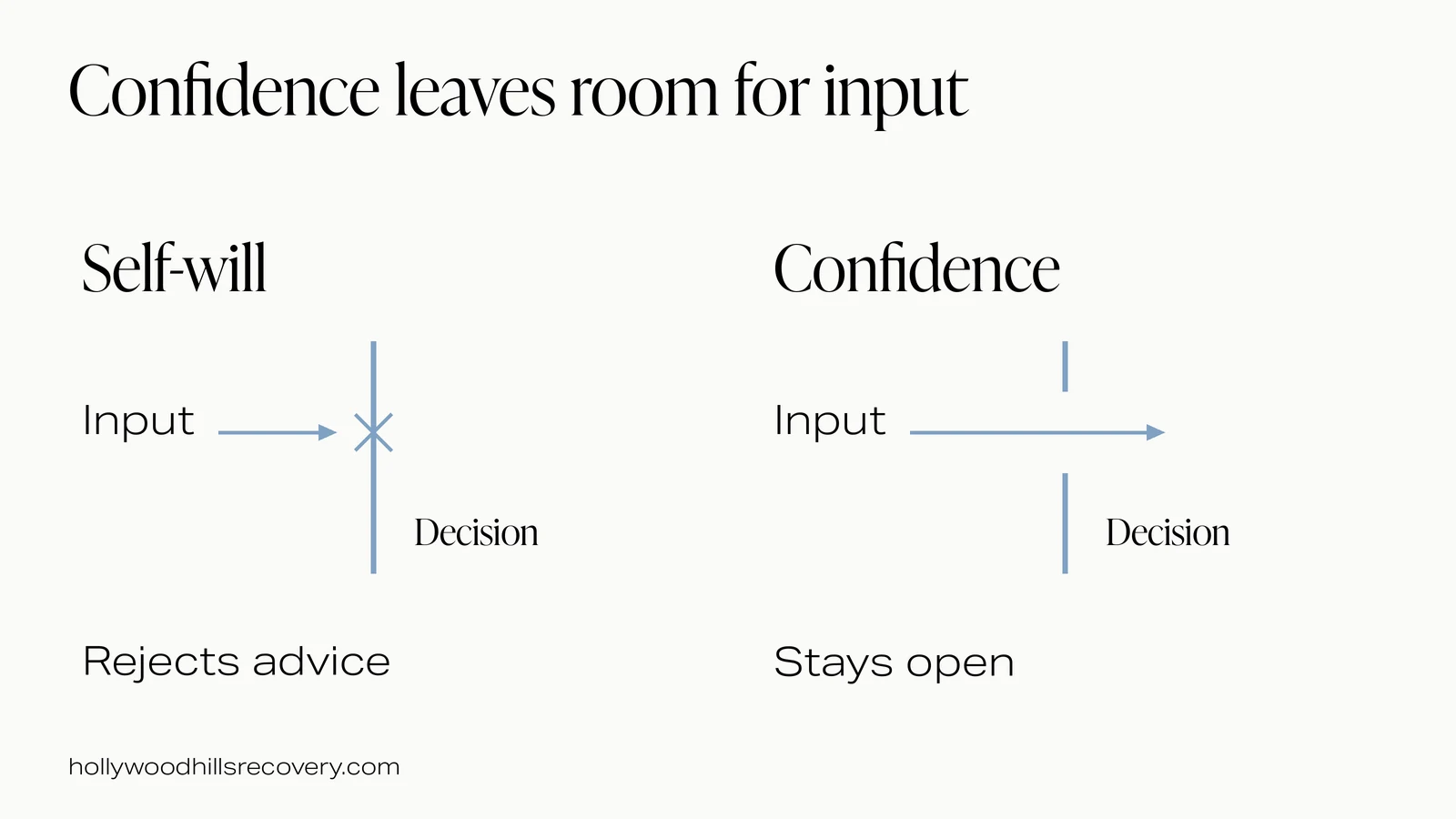
Self-will is not the same as confidence. Confidence trusts your abilities while staying open to input. Self-will rejects input entirely and treats every disagreement as a threat. Recovery keeps healthy confidence and lets go of the rest.
What Is the Opposite of Self-Will?
The opposite of self-will is willingness. The 12 Steps ask people to become willing again and again, starting with the surrender of Step 1 in AA and continuing through the defects addressed in character defects and Step 6.
Why Does Letting Go of Control Help Recovery?
Letting go of control helps recovery because it opens the door to support. Twelve-step facilitation produced higher rates of continuous abstinence than other established treatments across 27 studies and 10,565 participants, according to a review by Cochrane. A higher power in recovery gives that support a name.
How Can Hollywood Hills Recovery Help?
Hollywood Hills Recovery helps clients trade control for structure and support. Residential inpatient treatment provides a daily schedule built by clinicians, dual diagnosis treatment addresses the anxiety that often fuels control, and our aftercare program continues the work after discharge. Call 323-709-7856.