Illustrative stock photograph, not Nicholas or Hollywood Hills Recovery patients or staff. No recovery status is implied for the people shown. Photo by Daniil Onischenko on Unsplash.
A spiritual malady is the restlessness, irritability, and discontent that the Big Book of Alcoholics Anonymous describes as the root condition underneath alcoholism. It is the inner emptiness a person tries to fill with drinking or drugs. The Big Book treats it as the part of addiction that sobriety alone does not fix. I’m Nicholas, co-founder of Hollywood Hills Recovery, and I have been sober since July 20, 2018.
Where Does the Term Spiritual Malady Come From?
The term comes from the Big Book, first published in 1939. The book describes alcoholism as an illness with 3 parts, and the spiritual malady is the one it says must be addressed first.
What Are the 3 Parts of the Illness the Big Book Describes?
The Big Book describes 3 connected parts:
- A physical allergy, meaning the body reacts to alcohol with a craving for more once drinking starts.
- A mental obsession, meaning the mind keeps returning to the idea of drinking even after consequences pile up.
- A spiritual malady, meaning a persistent sense of disconnection, fear, and self-centeredness underneath both.
Why Does the Big Book Focus on the Spiritual Part?
The Big Book focuses on the spiritual part because it treats the malady as the driver of the other two. Its reasoning is simple: when the spiritual malady is overcome, a person tends to recover mentally and physically as well.
What Does a Spiritual Malady Feel Like?
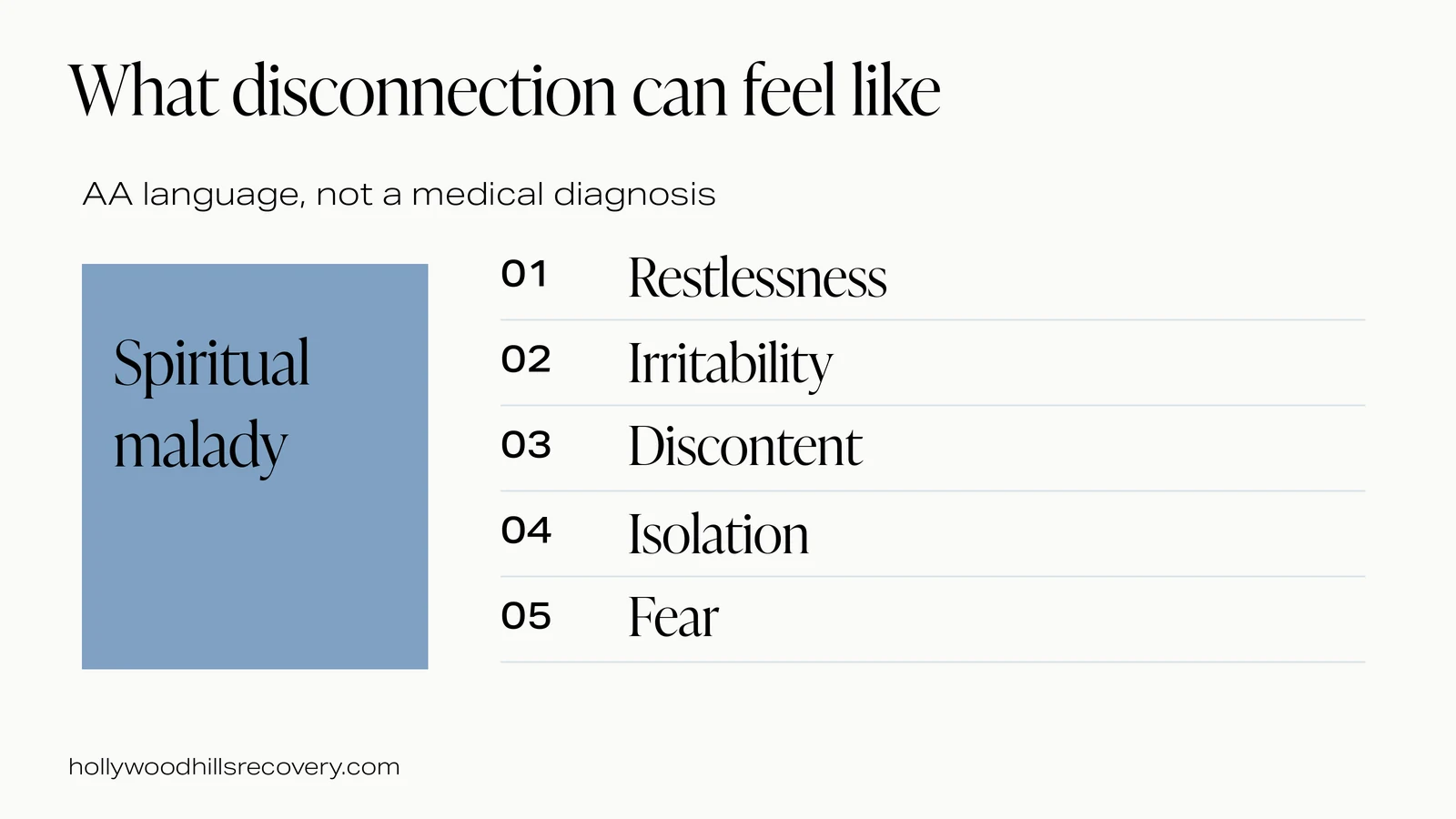
A spiritual malady feels like being uncomfortable in your own skin with no clear reason. 5 common signs:
- Restlessness, a constant need for something to change.
- Irritability over small, ordinary frustrations.
- Discontent, feeling that nothing is ever enough.
- Isolation, even when surrounded by people.
- Fear about the future that has no specific object.
How Is It Different From a Spiritual Awakening?
A spiritual malady is the problem, and a spiritual awakening in recovery is the change that answers it. The malady describes the condition before recovery. The awakening describes what replaces it after the work is done.
How Is It Different From Being a Dry Drunk?
A spiritual malady is the underlying condition, and being a dry drunk is what it looks like when that condition is left untreated after the drinking stops. One is the illness. The other is a symptom of ignoring it.
How Do I Describe Where I Was?
In my words: “The day that I decided to get sober was the day that I was sick and tired of being sick and tired. And I know a lot of people have heard that cliche comment.” Underneath a phrase like that is usually something deeper than physical exhaustion, which is what the Big Book means by a spiritual malady.
Why Doesn’t Stopping Alone Fix It?
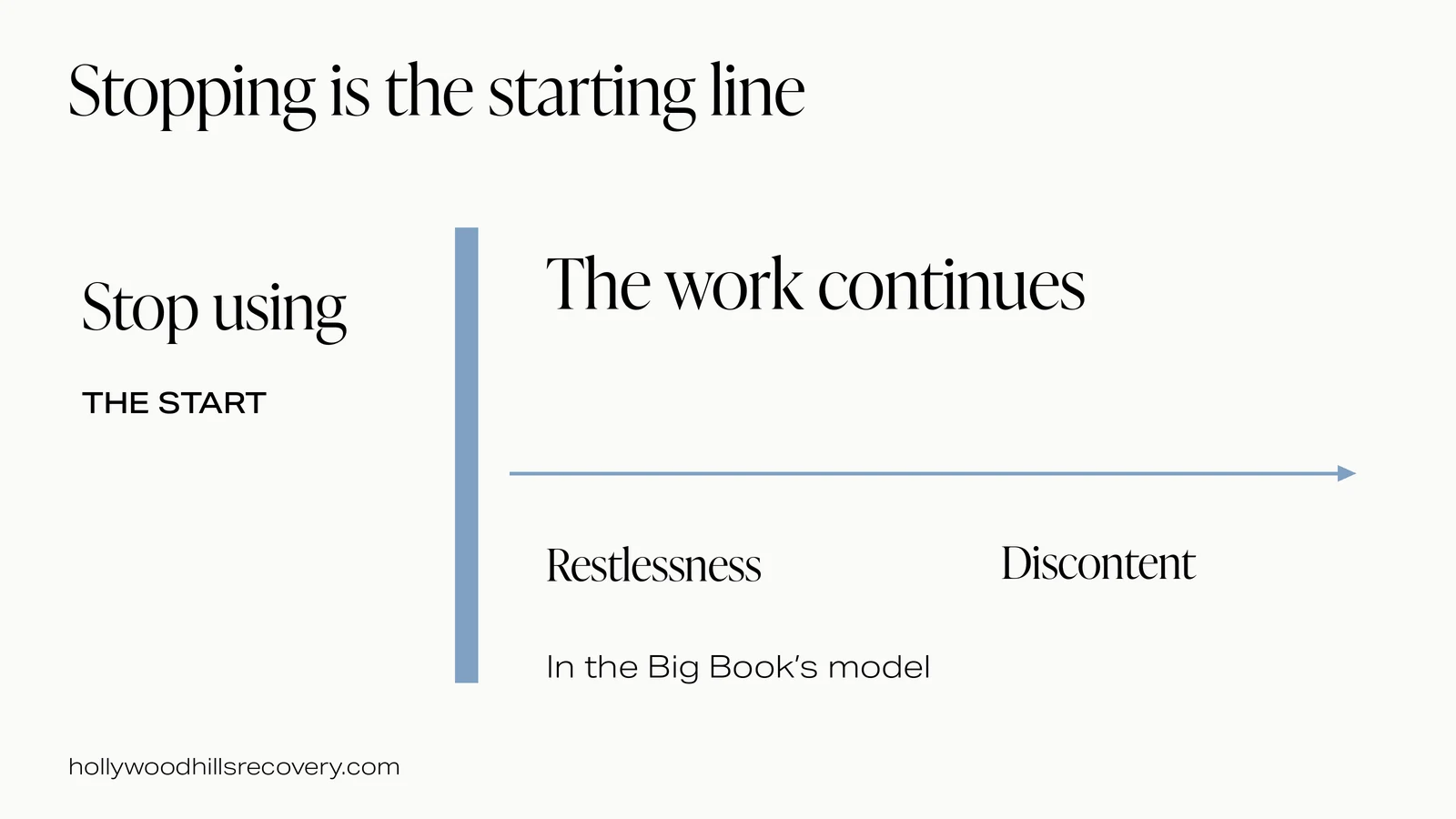
Stopping alone does not fix a spiritual malady because the substance was never the whole problem. Remove the alcohol or drugs, and the restlessness and discontent are still there, often louder than before. That is why the Big Book treats abstinence as the starting line rather than the finish.
What Has Helped Me?
Daily prayer and structure helped me. “My higher power got me through that day because it’s one day at a time.” The Big Book’s answer to a spiritual malady is the same kind of daily connection.
Can Clinical Treatment Help With a Spiritual Malady?
Clinical treatment helps by addressing the conditions that often overlap with it, like depression, anxiety, and unresolved trauma. Only 16.0% of the 47.2 million people who needed substance use treatment in 2025 received it, according to the Substance Abuse and Mental Health Services Administration. Many of the rest are living with the malady untreated.
How Do Spiritual and Clinical Care Work Together?
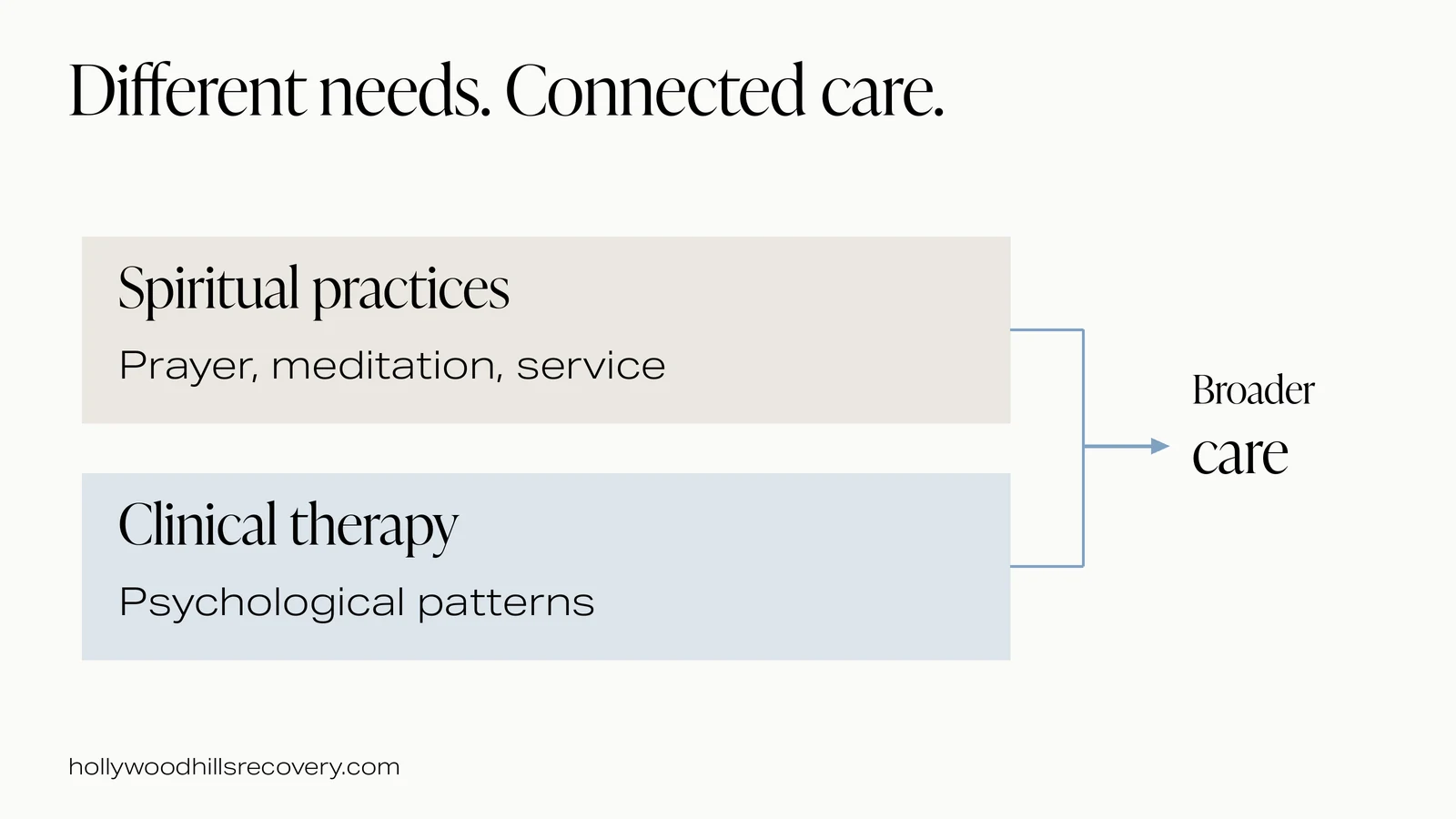
Spiritual and clinical care work together by treating different layers of the same illness. Therapy addresses the psychological patterns, while practices like prayer, meditation, and service address the disconnection. The role of spirituality and mindfulness in long-term sobriety explores that overlap in more depth.
How Can Hollywood Hills Recovery Help?
Hollywood Hills Recovery treats the whole person, not only the substance. Residential inpatient treatment combines clinical therapy with 12-step facilitation, dual diagnosis treatment addresses co-occurring conditions, and our aftercare program supports the ongoing work. Call 323-709-7856.