AI-generated illustrative scene, not Nicholas, Hollywood Hills Recovery patients or staff, or an actual recovery event.
Character defects are the recurring traits that cause harm to yourself and others, such as selfishness, dishonesty, resentment, fear, and pride. In 12-step recovery, they are the patterns that surface in a Step 4 inventory. Step 6 is becoming “entirely ready to have God remove all these defects of character.” I’m Nicholas, co-founder of Hollywood Hills Recovery, and I have been sober since July 20, 2018.
What Are the Most Common Character Defects?
The most common character defects show up as patterns, not one-time mistakes. 7 that appear in most inventories:
- Selfishness, putting your own wants ahead of everyone else’s needs.
- Dishonesty, including half-truths and strategic silence.
- Resentment, holding on to anger long after the event.
- Fear, especially fear of losing control or being found out.
- Pride, refusing help or admitting you were wrong.
- Self-pity, treating yourself as the victim of every situation.
- Impatience, demanding results on your own timeline.
Are Character Defects the Same as Being a Bad Person?
Character defects are not the same as being a bad person. They are survival habits that often formed long before the addiction did. Many of them worked for a while, which is exactly why they are hard to give up.
What Does Step 6 Actually Ask?
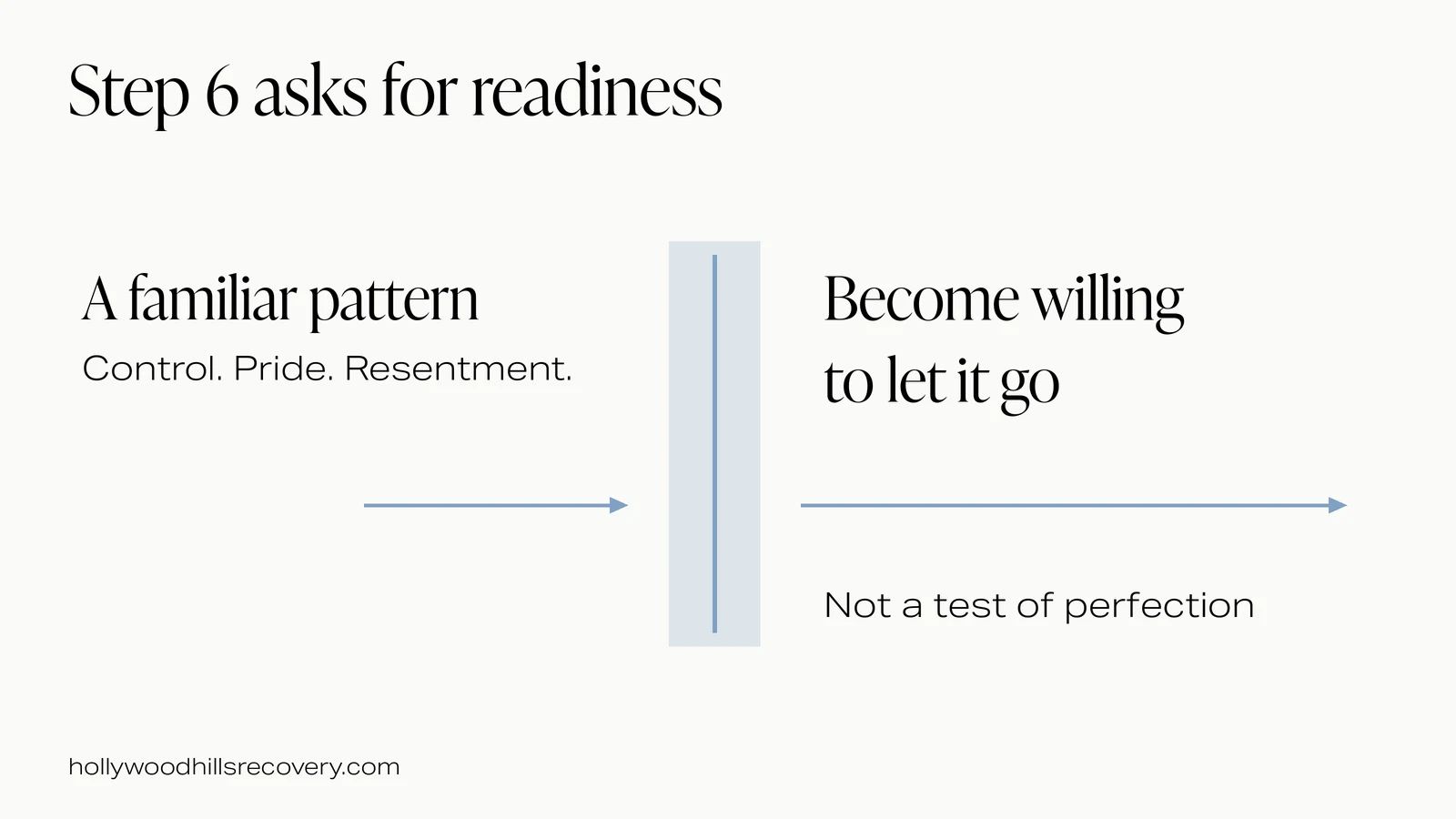
Step 6 asks for willingness, not perfection. It does not ask you to remove your defects through willpower. It asks you to become ready to let them go, which is a different and harder thing.
Why Is Willingness the Hard Part?
Willingness is the hard part because some defects still feel useful. Control feels safe. Resentment feels justified. Pride feels like self-respect. Becoming ready means admitting that those payoffs cost more than they return.
What Did Step 6 Ask of Me?
When I describe my own recovery, I talk about structure: “My entire life is all about having structure. There has to be discipline. If not, I’m a complete mess.” Willingness without structure tends to fade, which is why Step 6 is a daily practice for many people.
Why Does Discipline Connect to Character Defects?
Discipline connects to character defects because defects grow in unstructured time. Impatience, self-pity, and resentment all get louder when nothing is holding them in check. Structure gives willingness a daily place to show up, which is covered in structure in early recovery.
How Do You Practice Step 6 Day to Day?
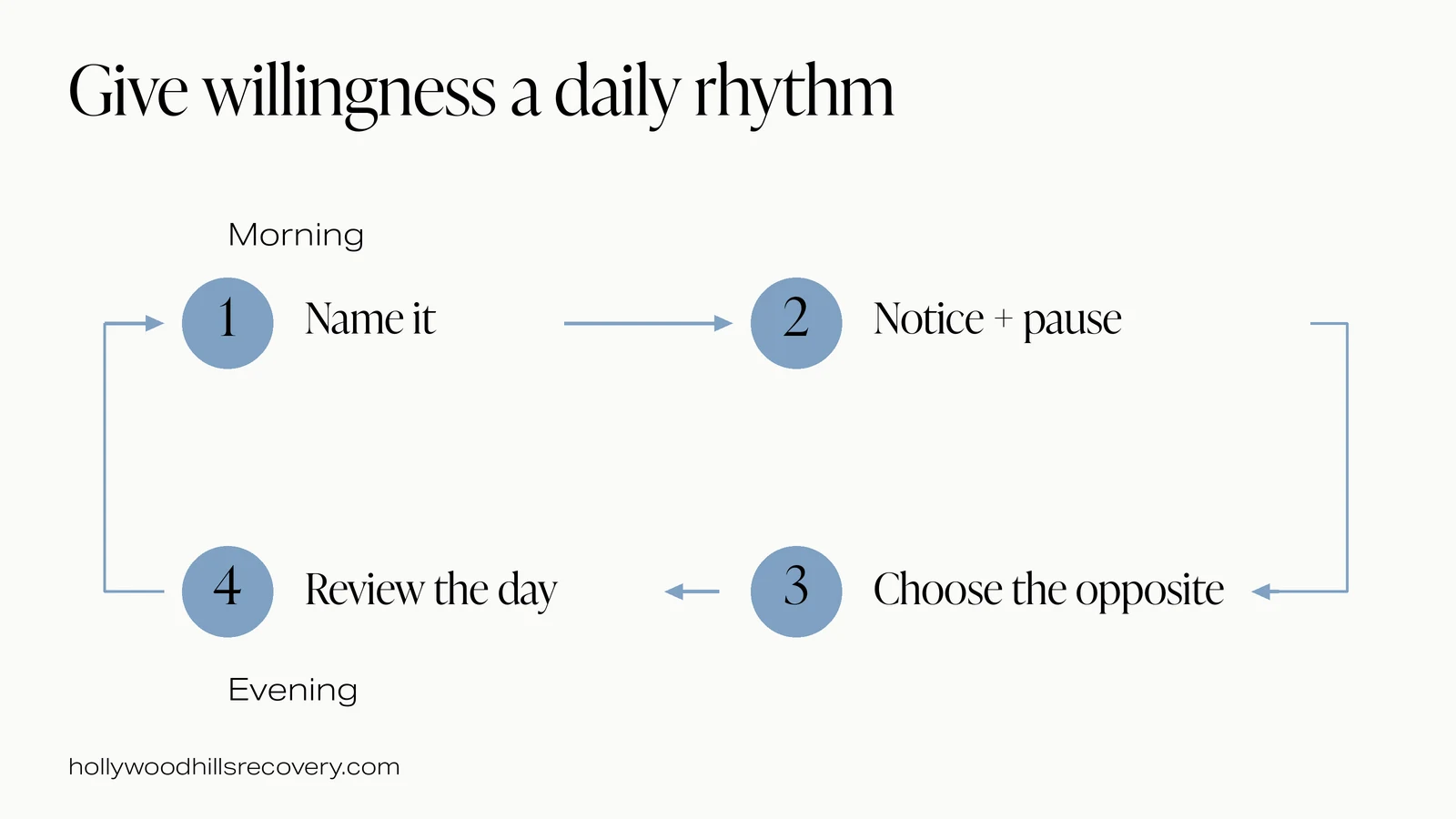
You practice Step 6 by catching defects in action and choosing differently. 4 daily habits:
Name one defect each morning that you expect to show up.
Notice when it appears and pause before acting on it.
Practice the opposite trait, such as patience instead of impatience.
Review the day at night and note where the defect won or lost.
What Is the Opposite of Each Common Defect?
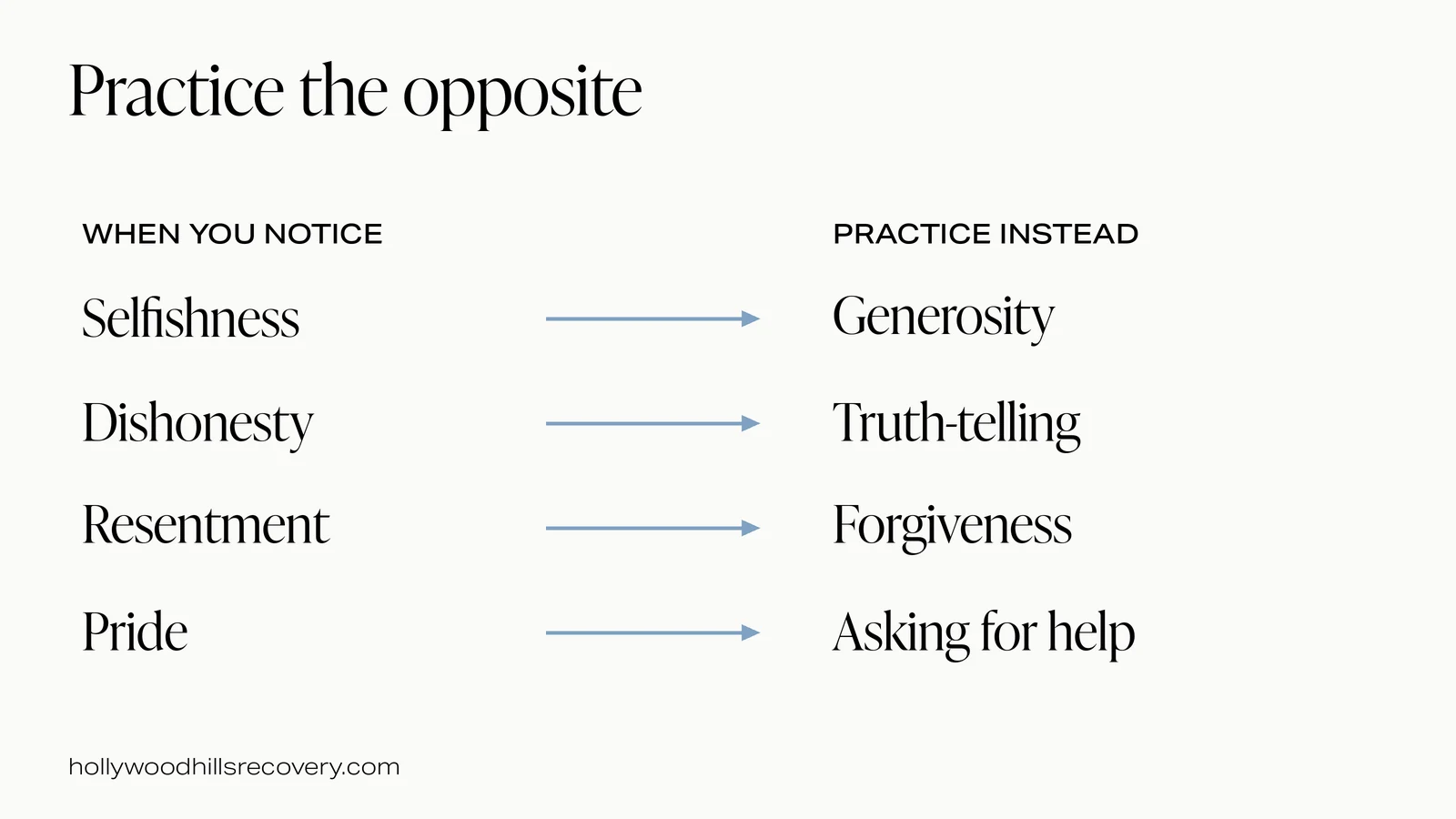
Every common defect has an opposite trait worth practicing. 4 examples:
- Selfishness becomes generosity with time and attention.
- Dishonesty becomes plain, prompt truth-telling.
- Resentment becomes forgiveness, even when it is slow.
- Pride becomes a willingness to ask for help.
How Long Does Step 6 Take?
Step 6 does not have a finish line. Most people in long-term recovery describe it as a lifelong practice. Progress shows up as defects that appear less often and do less damage when they do. Expecting them to vanish completely usually leads to frustration, while expecting steady improvement leads to patience.
How Do Character Defects Connect to Relapse?
Character defects connect to relapse because they drive the thinking that comes before a return to use. Relapse rates for substance use disorders run between 40% and 60%, according to a study published in JAMA. Unchecked resentment and self-pity are hallmarks of dry drunk thinking, and perfectionism and the link to addiction explores one defect in depth.
How Can Hollywood Hills Recovery Help?
Hollywood Hills Recovery helps clients identify and change the patterns behind their use. Residential inpatient treatment combines 12-step work with clinical therapy, and dual diagnosis treatment addresses the anxiety and depression that often fuel defects like fear and self-pity. Our aftercare program keeps that work going. Call 323-709-7856.