Table of Contents
I have been sober since July 20, 2018. I describe structure in blunter terms.
My entire life is built around structure. There has to be discipline. If there isn’t, I’m a complete mess.
I want to break down what that structure looks like hour by hour, and explain why the research on monitored recovery programs supports it so strongly.
How I Built a Day That Held
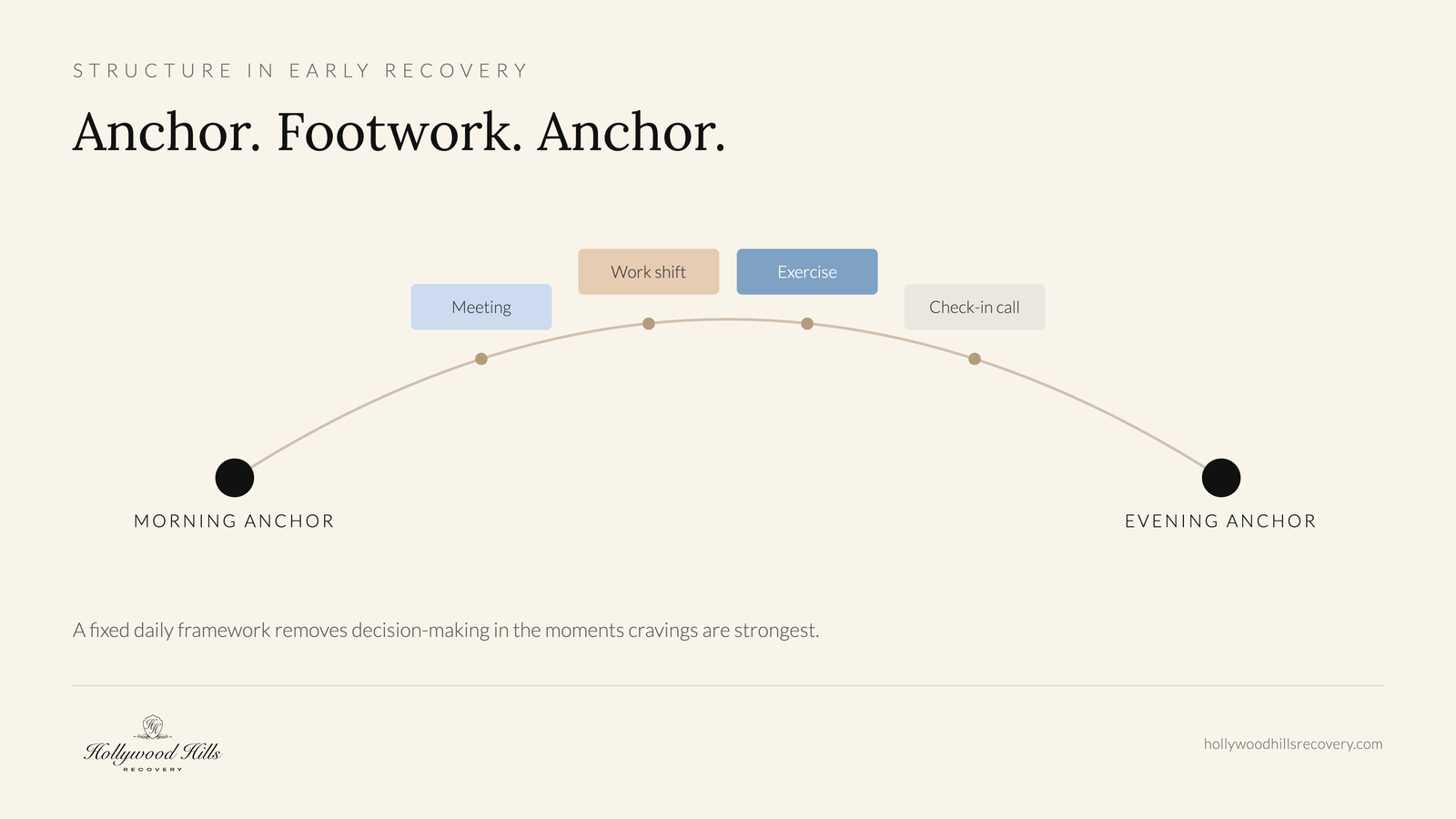
My routine has three parts, and I think about them in a specific order.
Every morning when I wake up, I pray. Every night before I go to sleep, I pray. What I do in between is the action.
The Morning Anchor
The first act of my day is not a task. It is a connection point. For me, that is prayer directed at a higher power of my own understanding, which is how 12-step programs frame it deliberately, leaving the definition to the individual.
The function is the same whether the anchor is prayer, meditation, journaling, or a phone call to a sponsor. It sets the day’s intention before the day starts making demands.
The Middle: Footwork
Throughout the day, I put in the footwork. I have action plans to follow.
This is the part people skip. Recovery is not maintained by intention in the morning and gratitude at night. It is maintained by the scheduled, unremarkable work in between: meetings, therapy sessions, work shifts, exercise, service commitments, meal times.
The Closing Anchor
Ending the day the same way it started creates a closed loop. I return to prayer at night and frame the whole thing around a single principle: one day at a time.
That framing is not sentimental. Twenty-four hours is a unit a person in early recovery can actually commit to. Five years is not.
Why Does Structure Matter So Much in the First 90 Days?
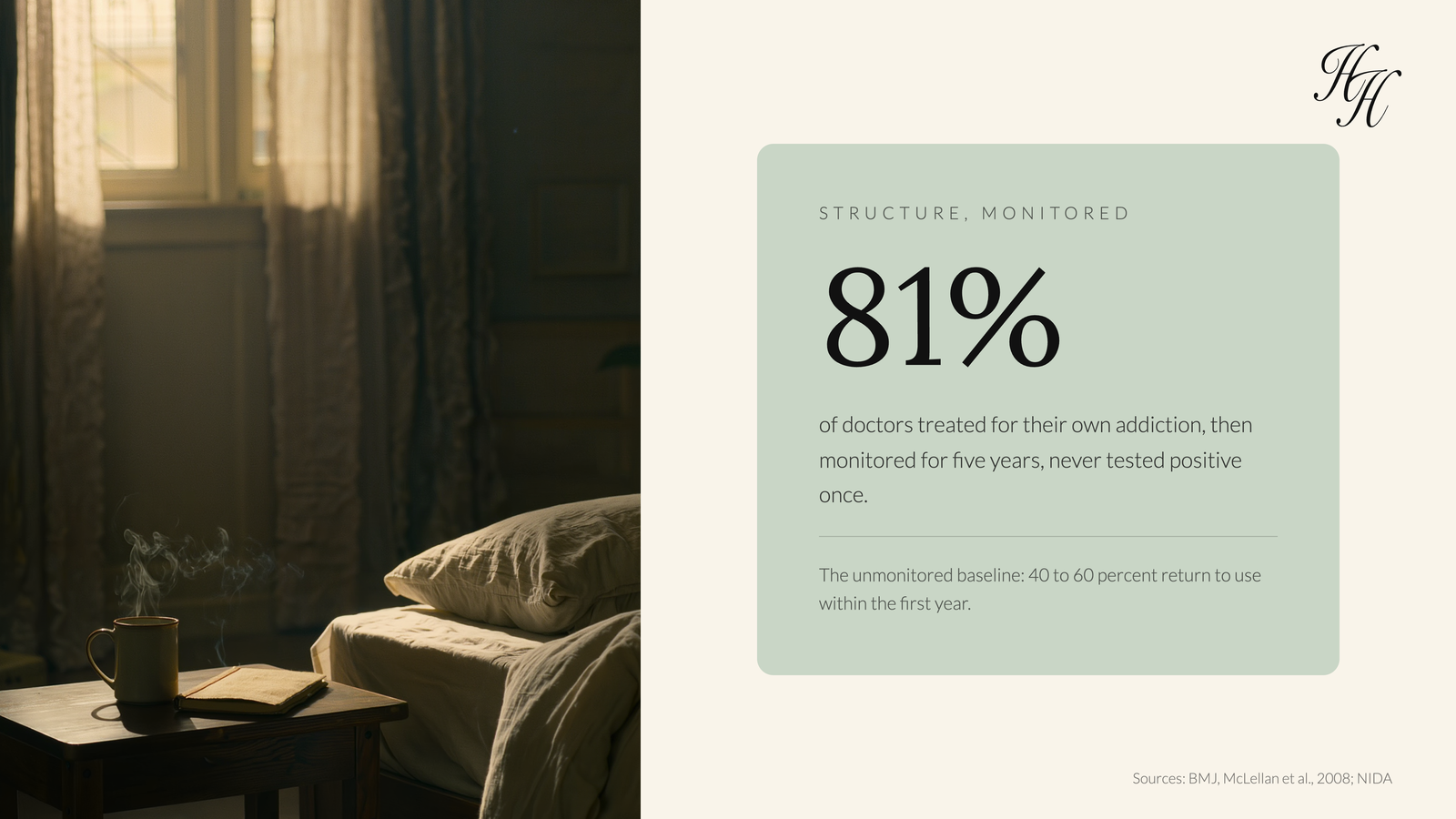
The first 90 days after discharge carry the highest relapse risk of the entire recovery process. According to the National Institute on Drug Abuse, relapse events concentrate in the 30 to 90 day window after leaving treatment.
The broader numbers set the context:
- According to the National Institute on Drug Abuse, 40% to 60% of people treated for a substance use disorder return to use within a year, comparable to the 50% to 70% recurrence rates the same agency reports for hypertension and asthma.
- According to the BMJ cohort study led by A. Thomas McLellan, outcomes from mainstream addiction treatment in the general population have consistently shown poor compliance and high relapse, which is the baseline these programs are measured against.
- According to the National Institute on Drug Abuse, substance use disorders are chronic illnesses in which a return to use after a period of abstinence is common rather than exceptional.
What the Brain Is Doing During That Window
Early recovery involves a brain still recalibrating reward, stress response, and impulse control while the person simultaneously handles the practical stress of re-entering daily life. Structure reduces the number of unscripted decisions in that period, which is precisely when unscripted decisions are most dangerous.
What Does the Research Say About Accountability?
The strongest evidence for structured accountability comes from an unlikely population: doctors.
According to a five-year cohort study published in the BMJ in 2008 by A. Thomas McLellan, Gregory Skipper, Michael Campbell, and Robert DuPont, 904 physicians admitted to 16 state physician health programs were tracked from admission through five-year follow-up. These programs combine treatment with long-term monitoring, random drug testing, scheduled check-ins, and case management.
The Five-Year Physician Health Program Outcomes
Every figure below comes from that same BMJ cohort study.
- 647 physicians, or 80.7% of those with known outcomes, completed treatment and resumed practice under supervision and monitoring.
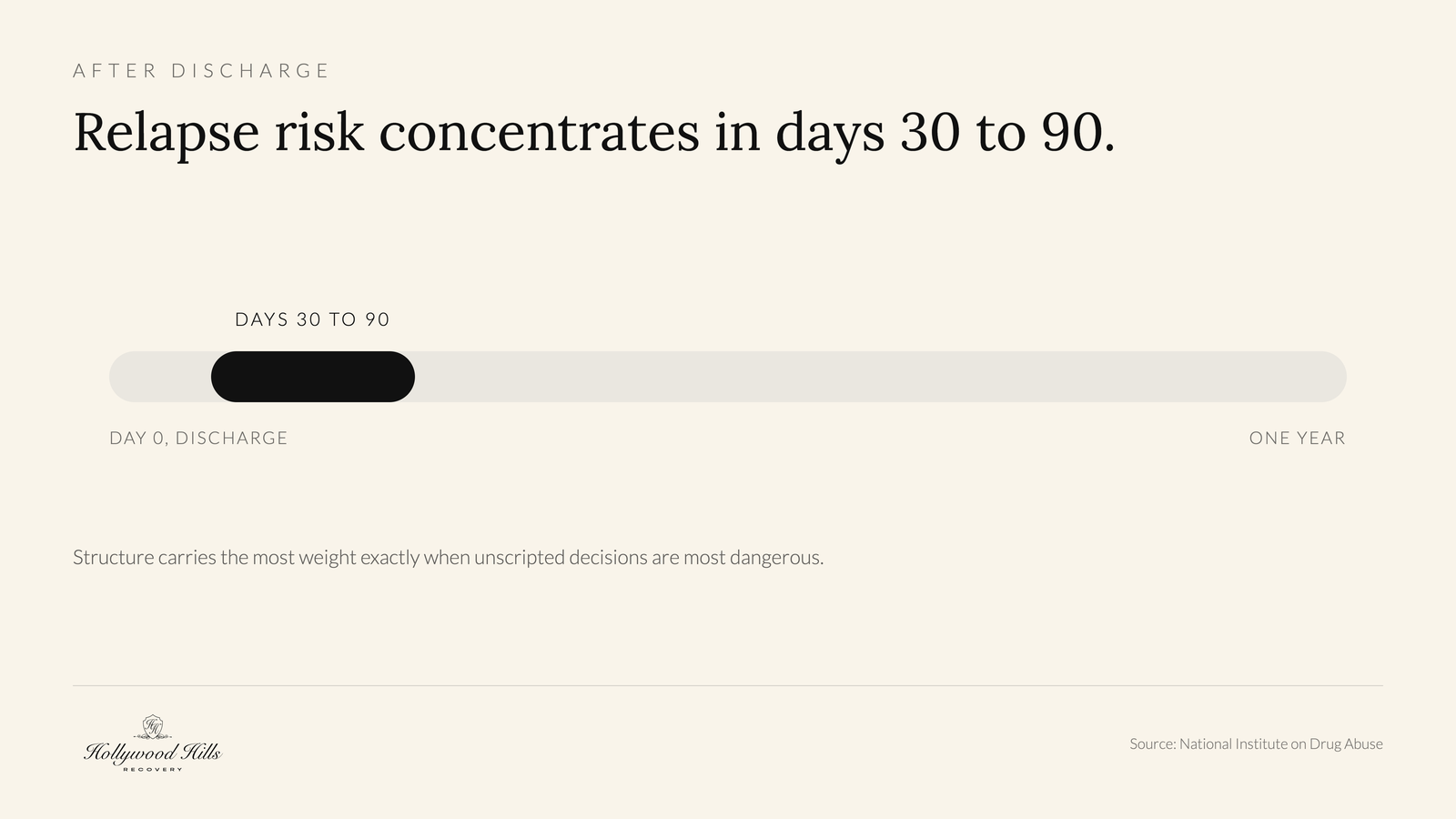
- Of those 647, alcohol or drug use was detected by urine testing in 126, or 19%, across the full five years. The other 81% never tested positive.
- Of the 126 who tested positive once, only 33, or 26%, had a repeat positive result.
- At five-year follow-up, 631 physicians, or 78.7%, were licensed and working.
- 155 physicians, or 19.3%, failed the program, usually early in treatment.

The authors concluded that about three quarters of physicians with substance use disorders in these programs had favorable outcomes at five years, against a general population baseline where 40% to 60% relapse within twelve months.
What Actually Explains the Difference
The differentiator is not that physicians are more motivated. It is that the structure removes the internal negotiation that precedes most relapses. When a slip carries immediate, predictable, unavoidable consequences, the mental sequence of minimizing and rationalizing gets interrupted before it finishes.
I built a personal version of the same system: fixed anchors, daily action plans, and a community that notices when I do not show up.
What Should a Daily Schedule in Early Recovery Include?
An effective early recovery schedule includes 7 elements, each occupying a fixed place in the day:
- Consistent wake and sleep times, ideally within a 30-minute window daily.
- A morning anchor practice such as prayer, meditation, or journaling.
- At least one meeting or clinical session per day in the first 90 days.
- Physical activity, which regulates sleep, mood, and stress response.
- Three scheduled meals, since blood sugar swings amplify irritability and cravings.
- A daily check-in with a sponsor, peer, or accountability partner.
- An evening review that closes the day deliberately.

Why Unstructured Time Is the Risk
Cravings do not typically strike during a therapy session. They arrive in the empty hours. Naming the empty hours in advance and filling them is the single most practical relapse prevention tactic available in early recovery.
How Treatment Programs Build the Structure for You
Residential treatment works partly because it removes the burden of designing a schedule while the brain is least equipped to design one. Our residential intensive treatment program provides that framework, combining clinical therapy with fixed daily rhythms around meals, fitness, and group work.
Before residential care begins, medically supervised detox stabilizes withdrawal so structure has something to build on.
Carrying Structure Past Discharge
The structure that holds inside a facility has to survive outside it. Our aftercare program exists to transfer accountability from the facility to the person’s own life, through continued outpatient counseling, sober living resources, 12-step engagement, and alumni events.
For a broader look at how clinical care, peer support, and education work together, see the three pillars of recovery: therapy, support, and education.
When the Schedule Has to Fit a Career
I kept working. I move freight for a living, and I see recovery work as a passion rather than a job. Structure and a demanding career are not mutually exclusive, which is the premise of our executive treatment program.
When Mental Health Disrupts the Routine
Untreated depression, anxiety, or trauma will dismantle a schedule faster than cravings will. Our dual diagnosis program treats both conditions on the same timeline rather than sequentially.
Bringing Family Into the Structure
Household routines shift when one member enters recovery, and families often need their own support framework. We explained one option in what is Al-Anon and how does it support families of addicts.
The Discipline Is the Treatment
My assessment of my own routine is not that discipline makes recovery easier. Discipline is what keeps me from becoming, in my own words, a complete mess.
The physician health program data says the same thing in the language of statistics: 81% of monitored physicians never tested positive across five years, and that is what happens when structure and accountability are non-negotiable rather than aspirational.
Call Hollywood Hills Recovery at 323-709-7856 to talk through what a structured program would look like for your situation.