
AI-generated illustrative scene, not Nicholas, Hollywood Hills Recovery patients or staff, or an actual recovery event.
Step 10 in AA is “continued to take personal inventory and when we were wrong promptly admitted it.” It turns the one-time inventory of Step 4 into a daily habit. Step 10 is the first of the maintenance steps, the ones that keep recovery current long after early sobriety. I’m Nicholas, co-founder of Hollywood Hills Recovery, and I have been sober since July 20, 2018.
What Does Step 10 Ask You to Do?
Step 10 asks you to keep watching for the same patterns your Step 4 inventory revealed and to correct them quickly. The key word is promptly. A wrong admitted the same day stays small. A wrong ignored for weeks turns into resentment.
What Are the 3 Types of Step 10 Inventory?
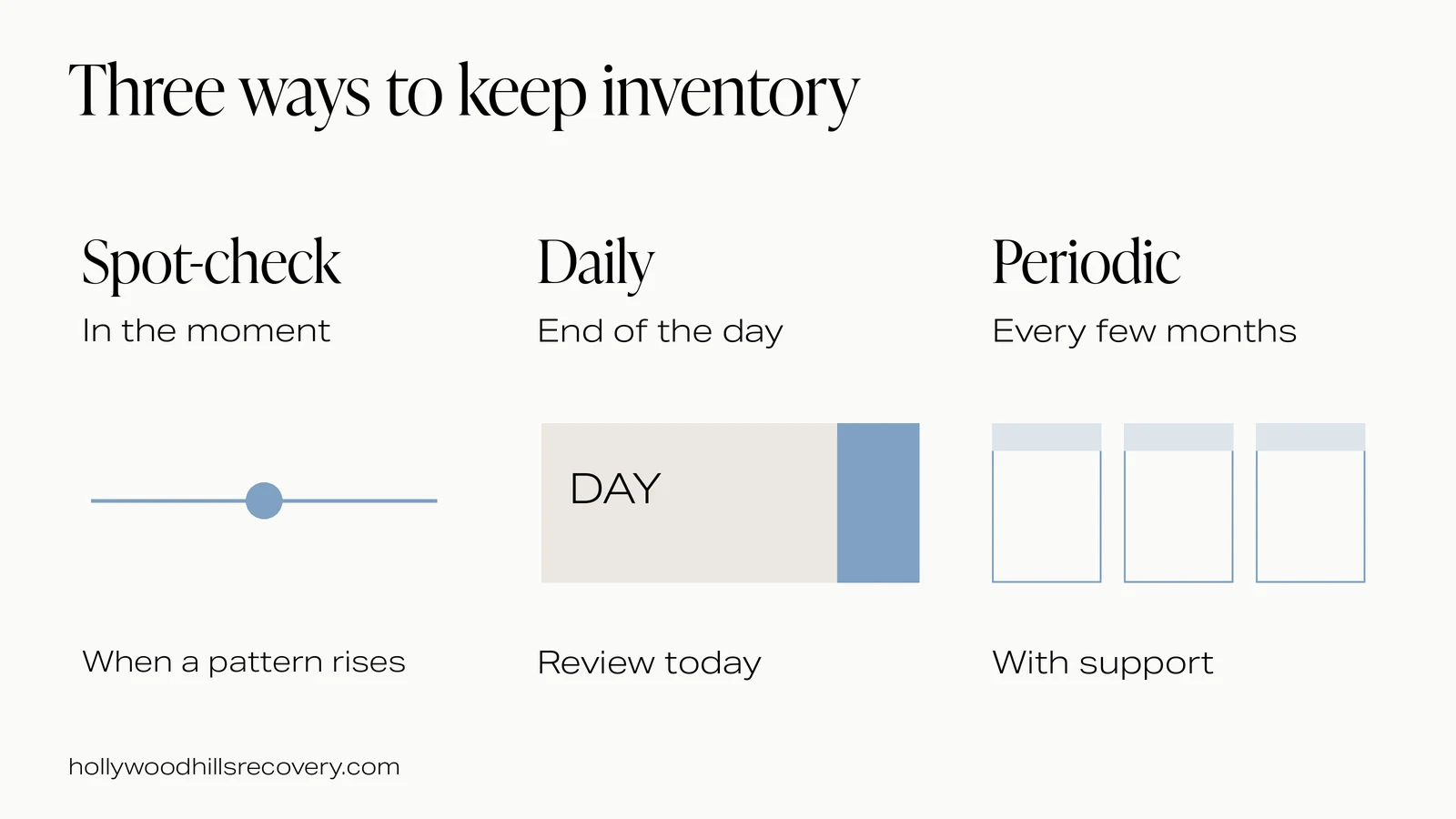
Step 10 is usually practiced in 3 ways:
- A spot-check inventory in the moment, when you notice anger, fear, or dishonesty rising.
- A daily inventory at the end of each day.
- A periodic inventory every few months, often with a sponsor or counselor.
How Is Step 10 Different From Step 4?
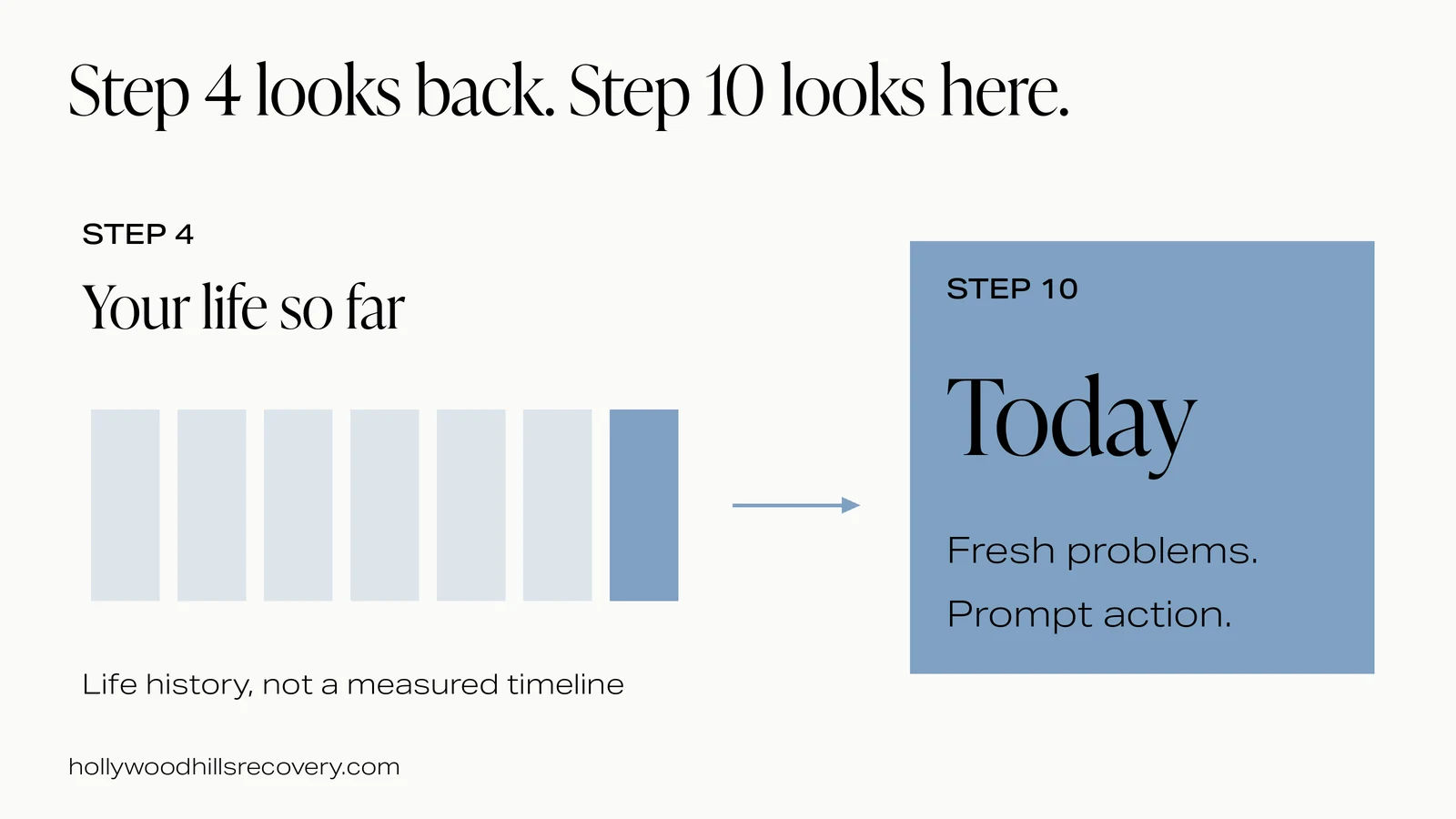
Step 10 differs from Step 4 in scope and timing. Step 4 looks backward across your whole life. Step 10 looks at today and handles problems while they are still fresh.
How Do I Keep My Recovery Current?
I keep my recovery current one day at a time. “Throughout the day, I’m putting in the footwork. There’s action plans for me.” A Step 10 review is how anyone can check whether those plans held up.
What Does the Daily Check Look Like?
The daily check is a short, honest review of how the day went. My day has the same frame: “the morning time is for prayer,” and “when I go to bed, I’m praying again.” For anyone working Step 10, the evening is a natural place for the review. The full routine is covered in structure in early recovery.
Why Does “Promptly” Matter So Much?
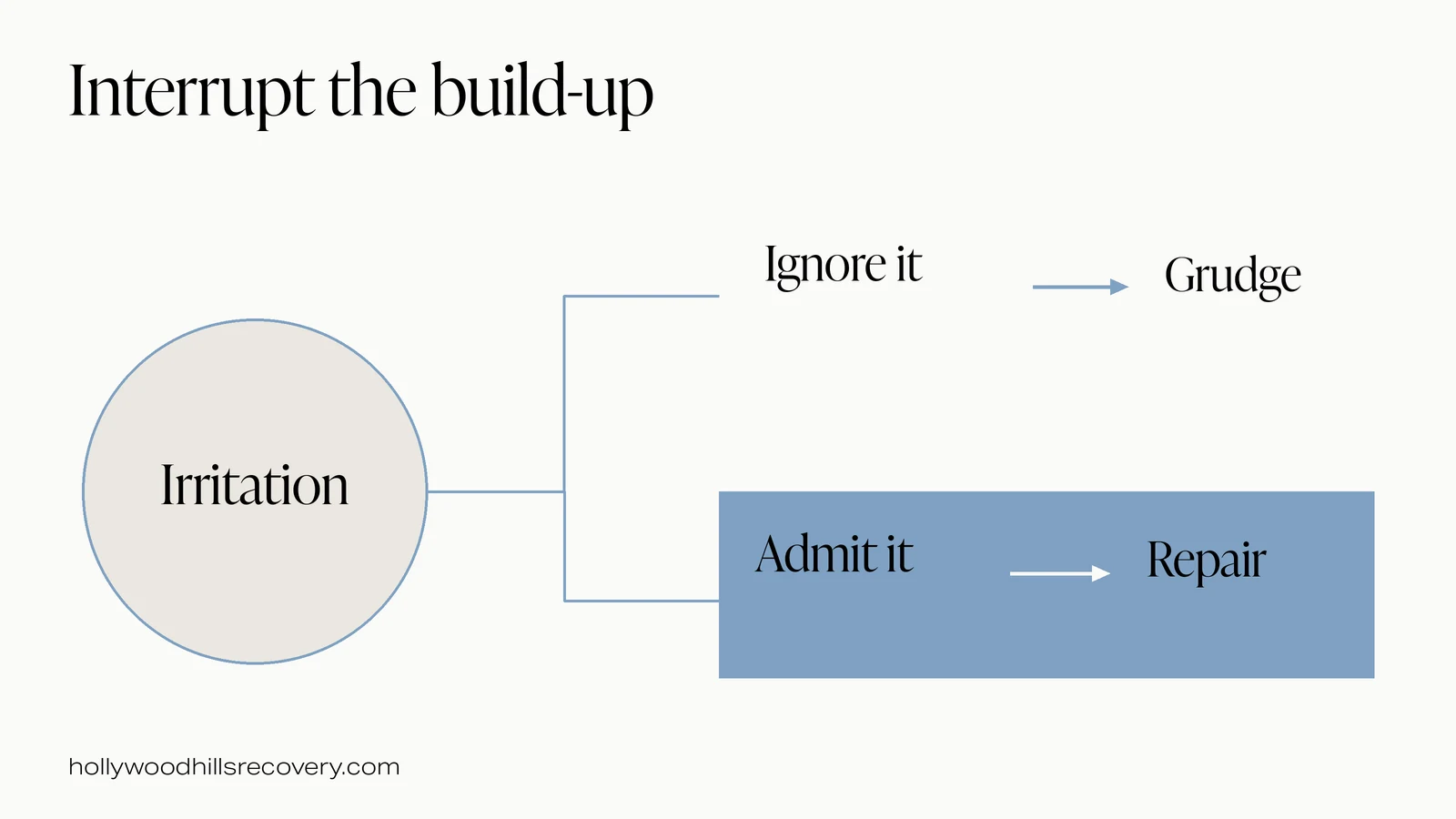
“Promptly” matters because small problems compound. An unspoken irritation becomes a grudge. A skipped commitment becomes a pattern. Catching them on the same day keeps them from piling up into the conditions that come before a relapse. A 2-minute apology today costs far less than a damaged relationship next month.
What Questions Belong in a Nightly Step 10 Review?
A nightly Step 10 review works best with a short set of fixed questions. 5 that cover the basics:
Was I resentful, selfish, dishonest, or afraid today?
Do I owe anyone an apology?
Did I keep something to myself that I should share?
Was I kind and helpful to the people around me?
What could I have done better, and what will I do tomorrow?
How Long Should a Nightly Review Take?
A nightly review should take about 10 to 15 minutes. Longer reviews tend to turn into rumination, and shorter ones skip the honest part. Consistency matters far more than length, so the same time every night works best.
What Should You Do With the Answers?
You should act on the answers quickly. If you owe an apology, make it the next day. If something is weighing on you, call someone. Writing the answers in a journal makes patterns easier to see over weeks, which is one of the benefits of journaling in sobriety.
Why Does Daily Maintenance Matter for Long-Term Sobriety?
Daily maintenance matters because addiction behaves like a chronic condition. Relapse rates for substance use disorders run between 40% and 60%, according to a study published in JAMA, similar to other chronic illnesses that require ongoing management.
How Does Step 10 Connect to Other Recovery Practices?
Step 10 connects directly to the slogan behind one day at a time, since both keep attention on today. It also protects against sobriety fatigue, when routines start to feel stale and small lapses go unnoticed. A written relapse prevention plan gives your nightly answers somewhere to point.
How Can Hollywood Hills Recovery Help?
Hollywood Hills Recovery helps clients build the daily habits that keep recovery current. Residential inpatient treatment establishes structure from day one, and our aftercare program keeps accountability in place after discharge. Clients with co-occurring conditions receive dual diagnosis treatment. Call 323-709-7856.