
AI-generated illustrative scene, not Nicholas, Hollywood Hills Recovery patients or staff, or an actual recovery event.
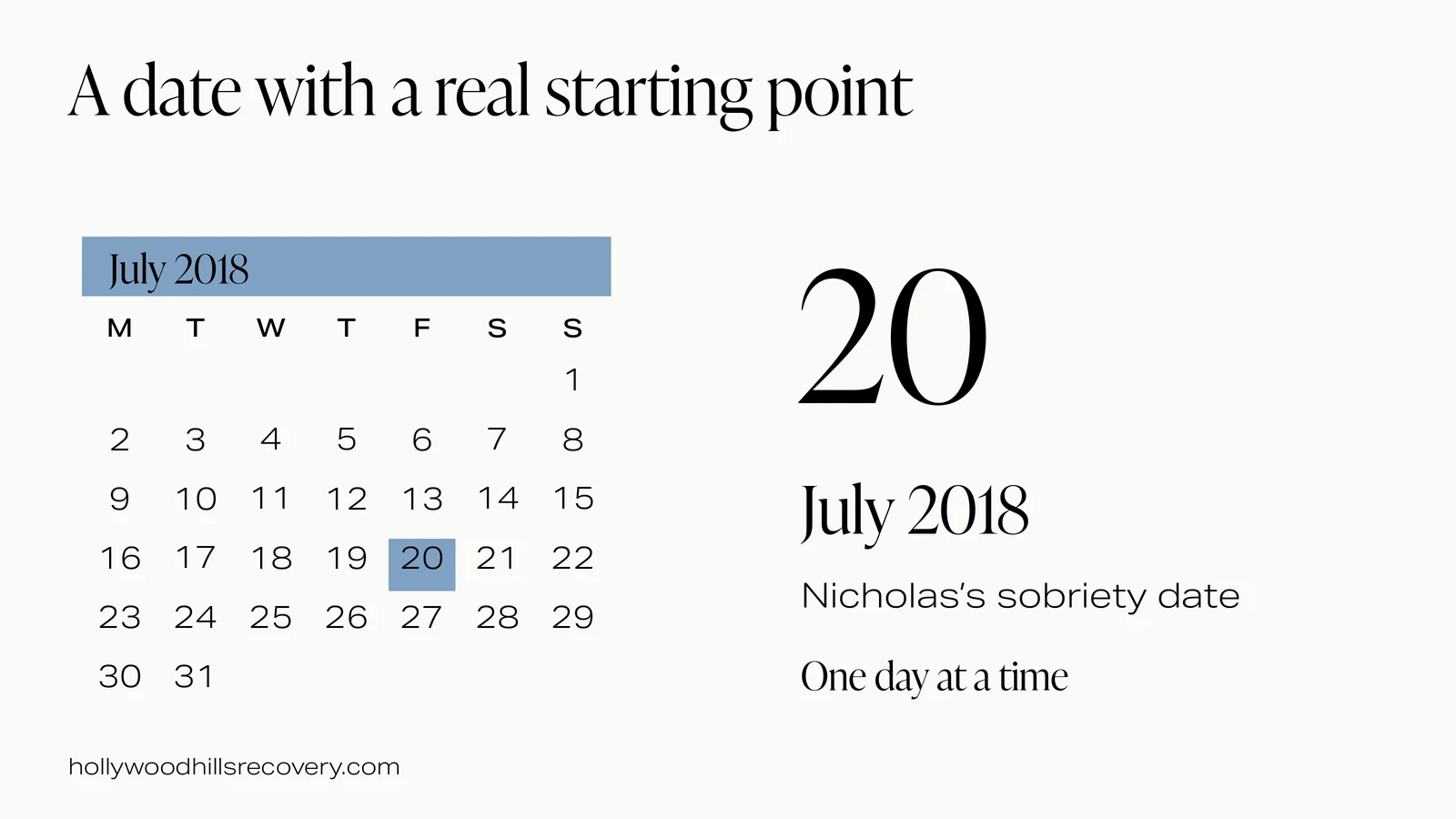
A sobriety date is the first full day a person stays free of alcohol and drugs. It marks the start of continuous recovery and is the date most people count their sober time from. I’m Nicholas, co-founder of Hollywood Hills Recovery, and mine is July 20, 2018.
How Do You Determine Your Sobriety Date?
Your sobriety date is the first day after your last drink or drug use. If your last use was on a Monday, your sobriety date is Tuesday. That way, the date marks a full day of not using rather than the day you stopped partway through.
What Counts Toward Sobriety Time?
What counts toward sobriety time varies by program and person, but most recovery communities apply 3 basic guidelines:
- Any alcohol or non-prescribed drug use usually resets the date.
- Medications taken as prescribed by a doctor typically do not.
- Medication-assisted treatment generally counts as recovery under medical supervision.
Does a Relapse Erase Your Progress?
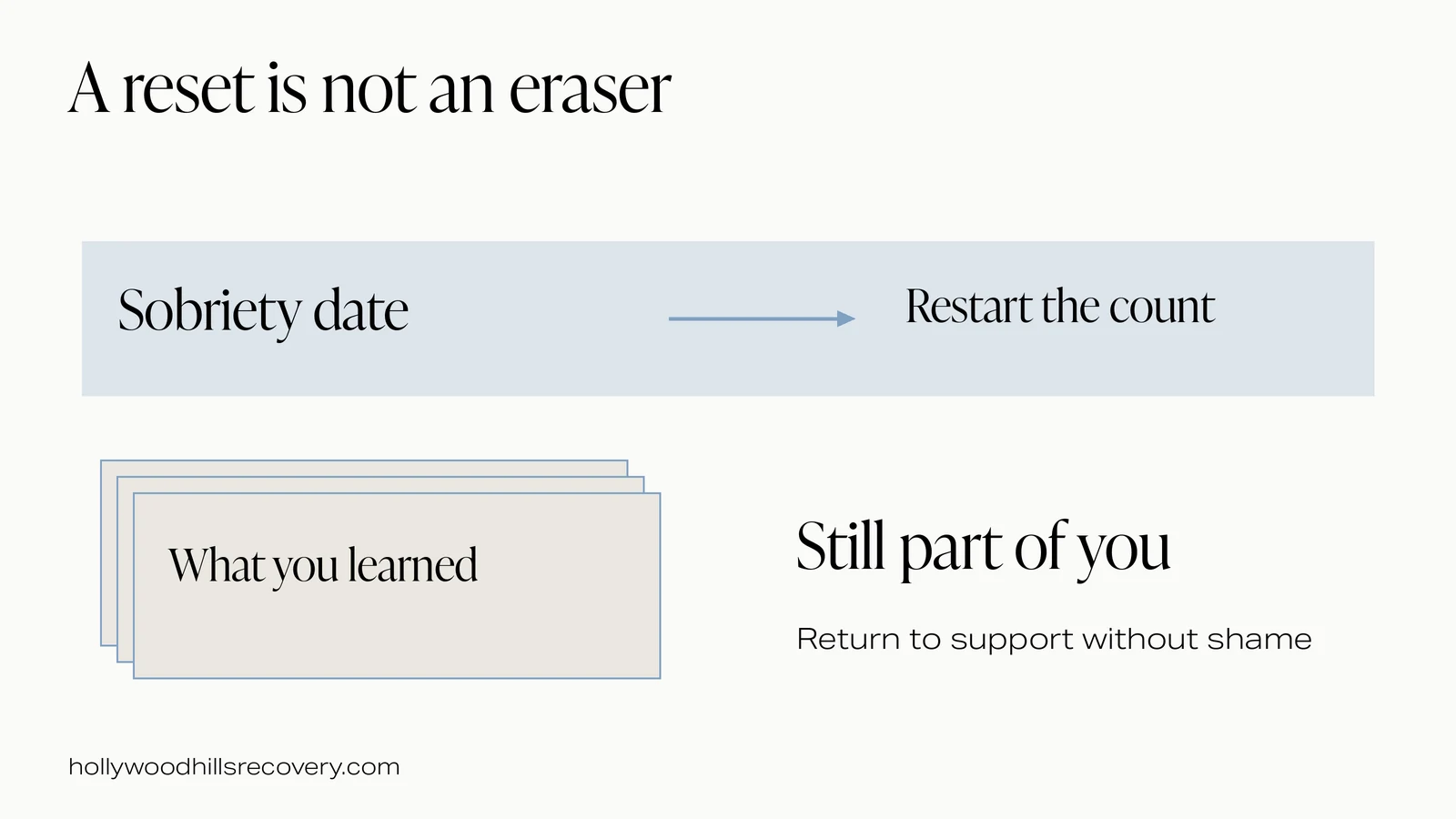
A relapse resets the date but does not erase what you learned. Relapse rates for substance use disorders run between 40% and 60%, according to a study published in JAMA. How to navigate relapse and continue with your recovery journey explains how to start again without shame.
Why Does July 20, 2018 Matter to Me?
July 20, 2018 matters to me because it is where my clean time starts. When I talk about my recovery, I give it the same way: “My sobriety date is 7/20/2018.” Every day I count starts from there.
What Does My Sobriety Date Remind Me Of?
My sobriety date reminds me of the decision behind it: “I’m gonna go and get sober. I’m gonna get clean and I’m actually gonna have a clean and healthy lifestyle.”
Why Do I Count Days and Not Only Years?
I count days because, in my words, “it’s one day at a time.” As of this writing, July 20, 2018 is more than 3,000 days behind me. “My higher power got me through that day,” and each day is handled on its own. That practice is covered in what does one day at a time mean in recovery.
Why Do People in Recovery Share Their Sobriety Date?
People in recovery share their sobriety date for 4 main reasons:
- Accountability, because the date is public and people notice if it changes.
- Hope, because newcomers see that long sobriety is possible.
- Honesty, because a date is a fact, not an opinion about how you are doing.
- Connection, because shared dates create a common language in recovery.
Is a Sobriety Date the Same as a Soberversary?
A sobriety date and a soberversary are related but different. The sobriety date is the starting point. The soberversary is the yearly anniversary of it, and how to celebrate your soberversary covers ways to mark that milestone.
How Do Recovery Communities Mark Sober Time?
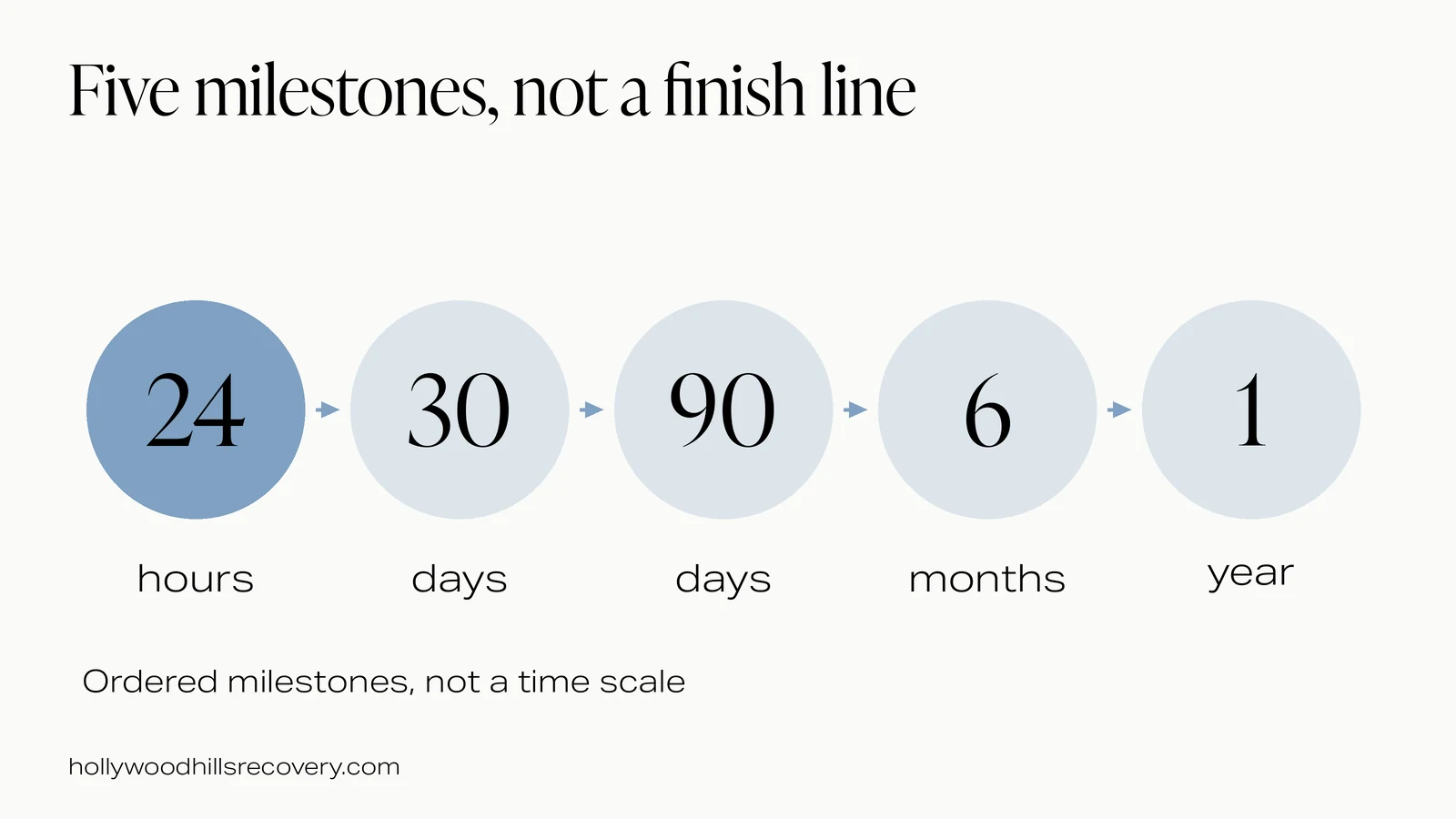
Recovery communities mark sober time with milestones measured from the sobriety date. 5 common ones:
- 24 hours, often recognized as the first and most important milestone.
- 30 days, when many people finish their first month of structured treatment.
- 90 days, the end of the period with the highest relapse risk.
- 6 months, when daily routines usually start to feel natural.
- 1 year, the first full cycle of holidays, anniversaries, and seasons sober.
Why Do Early Milestones Matter So Much?
Early milestones matter because the first months carry the most risk. Each one proves the next day is possible.
What If You Do Not Know Your Exact Date?
If you do not know your exact date, choose the earliest day you can confirm you did not use. Many people in early recovery have blurry memories of their last weeks of using. Talking with family or a counselor can help pin it down, and picking a close, honest date is better than waiting.
How Can Hollywood Hills Recovery Help You Start Yours?
Hollywood Hills Recovery helps people get to day one safely. Care starts with medical detox, continues through residential inpatient treatment, and extends into our aftercare program. Alcohol addiction treatment is available for clients who need it. Call 323-709-7856.