Table of Contents
AI-generated illustrative conversation, not Nicholas, HHR patients or staff, or an actual treatment session.
Step 5 in AA is admitting “to God, to ourselves, and to another human being the exact nature of our wrongs.” It is the step where the written Step 4 inventory is read aloud to another person. The point is not punishment. The point is ending the isolation that secrets create. I’m Nicholas, co-founder of Hollywood Hills Recovery, and I have been sober since July 20, 2018.
What Are the 3 Admissions in Step 5?
Step 5 contains 3 separate admissions, and each one does different work:
- To God, or a higher power of your own understanding, which ends the sense of carrying everything alone.
- To yourself, which ends the habit of minimizing what happened.
- To another human being, which turns private shame into shared truth.

Why Is the Third Admission the Hardest?
The third admission is the hardest because it involves a real person’s reaction. Most people can admit their wrongs privately. Saying them to someone across the table removes every escape route and every softened version of the story.
What Does “Exact Nature” Mean?
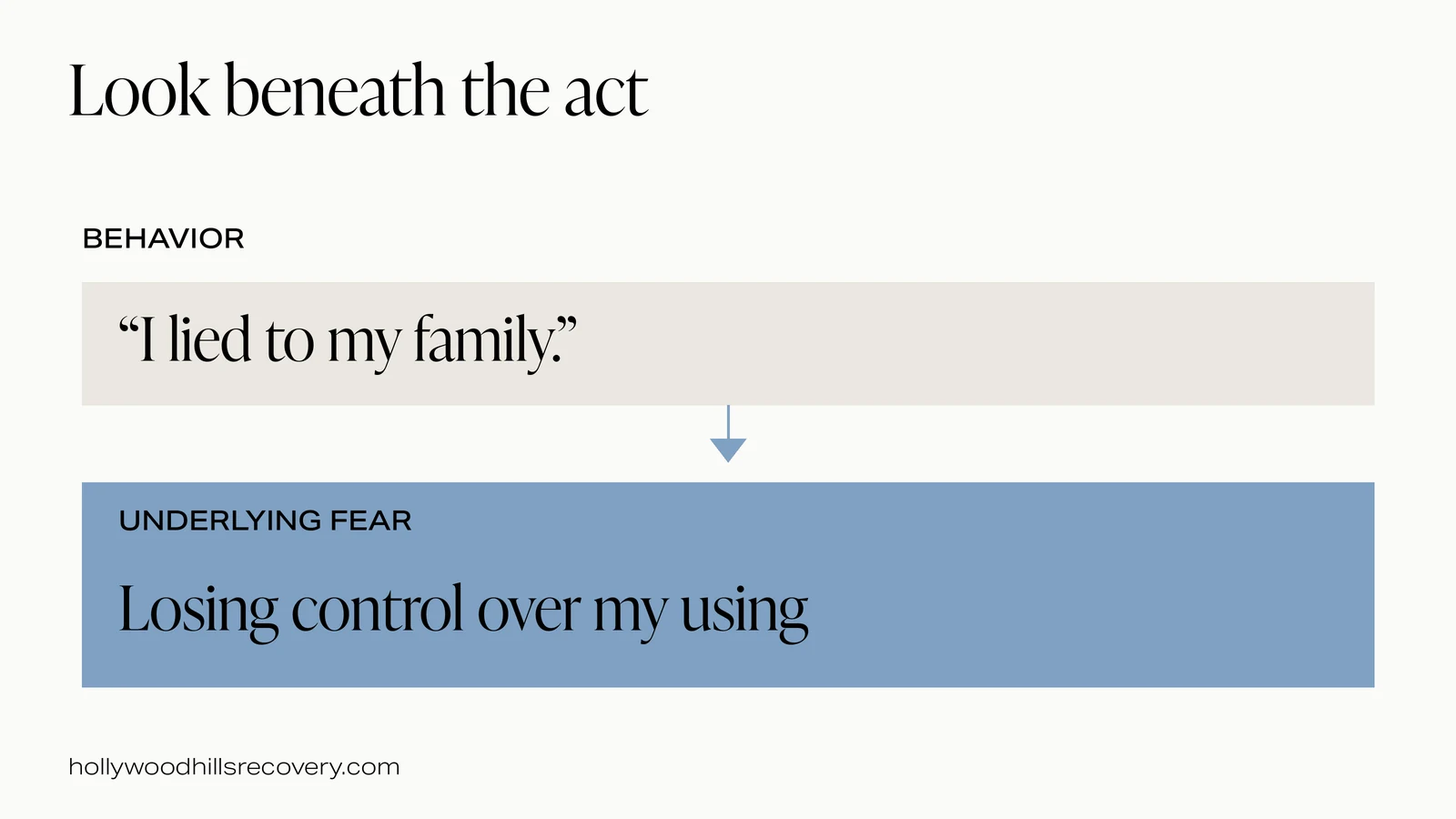
“Exact nature” means naming the pattern behind the behavior, not just the behavior itself. Saying “I lied to my family” is a fact. Saying “I lied because I was afraid of losing control over my using” is the exact nature.
Why Does Saying It Out Loud Matter?
Saying it out loud matters because addiction survives on secrecy. A secret kept inside keeps its power. A secret spoken to a trusted person usually shrinks to its real size.
Why Does Speaking Up Matter to Me?
I share my story because “I really wanted to help our community.” That includes the hard parts: “I’ve done so many things that it’s unbearable. But today I’ve learned from those mistakes.” Being honest about the past is part of how I can say, “Today I actually know who I am, who Nicholas is.”
Is Step 5 the Same as Being Honest in General?
Step 5 is narrower than general honesty. Day-to-day honesty is a practice you keep for life. Step 5 is a specific, one-time disclosure of a completed inventory to one chosen person, though many people repeat it as recovery deepens.
Who Should Hear Your Step 5?
The person who hears your Step 5 should be someone trustworthy, experienced, and outside the situations on your list. 4 common choices:
A sponsor with long-term sobriety who has completed the steps.
A clergy member bound by confidentiality.
A licensed therapist or addiction counselor.
A trusted mentor in recovery who will not judge or gossip.

What Happens During a Step 5 Conversation?
A Step 5 conversation is usually a single long meeting, often 2 to 4 hours. You read your inventory aloud, the listener asks clarifying questions, and together you look for the patterns that repeat across the columns. The listener’s job is to understand, not to judge or fix.
Who Should You Avoid Choosing?
You should avoid choosing someone named in your inventory or someone who would be hurt by hearing it. A spouse or parent may deserve amends later, but Step 5 is not the place to deliver painful details to the people affected.
What Happens After Step 5?
After Step 5, most people report relief and a clearer view of their recurring patterns. Those patterns become the focus of Steps 6 and 7, and the harms eventually guide the process in how do you make amends in recovery. The inventory itself comes from Step 4 in AA.
How Does Step 5 Support Long-Term Sobriety?
Step 5 supports sobriety by building the habit of telling someone the truth before it turns into a relapse. Twelve-step facilitation produced higher rates of continuous abstinence than other established treatments across 27 studies, according to a review by Cochrane. The same instinct protects emotional sobriety long after the step itself is done.
How Can Hollywood Hills Recovery Help?
Hollywood Hills Recovery creates a setting where disclosure feels safe. Residential inpatient treatment offers daily individual therapy, dual diagnosis treatment addresses shame tied to trauma or depression, and our aftercare program keeps support in place afterward. Call 323-709-7856.