Table of Contents
Gratitude helps in recovery by shifting attention from what sobriety took away to what it gave back. Resentment and self-pity are 2 of the most common emotional routes back to using. Gratitude is the daily habit that works against both. I’m Nicholas, co-founder of Hollywood Hills Recovery, and I have been sober since July 20, 2018.
What Am I Grateful for Today?
When I actually saw that there’s an actual path for me in recovery, I took it. It was the best investment of my entire life. Today I live a clean and sober life, with 2 successful careers and a golden education. It’s really been so remarkable to just see the happiness and joy that’s been instilled in me.
Why Does Remembering the Before Matter?
Remembering the before matters because the good parts of recovery become normal quickly. A stable job, a clear head, and people who trust you start to feel ordinary. Gratitude keeps them from feeling ordinary. The contrast is where the motivation lives, especially on days when recovery feels routine.
Why Is Gratitude Important in Recovery?
Gratitude is important because it directly counters the thinking that leads to relapse. 4 patterns it interrupts:
- Self-pity, the belief that sobriety is unfair.
- Resentment toward people who “made” recovery necessary.
- Entitlement, the sense that you have earned a break from the work.
- Nostalgia for using that edits out the consequences.
Is Gratitude Just Positive Thinking?
Gratitude is not the same as positive thinking. Positive thinking tries to ignore problems. Gratitude acknowledges problems and still notices what is going right. It holds both at once, which is why it survives hard days better than forced optimism does.
Can Gratitude Turn Into Complacency?
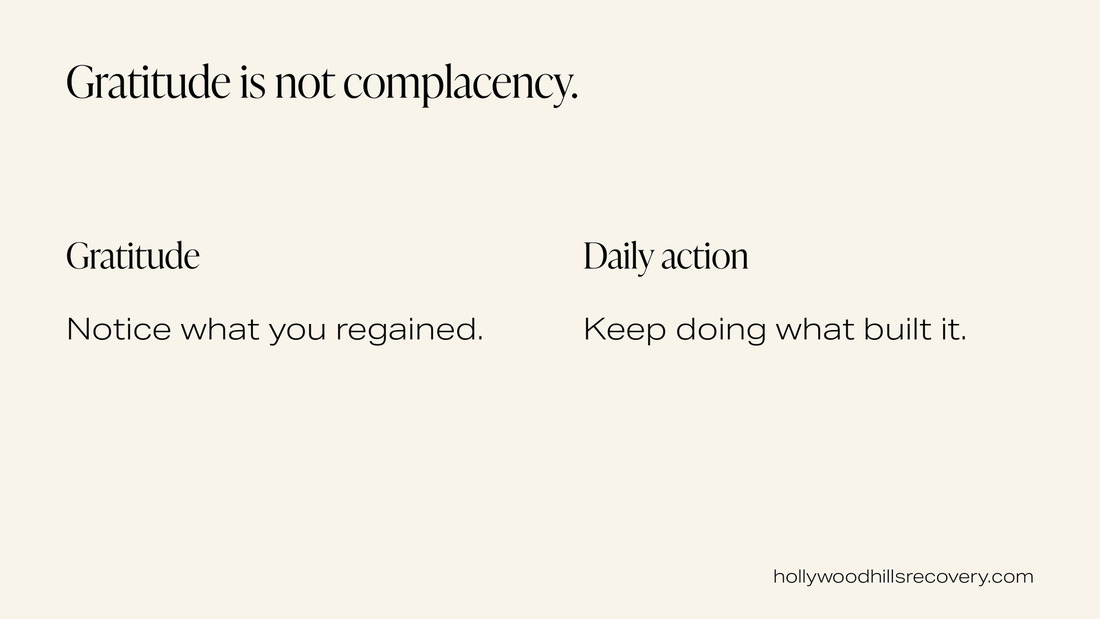
Gratitude can turn into complacency if it becomes a reason to stop doing the work. “Things are good now” is a gratitude statement. “Things are good now, so I can skip the routine” is the start of a relapse. Real gratitude protects what you have by continuing to do what built it.
How Do You Practice Gratitude in Recovery?
You practice gratitude through small, repeatable actions. 5 methods that work:
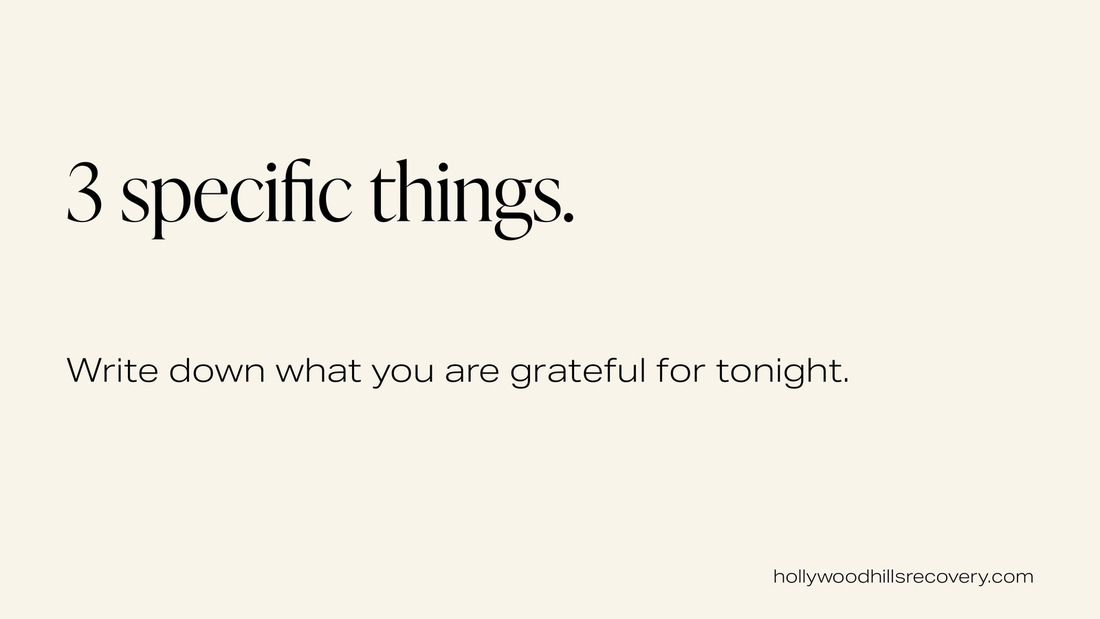
- Write 3 specific things you are grateful for each night.
- Tell one person each week why you appreciate them.
- Keep a list of what using cost you and what sobriety has returned.
- Say thank you to the people who helped you get sober.
- Help someone newer to recovery, which turns gratitude into action.
What Makes a Gratitude List Actually Work?
A gratitude list works when it is specific. “My family” fades after a week. “My sister answered my call on Tuesday” stays real. Specific entries force you to notice the day you actually lived. The benefits of journaling in sobriety explains how to build the habit.
How Can Families Practice Gratitude Too?
Families can practice gratitude by noticing progress out loud. Naming a specific change, like a kept promise or an honest conversation, reinforces recovery and helps repair the relationship at the same time.
What if You Do Not Feel Grateful?
If you do not feel grateful, practice it anyway. Gratitude is a behavior before it becomes a feeling, and the feeling usually follows weeks of consistent practice. Early recovery can feel like loss, and that is normal. What to do when you are losing hope in recovery helps on the hardest days. Persistent emptiness may point to depression, which dealing with depression during recovery addresses directly.
Does Gratitude Connect to Structure?
Gratitude works best when it has a fixed place in the day. A morning or evening slot turns it from an occasional mood into a habit. I describe how I built fixed anchors into my day in structure in early recovery.
How Can Hollywood Hills Recovery Help You Build a Life Worth Being Grateful For?
Hollywood Hills Recovery helps clients recovering from substance abuse build the life that gratitude grows from. Residential inpatient treatment creates stability, dual diagnosis treatment treats depression and anxiety, and our aftercare program supports the long work of rebuilding. Call 323-709-7856.