Table of Contents
You make amends in recovery by taking direct responsibility for the harm you caused and changing the behavior that caused it. An apology is words. An amends is words followed by a different way of living. I’m Nicholas, co-founder of Hollywood Hills Recovery, and I have been sober since July 20, 2018.
Why Did Amends Matter So Much to Me?
Amends mattered to me because of what I had to make amends for. I’ve hurt so many people. I’ve done so many things that it’s unbearable. But today I’ve learned from those mistakes. Amends is where that learning becomes visible to the people on the other side of it.
What Does Learning From Mistakes Have to Do With Amends?
Learning from mistakes is what makes an amends believable. Anyone can say sorry. The people someone has hurt have usually heard apologies before. What they have not seen is consistent change, day after day, with no promise attached. Living differently is the part of an amends nobody can fake, and it is the part that lasts.
What Do the 12 Steps Say About Making Amends?
The 12 Steps handle amends in 2 stages, Steps 8 and 9. Step 8 asks you to list everyone you harmed and become willing to make things right. Step 9 asks you to make direct amends to those people wherever possible, except when to do so would injure them or others. That exception matters as much as the instruction.
What Are the Different Types of Amends?
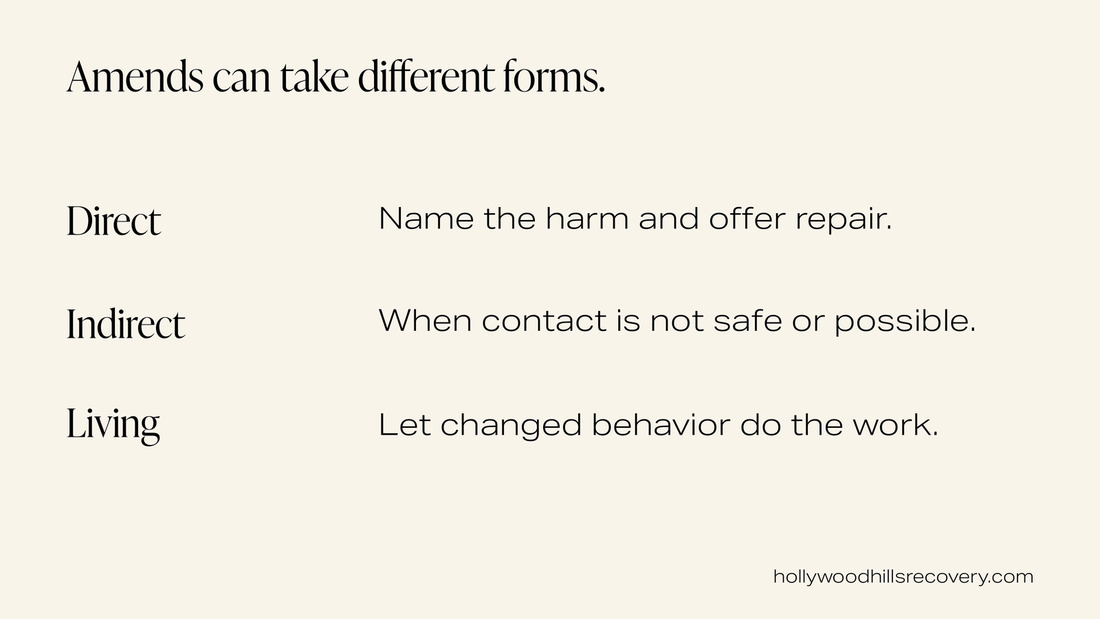
Amends take 3 common forms:
- Direct amends, where you speak with the person, name the harm, and ask what you can do to repair it.
- Indirect amends, where contact is not possible or safe, such as donating time or money to a related cause.
- Living amends, where you change the behavior permanently and let consistency do the work over time.
How Do You Make an Amends the Right Way?
You make an amends the right way by focusing on the other person, not on your own relief. 5 guidelines keep the process honest:
- Work through the list with a sponsor, counselor, or therapist before acting.
- Name the specific harm without excuses or explanations.
- Ask what the person needs rather than deciding for them.
- Accept whatever response you receive, including silence.
- Follow through on any repair you offer, including repaying money.
What Should You Say During a Direct Amends?
A direct amends works best when it stays short and specific. A simple structure covers 4 points:
- What I did, stated plainly.
- How I understand it affected you.
- What I am doing differently now.
- What I can do to make it right, if anything.
When Should You Not Make a Direct Amends?
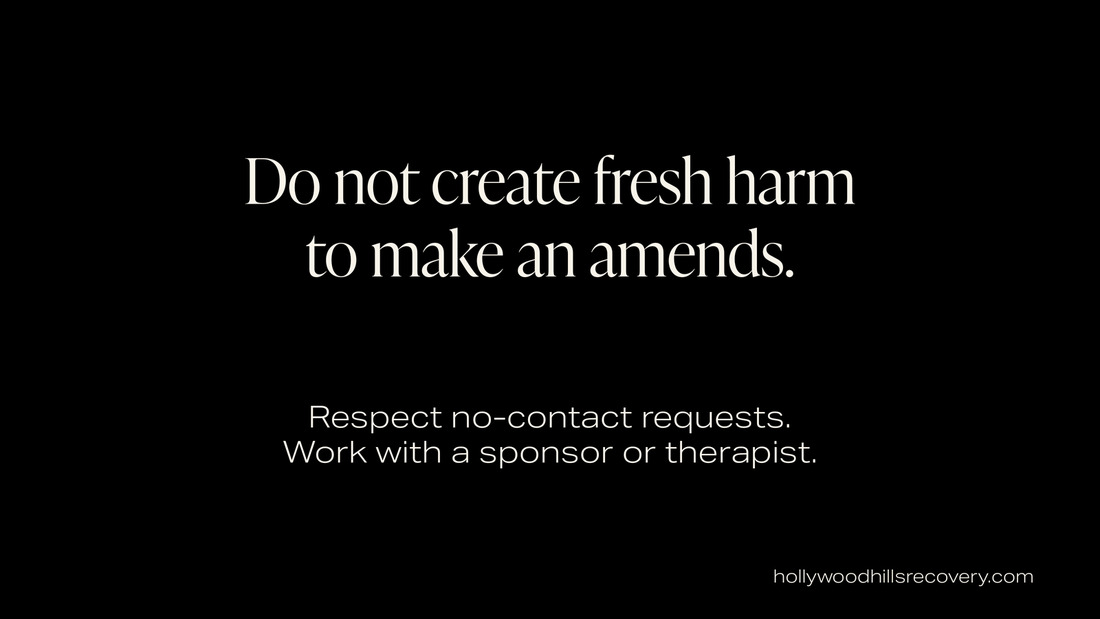
You should not make a direct amends when contact would cause fresh harm. That includes reopening trauma for someone who asked for no contact, or confessing something that would damage a third person. In those cases, an indirect or living amends is the responsible choice.
How Long Does It Take to Rebuild Trust After Amends?
Rebuilding trust takes months or years, not one conversation. The amends opens the door. Consistent behavior is what earns the person’s willingness to walk through it. Rebuilding trust in relationships after addiction and how to rebuild a marriage after addiction recovery cover that longer process in more detail.
Can You Make Amends Too Early?
You can make amends too early. Rushing into amends in the first weeks of sobriety often comes from wanting to feel better quickly rather than from real change. Building a stable routine first, like the one I describe in structure in early recovery, gives the amends weight. Understanding the steps of addiction recovery outlines the broader stages of treatment that come before this work.
How Can Hollywood Hills Recovery Help You Prepare for Amends?
Hollywood Hills Recovery helps clients in substance abuse treatment prepare for amends through individual therapy and family work during residential inpatient treatment. Our aftercare program supports clients as they work through amends in the months after discharge, when the real repair happens. Clients carrying guilt tied to trauma or depression also receive dual diagnosis treatment. Call 323-709-7856.