AI-generated editorial illustration. Not actual HHR clients, staff, facilities or events.
Going to rehab rarely costs a professional their license, and seeking treatment voluntarily is usually the strongest protection a licensed professional has. Licensing boards act on impaired practice, criminal conduct, and harm to the public. A confidential decision to enter treatment before any of those happen is treated very differently.
Why Do Licensing Boards Care About Substance Use?
Licensing boards care about substance use because their job is protecting the public. Boards for physicians, nurses, attorneys, pilots, and pharmacists step in when impairment affects safety or competence.
What Usually Triggers Board Involvement?
4 events usually trigger board involvement:
- Practicing while impaired.
- An arrest, such as a DUI or possession charge.
- A complaint from a patient, client, or employer.
- A positive drug test tied to the job.
Do You Have to Report That You Went to Rehab?
You usually do not have to report treatment itself. Disclosure rules vary by board and state, and some renewal forms ask about current conditions that impair practice rather than past treatment. Read the exact wording on your renewal application, and consult a licensing attorney if a question is unclear.
Are Addiction Treatment Records Private?
Addiction treatment records carry stronger privacy protection than most medical records. A federal regulation known as 42 CFR Part 2 limits how substance use disorder records can be shared without written consent. Your written consent is generally required before a covered program shares your records with an employer or board.
What Are Professional Assistance Programs?
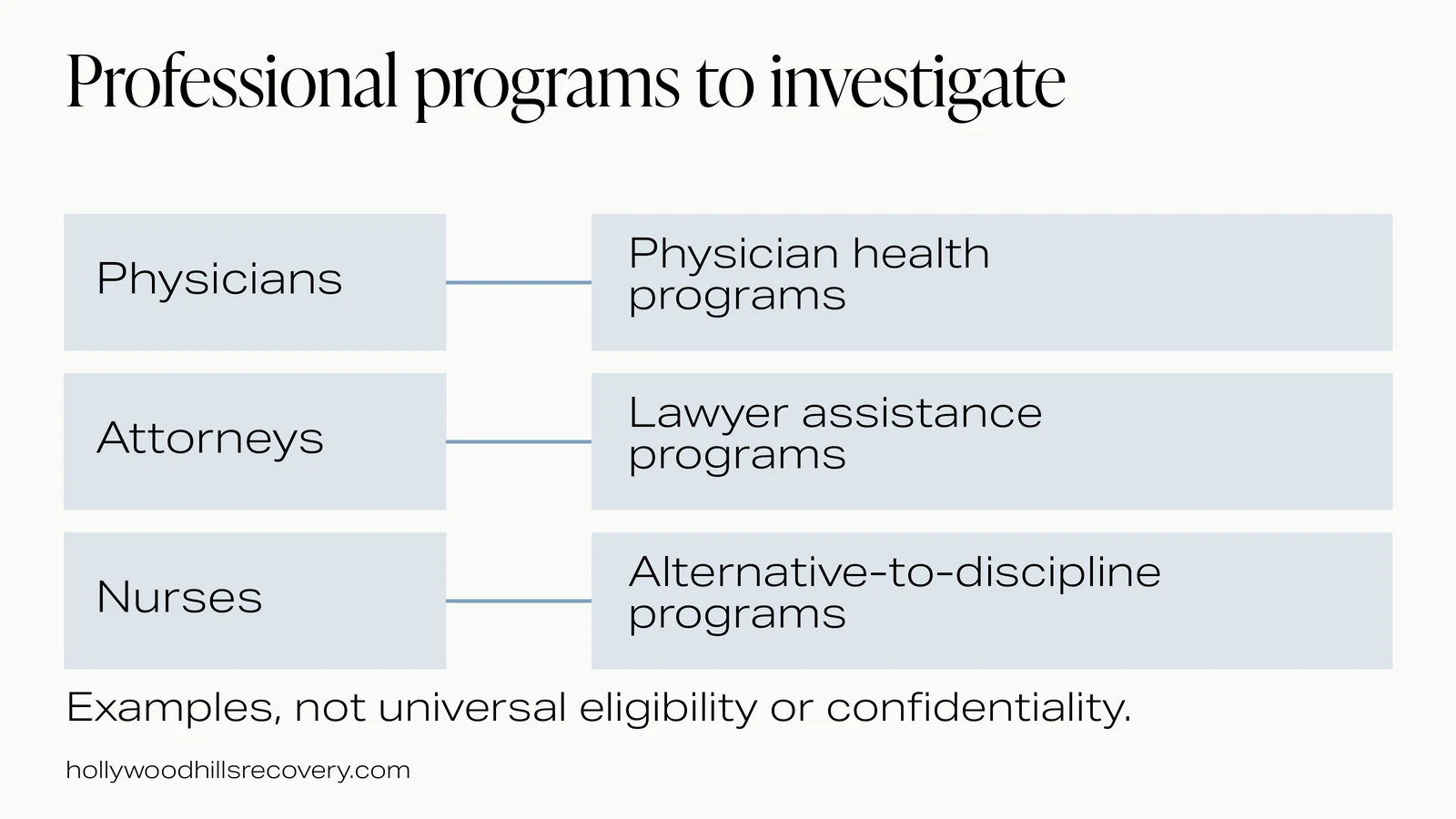
Professional assistance programs are confidential monitoring programs that let licensed professionals get treatment while protecting their careers. Most states run them for at least 3 groups.
- Physician health programs for doctors.
- Lawyer assistance programs for attorneys, like the State Bar of California’s Lawyer Assistance Program.
- Alternative-to-discipline programs for nurses, like the California Board of Registered Nursing Intervention Program.
Do Monitoring Programs Work?
Monitoring programs produce some of the best outcomes in addiction medicine. A 5-year study of 904 physicians in 16 state physician health programs, published in the BMJ, found 78.7% were licensed and working at follow-up.
What Happens If You Relapse While Being Monitored?
A relapse during monitoring usually leads to a clinical reassessment, not automatic license loss. Programs typically increase testing, adjust treatment, or require a return to a higher level of care. Concealing a relapse carries far greater risk than reporting it, because boards treat dishonesty more seriously than illness.
Does the ADA Protect Professionals in Recovery?
The Americans with Disabilities Act protects people in recovery from addiction who are not currently using illegal drugs. It covers employment decisions, not board discipline for misconduct. Employer rules are covered in do I have to tell my employer I’m going to rehab, and the return is covered in 10 tips for returning to work after rehab.
What Should a Licensed Professional Do Before Entering Treatment?
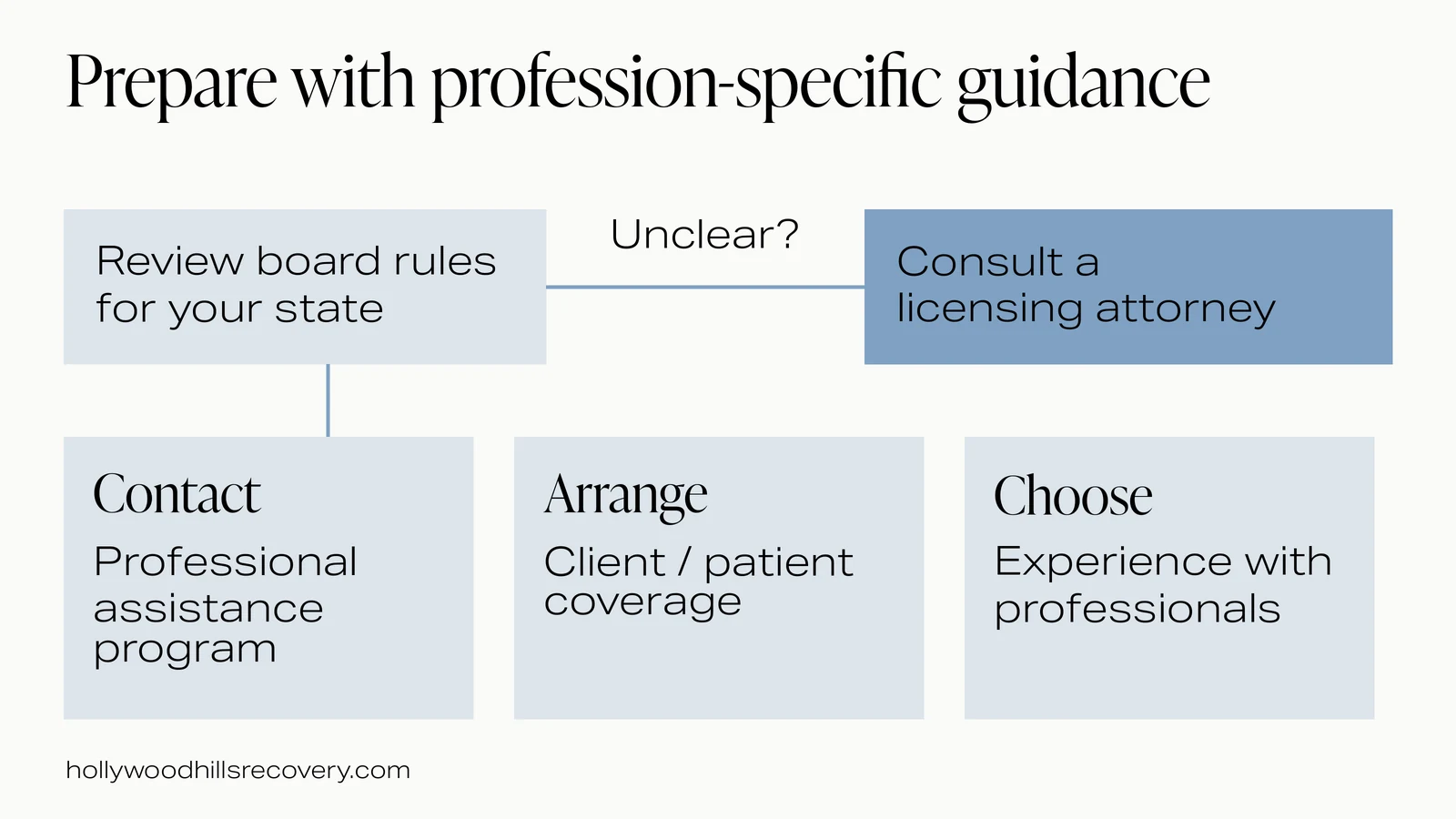
A licensed professional should take 5 steps before entering treatment.
- Review the board’s reporting rules for your profession and state.
- Consult a licensing attorney if any disclosure question is unclear.
- Contact your profession’s assistance program confidentially.
- Arrange coverage for your clients or patients.
- Choose a program with experience treating professionals.
Why Does Program Choice Matter for Professionals?
Program choice matters because professionals need clinical documentation, discretion, and aftercare planning that boards and monitoring programs recognize. The pressures leaders face are covered in executive rehabilitation and sobriety for leadership success, and privacy is covered in the benefits of a private luxury rehab for long-term recovery.
How Can Hollywood Hills Recovery Help Licensed Professionals?
Hollywood Hills Recovery treats physicians, attorneys, executives, and other licensed professionals in a private setting. Our executive rehab program builds treatment around career demands and confidentiality. Care starts with medical detox, continues in residential inpatient treatment, and moves into our aftercare program. Clients with co-occurring anxiety or depression receive dual diagnosis treatment. Call 323-709-7856 or verify your insurance.
Frequently Asked Questions
Can a Nurse Keep Their License After Rehab?
Yes. Most state nursing boards offer alternative-to-discipline programs that let nurses complete treatment and monitoring without public discipline.
Will My Employer Find Out From My Board?
Participation in a confidential assistance program is generally not reported to employers unless you fail to comply with the monitoring agreement.