
AI-generated editorial illustration. Not actual HHR clients, staff, facilities or events.
You tell your family you’re going to rehab by choosing a calm moment, stating the decision plainly, and giving them specific facts about where you are going and how they can help. You do not owe a full history of your use in the first conversation. The goal is to share a decision, not to defend it.
When Is the Best Time to Tell Your Family?
The best time to tell your family is after you have a confirmed admission date and before you leave. A date makes the decision real and answers the first question most families ask.
Where Should the Conversation Happen?
The conversation should happen somewhere private, quiet, and free of alcohol. Avoid holidays, arguments, and late nights, when emotions run highest. If distance makes an in-person talk impossible, a video call works better than a text message.
What Should You Say?
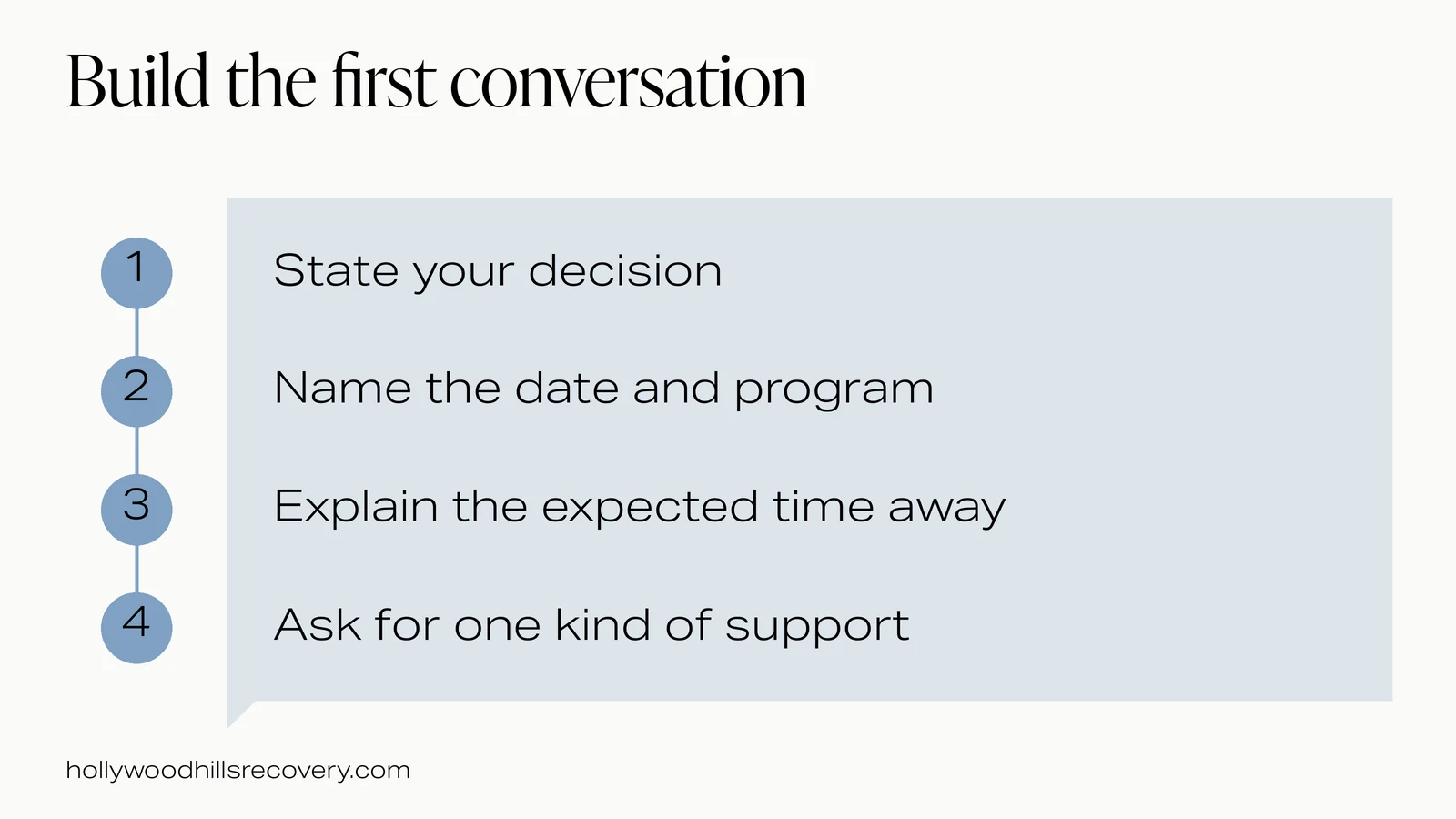
You should say 4 things in the first conversation.
- State the decision, like “I’m going to treatment for my drinking.”
- Name the date and the program.
- Explain how long you expect to be gone.
- Ask for 1 specific kind of support.
How Much Detail Should You Share?
Share as much detail as feels safe. “I need help and I’m getting it” is a complete answer. Deeper conversations can happen later in family sessions with a therapist present.
How Do You Handle Difficult Reactions?
You handle difficult reactions by expecting them and not arguing with them. Families often react with relief, anger, guilt, or denial, sometimes all at once.
What Are Calm Responses to Common Reactions?
4 common reactions and calm responses:
- Denial: “I know it’s hard to hear. I’ve already decided.”
- Anger: “You have every right to be upset. I’m doing this to fix it.”
- Guilt: “This isn’t your fault.”
- Fear: “The program is medically supervised, and you can call the admissions team with questions.”
How Do You Tell Children?
You tell children with simple, age-appropriate words and a promise that you are getting help. Young children need to hear that it is not their fault and who will take care of them while you are away. Specific scripts are covered in how do you talk to children about a parent’s addiction.
What Can Your Family Do While You’re in Treatment?
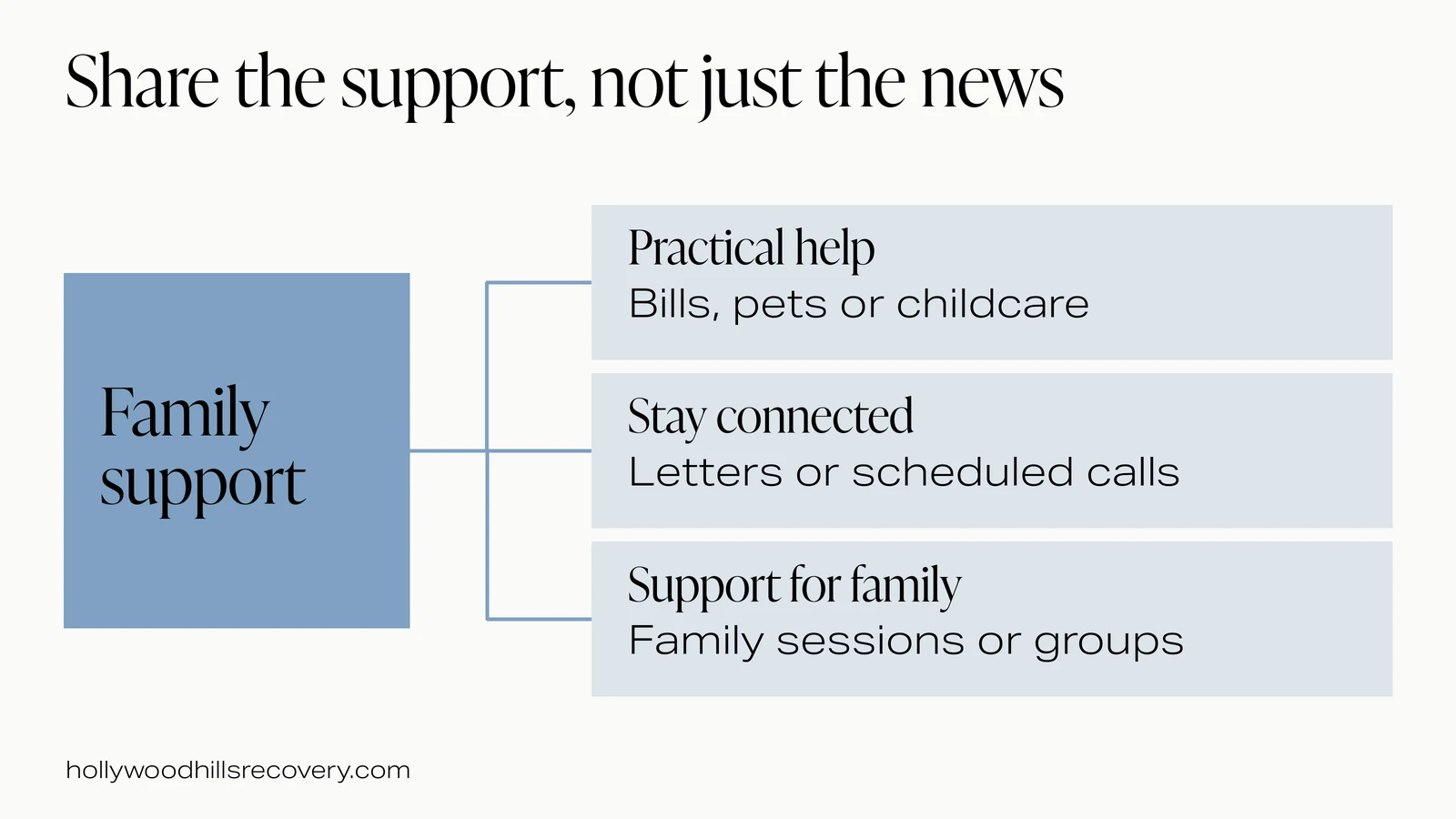
Your family can support your recovery and their own at the same time. 3 useful roles:
- Handling bills, pets, or childcare.
- Writing letters or joining scheduled calls.
- Attending family sessions and support groups.
What Should Families Read Before You Leave?
Families benefit from 2 resources before admission. What to say to someone going to rehab helps them respond well, and where can families get support during rehab in Los Angeles points them to groups for their own healing.
What If You Need to Tell a Partner?
Telling a partner works best as a private conversation before the wider family hears. Partners often carry the most hurt and the heaviest practical load while you are away. 3 things help:
- Acknowledge the strain your use has caused.
- Share the program’s visiting and phone rules.
- Ask whether they want their own support, like a family group or therapist.
Couples who rebuild after treatment often start with the steps in rebuilding trust in relationships after addiction.
What If You Need to Tell Your Employer Too?
Telling an employer follows different rules than telling family. Federal leave laws protect most workers, and you rarely need to name addiction. Details are in do I have to tell my employer I’m going to rehab.
How Can Hollywood Hills Recovery Help Your Family?
Hollywood Hills Recovery involves families from admission through discharge, and family members can call our admissions team directly with questions about the program. Clients start with medical detox, continue in residential inpatient treatment, and transition home with our aftercare program. Clients with co-occurring conditions receive dual diagnosis treatment. Call 323-709-7856.
Frequently Asked Questions
Should You Tell Your Family Before or After Admission?
Before admission works better for most people. It gives family time to prepare and removes the shock of a sudden absence.
What If Your Family Uses Too?
Tell only the people who will support your decision, and ask the treatment team about family sessions and boundaries before discharge.