
Why Can't Alcoholics Just Drink Less?
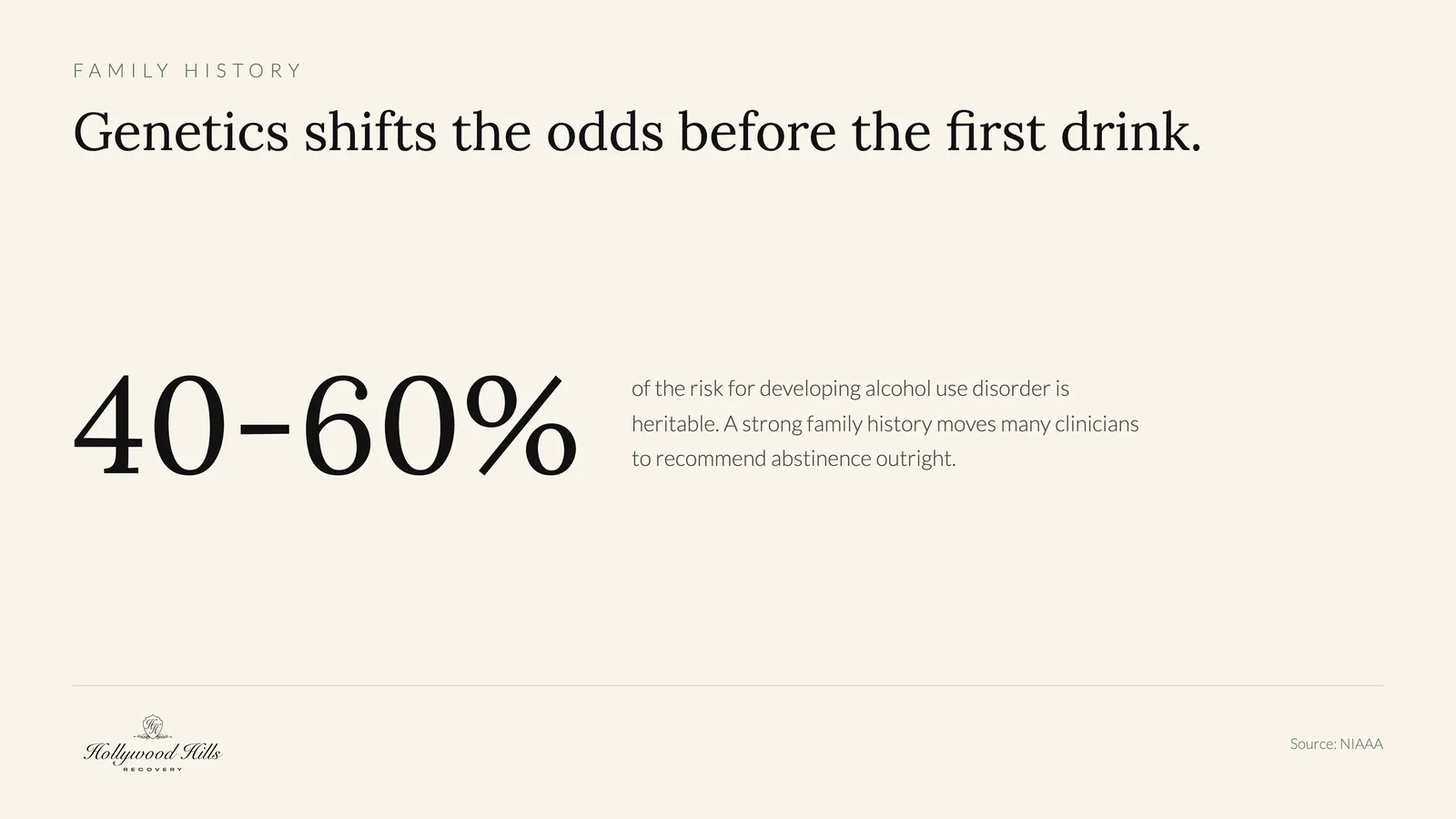
Alcoholics cannot simply drink less because addiction is a brain condition, not a discipline problem. Long-term heavy drinking reshapes the brain circuits that govern reward, stress, and self-control, so the brain of a person with alcohol addiction responds to a single drink differently than the brain of a casual drinker.
Three changes drive the loss of control:
- Reward circuits learn to treat alcohol as a survival priority, ranking it above food, family, and safety.
- Tolerance pushes the amount needed to feel normal steadily upward, never downward.
- Stress systems recalibrate so that not drinking feels like an emergency the next drink appears to fix.
None of these changes reverse because a person decides to be careful. That is why the first drink matters more than the fifth.
What Does the Moderation Trap Look Like?
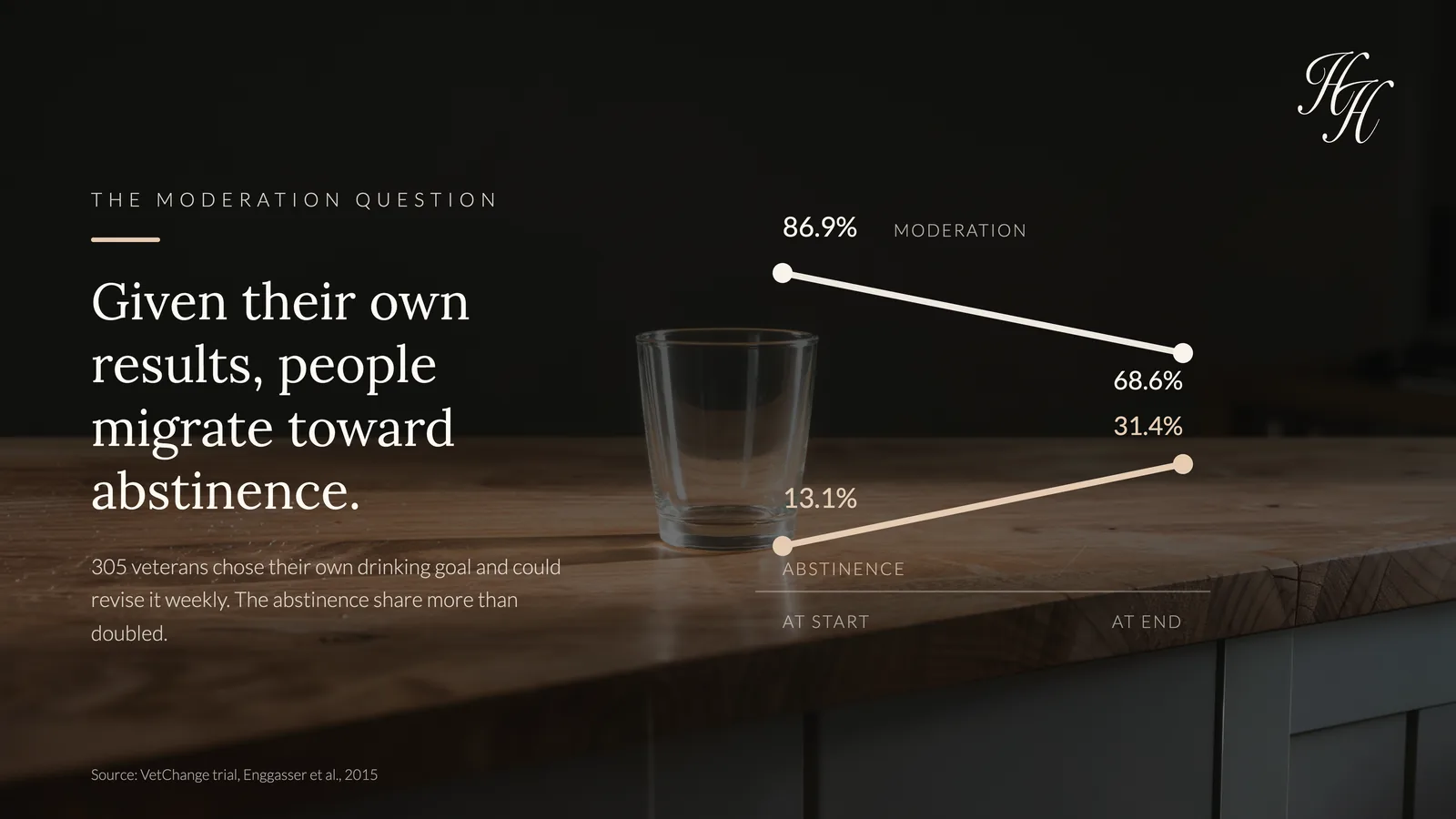
The moderation trap is the cycle of rules, exceptions, and resets that problem drinkers mistake for control. I lived every stage of it.
My rules looked reasonable: only on weekends, only beer, never before evening, never alone. Each rule held for a while, which felt like proof I was fine.
Every rule eventually collapsed on an ordinary day, and each collapse ended with more drinking than before the rule existed. The rules were not controlling the drinking. The drinking was controlling the rules.
Why Does One Drink Restart the Cycle?
One drink restarts the cycle because it reactivates the craving circuitry that abstinence had quieted. The first drink does not satisfy the urge, it wakes it up. People in recovery describe this as the phenomenon of craving, and it matches what I felt: the second drink was always a stronger demand than the first.
When Is It Time to Stop Trying to Moderate?
It is time to stop trying to moderate when your own rules keep failing. Ask 4 honest questions:
- Have you set drinking limits and broken them more than once?
- Do you hide, minimize, or pre-plan your drinking around other people?
- Does one drink reliably turn into more than you intended?
- Have consequences at work, at home, or with your health failed to change the pattern?
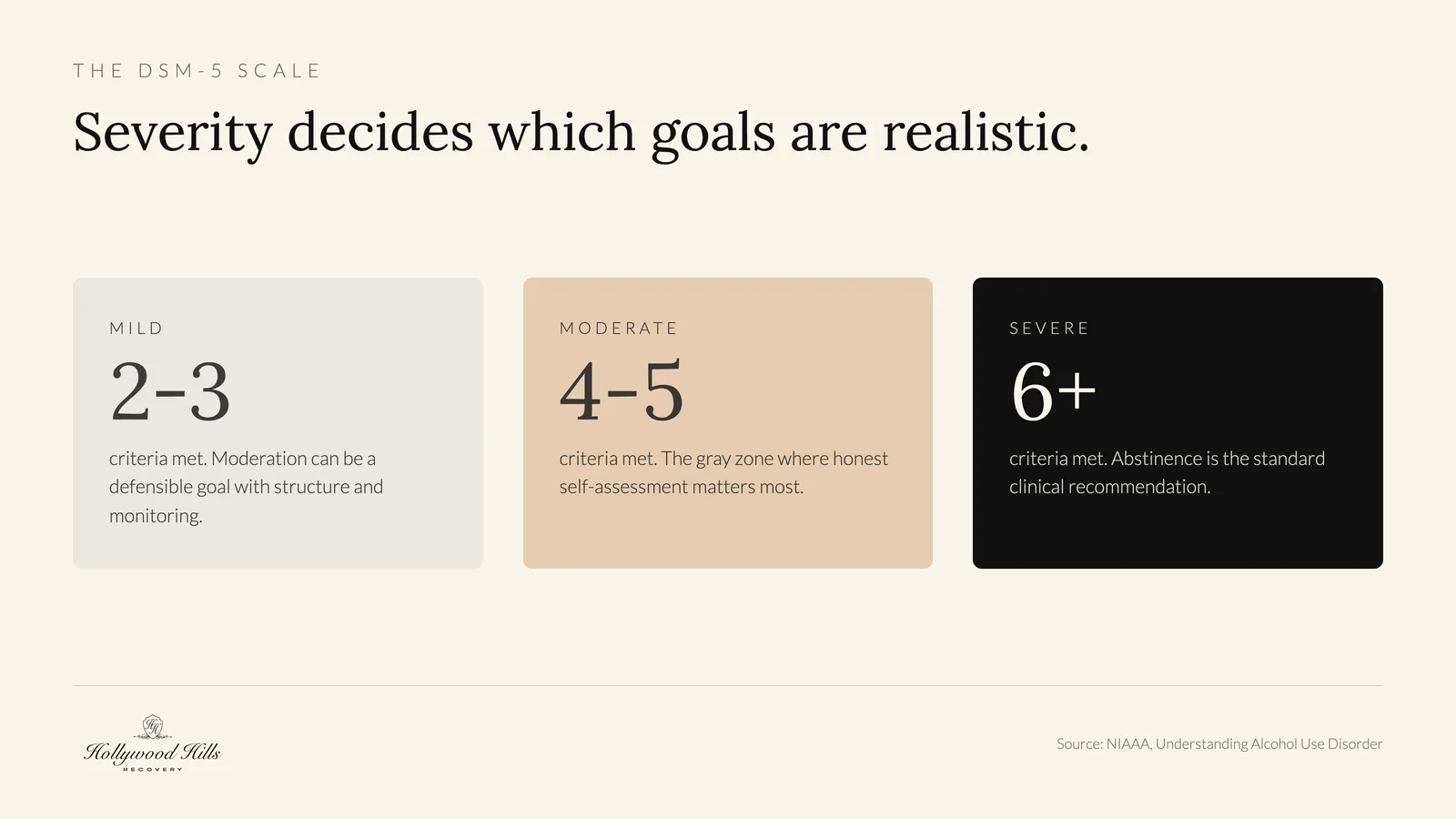
Answering yes to even 2 of these points toward dependence, and dependence responds to treatment, not to tighter rules.
What Works Instead of Moderation?
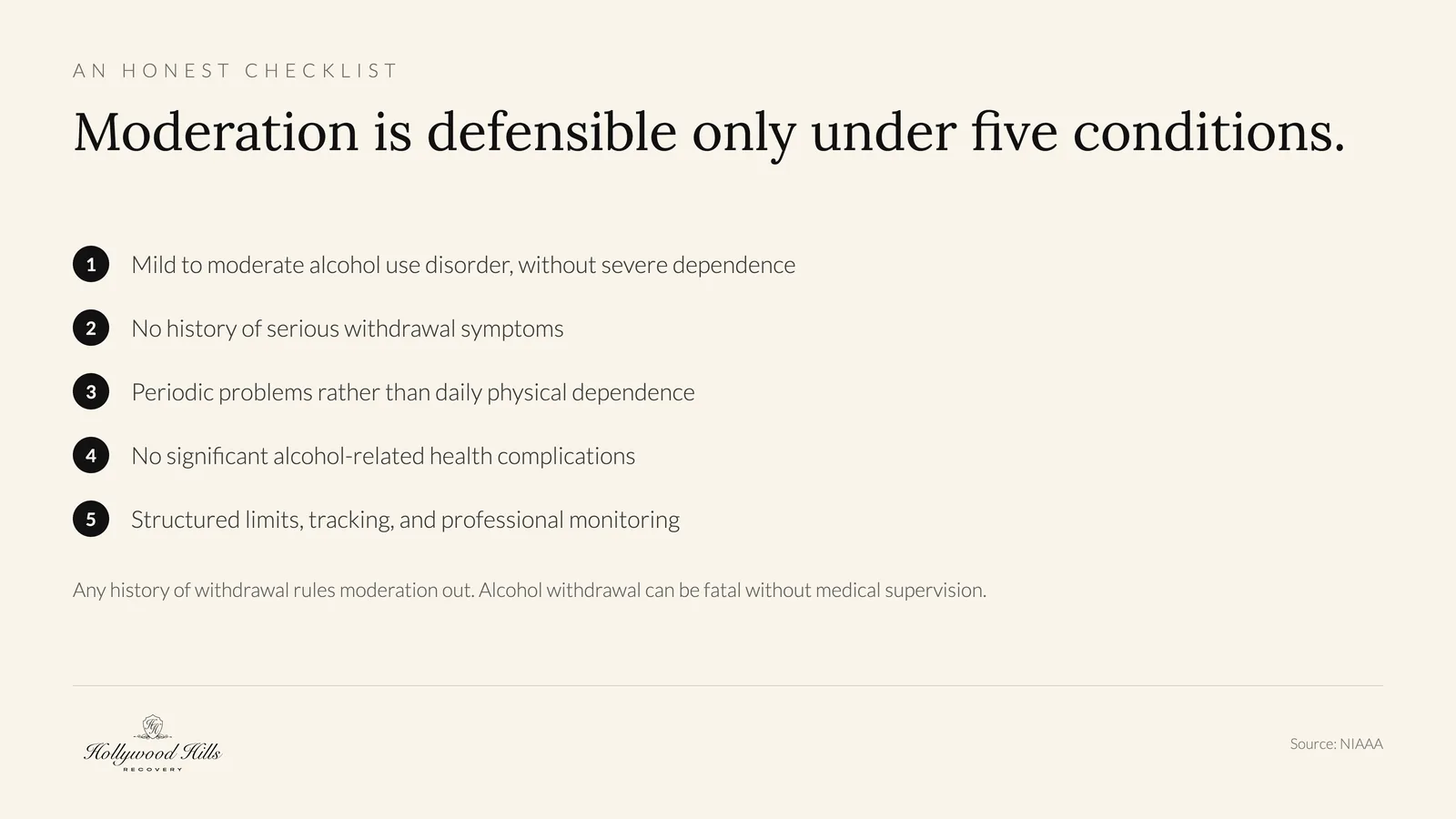
Abstinence supported by structured treatment works where moderation fails, because it removes the trigger instead of negotiating with it.
At Hollywood Hills Recovery that path usually starts with medically supervised detox, because stopping alcohol abruptly after heavy use can be dangerous without clinical care. From there, our residential treatment program rebuilds the daily life that drinking organized, and our dual diagnosis program treats the anxiety, depression, or trauma that moderation attempts were often medicating.
The related work of building a sober routine matters just as much, which I covered in what does structure in early recovery actually look like.
What I Accepted in Recovery
I accepted that I am not a person who can drink, and that acceptance ended a fight I had been losing for years. Moderation asked me to win the same battle every single day. Abstinence asked me to win it once, each morning, with help.
If your own experiments with moderation keep failing, that is not weakness. It is data. Our admissions team answers 24/7 at (323) 709-7856, and a real person picks up.