Substance use disorder among executives is disproportionate, underreported, and consistently undertreated by programs not designed for this population. The financial, clinical, and market evidence converges on the same conclusion: boutique residential programs that combine rigorous clinical protocols, advanced neuromodulation, and operational design suited to high-performing professionals deliver outcomes that standard treatment cannot match.
Our incredible intake team is ready to answer all your questions and guide you through the process.
How High-Pressure Careers Drive Substance Abuse and Why Boutique Inpatient Treatment Closes the Gap
Executive Summary
Executives and high-earning professionals face substance use disorder at rates significantly above the national average: yet they are among the least likely to enter treatment. This report examines the scope of that gap, the structural reasons it persists, and the clinical model that closes it.
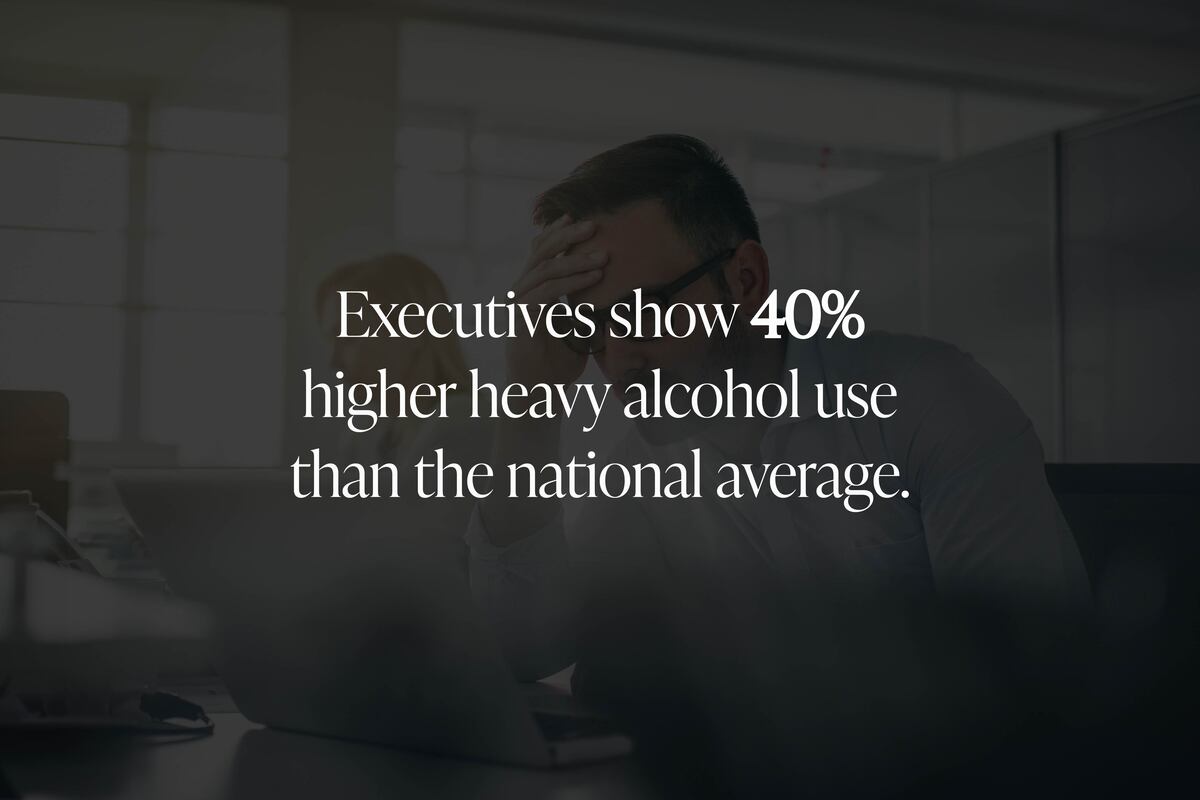
3 Key Statistics: Executives show 40% higher heavy alcohol use than the national average [1]. Untreated executive addiction costs employers $14,374 per worker annually [4]. Neurofeedback produced 77% abstinence at 13 months versus 44% in control groups [6].
Section 1: How Prevalent Is Substance Abuse Among Executives?
Executives Rank Among the Highest-Risk Occupational Groups
SAMHSA data places management occupations near the top of every substance use category tracked by the National Survey on Drug Use and Health.
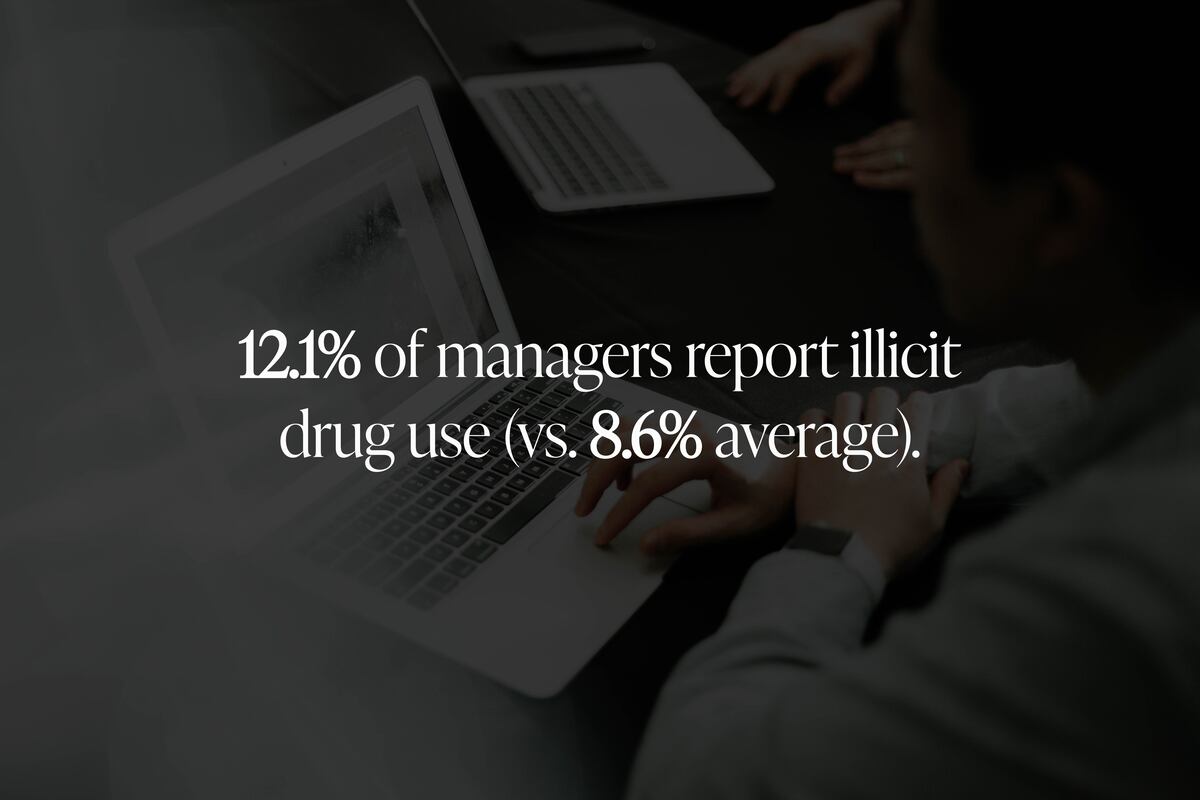
12.1% of managers reported past-month illicit drug use: the 3rd highest rate of any occupational category (vs. 8.6% average) [2]
Heavy alcohol use among managers runs at 9.5%, above the 8.7% cross-occupational average [2]
C-suite professionals (CEOs, CFOs, similar roles) show approximately 9% alcohol problem rates [7]
21% of lawyers and judges report problematic alcohol use: the highest rate of any white-collar profession [7]
Income Amplifies Risk
High earnings do not protect against addiction. They often accelerate it.
Individuals earning over $75,000 annually are twice as likely to engage in heavy drinking as lower-income populations, per NIAAA data [3]
Illicit drug use among professionals earning more than $50,000 per year rose approximately 60% between 2002 and 2015 [7]
The technology sector: heavily concentrated in California: shows 11.7% illicit drug use among employees, one of the highest white-collar rates [10]
Section 2: Why Do High-Pressure Careers Create Elevated Addiction Risk?
3 Structural Risk Factors Specific to Executive Life
The conditions of executive work create a distinct addiction risk profile that differs from other populations in three ways:
Sustained cortisol exposure from years of high-stakes decision-making suppresses prefrontal cortex function (impulse control) while amplifying reward-seeking circuitry
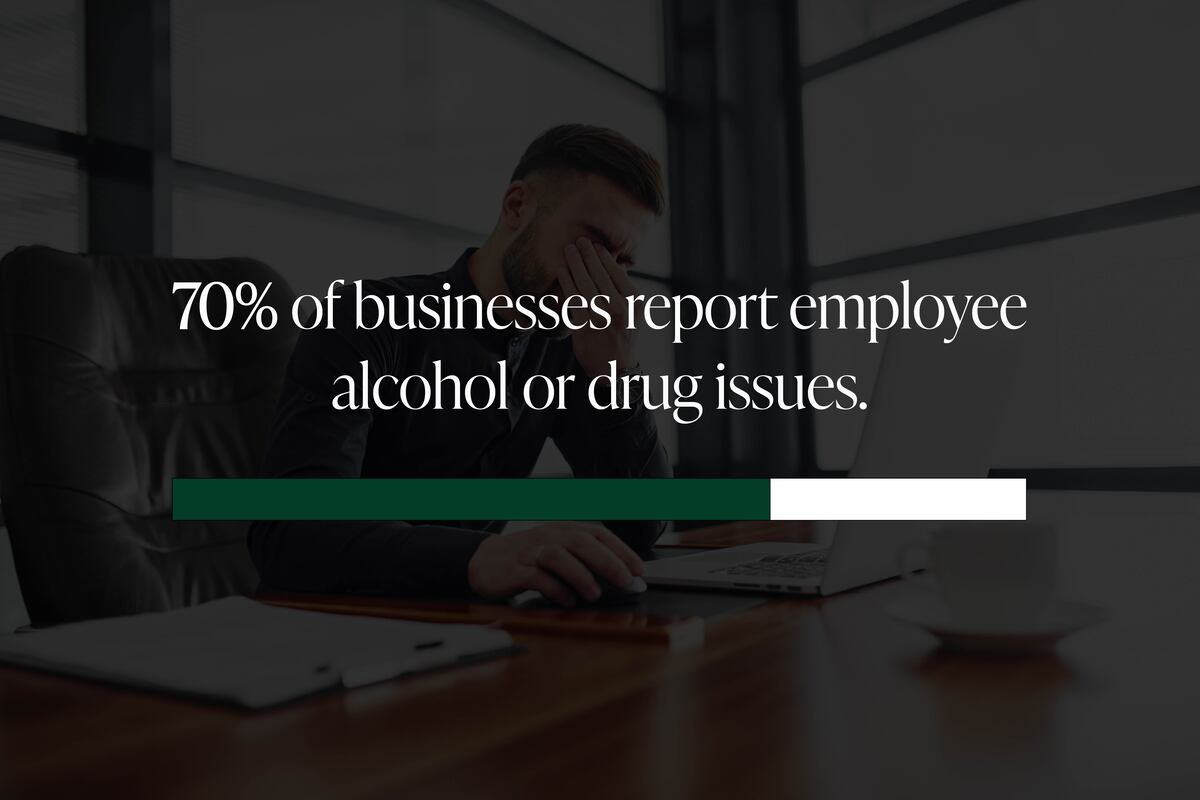
Business entertainment culture normalizes escalating alcohol intake at client dinners, conferences, and networking events: approximately 70% of professional businesses report employee issues with alcohol or prescription drugs [7]
Professional isolation and the expectation of visible strength deter disclosure and help-seeking in environments where vulnerability is perceived as weakness
Financial Resources Create Delayed Consequences
Unlike other populations, executives rarely experience the external shocks: job loss, financial crisis, legal trouble: that prompt treatment-seeking in most addiction cases. Financial insulation allows dysfunction to persist longer before reaching a visible threshold.
Section 3: What Is the True Cost of Untreated Executive Addiction?
The Employer-Side Financial Case Is Unambiguous
The National Safety Council quantified the per-worker cost of untreated SUDs by occupational segment.
In high-salary sectors (executives, managers, finance), untreated SUD costs employers $14,374 per affected worker annually [4]
Workers in recovery in these same occupations cost employers $13,000 to $15,000 less per year than peers with active untreated disorders [4]
The 2024 NSDUH found that only 19.3% of adults who need treatment receive any: meaning roughly 4 in 5 people with a diagnosable SUD go untreated each year [8]
Standard Programs Are Not Built for This Population
Community-based treatment models create friction that prevents executive treatment-seeking: group settings without confidentiality controls, visible admissions to publicly known facilities, and rigid schedules that make 30-to-90-day absences professionally untenable for senior leaders.
Section 4: What Does the Rehabilitation Market Look Like in 2025?
The Market Is Growing Rapidly
Global addiction rehab facilities market: $19.02 billion in 2024, projected to reach $30.26 billion by 2029 at a 9.7% CAGR [5]
U.S. addiction treatment market: $2.44 billion in 2024, growing to $4.31 billion by 2034 at 5.85% CAGR [12]
Inpatient and residential centers are the fastest-growing treatment segment within the broader market [5]
Standard residential treatment costs $2,000 to $25,000 per month; luxury programs can reach $80,000 per month [13]
California Represents the Epicenter of Premium Treatment Demand
More than 5 million Californians need addiction treatment, yet only 10% receive care: the largest treatment gap of any state by volume [14]. Los Angeles's concentration of entertainment, technology, and finance professionals makes it both the highest-need and highest-demand market for private specialized residential care.
Section 5: What Role Does Neuromodulation Play in Executive Recovery?
TMS Reduces Craving at the Neurological Level
Transcranial Magnetic Stimulation targets the dorsolateral prefrontal cortex: the brain region governing executive control and impulse regulation: using electromagnetic pulses to rebalance circuitry that addiction disrupts.
A 2024 meta-analysis in Neuropsychopharmacology reviewed 94 studies and identified clinically relevant effect sizes for rTMS across alcohol, cocaine, opioid, and stimulant use disorders [15]
High-frequency TMS produced a 50% reduction in alcohol and nicotine craving scores in one study [17]
Deep TMS showed a standardized mean craving reduction of -1.26 (p < .001) in a 2025 systematic review [18]
Neurofeedback Delivers the Strongest Long-Term Abstinence Outcomes
Neurofeedback uses real-time EEG display to train self-regulation of alpha and theta brainwaves implicated in craving and emotional dysregulation.
A 2026 meta-analysis in Addiction (17 RCTs, 662 participants) found neurofeedback significantly reduced addiction symptoms with a Hedges' g of 0.85 (p < .001) [19]
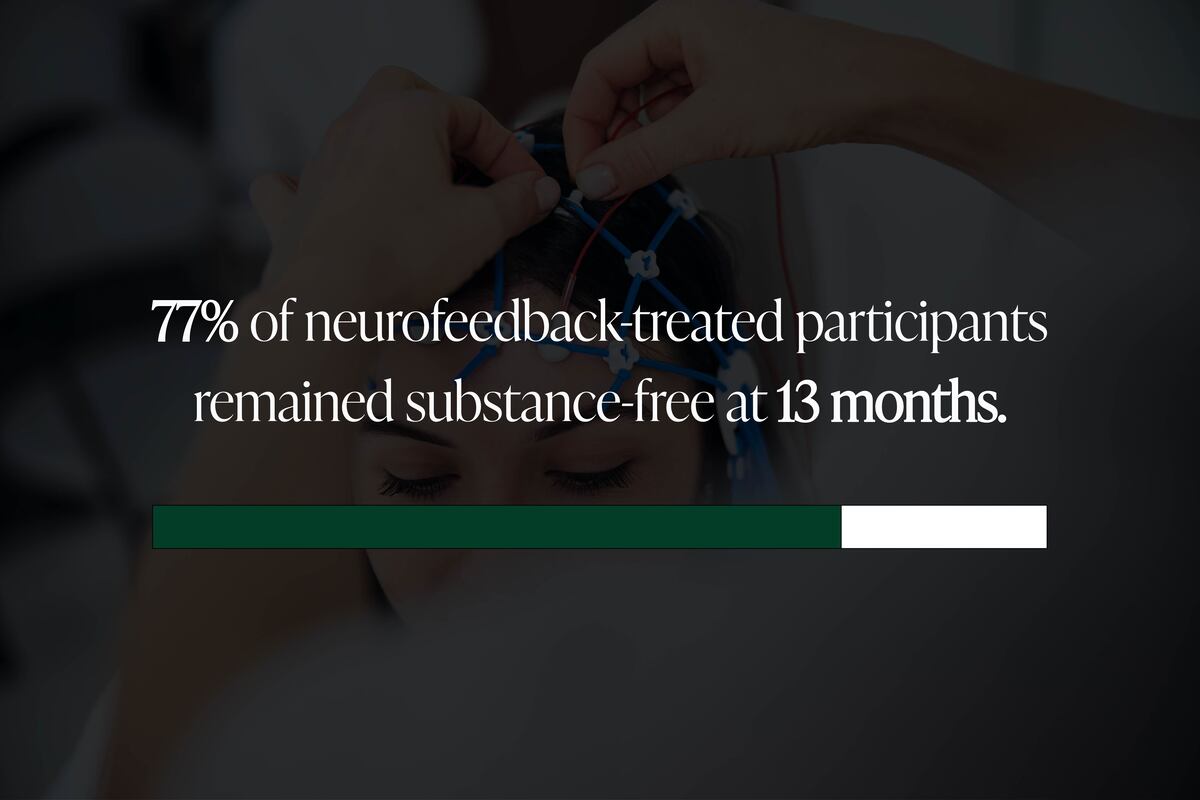
77% of neurofeedback-treated participants remained substance-free at 13 months versus 44% in control groups: a 33-point differential [6]
Non-invasive design, no pharmacological side effects, and compatibility with professional function during treatment make it well-matched to executive recovery requirements
Section 6: How Does Hollywood Hills Recovery Address the Executive Gap?
Clinical Credentials and Program Design
Hollywood Hills Recovery operates as a Joint Commission-accredited, DHCS-licensed residential facility at ASAM Level 3.7: medically monitored intensive inpatient care.
TMS and neurofeedback integrated into individualized treatment plans alongside CBT, DBT, and medication-assisted detox
Dual diagnosis program for co-occurring disorders (depression, anxiety, PTSD) that frequently accompany executive SUD presentations
Low-census boutique setting with on-site chef, fitness training, chiropractic care, and somatic wellness programming that supports neurological recovery alongside clinical treatment
Private insurance accepted through most major carriers, with benefits verification available
Residential settings are uniquely equipped to deliver integrated, sequenced treatment protocols across the neurologically critical early recovery window. The ability to combine TMS, neurofeedback, behavioral therapy, and wellness programming in structured daily succession: rather than fragmented outpatient appointments: is a clinical advantage specific to the inpatient model.
Looking Ahead: 3 Trends Shaping Executive Addiction Care Through 2030
Neuromodulation will transition from adjunct to standard of care as multi-site clinical trials (including Yale's ongoing inpatient TMS study) generate the evidence base required for widespread clinical adoption [16]
Employer-funded executive treatment pathways will expand as the NSC's documented $13,000+ per-worker ROI on executive recovery drives corporate EAP investment toward boutique residential options [4]
Insurance parity pressure will reduce out-of-pocket cost differentials, shifting the primary differentiator from price to documented clinical outcomes
Conclusion
Substance use disorder among executives is disproportionate, underreported, and consistently undertreated by programs not designed for this population. The financial, clinical, and market evidence converges on the same conclusion: boutique residential programs that combine rigorous clinical protocols, advanced neuromodulation, and operational design suited to high-performing professionals deliver outcomes that standard treatment cannot match.
[4] National Safety Council. "Substance Use Disorders by Occupation." nsc.org. Employer cost by occupational segment.
[5] The Business Research Company / Research and Markets. "Addiction Rehab Facilities Global Market Report." $19.02B (2024) to $30.26B (2029). researchandmarkets.com.
[6] Marzbani H et al. "Neurofeedback: A Comprehensive Review." 2016. 77% vs 44% abstinence at 13 months. Via rightchoicerecoverynj.com (March 2025).
“The reason for our success is no secret. It’s our simple commitment to fully understanding your struggle and to provide you the most comprehensive, guilt-free treatment you deserve.”
We work with most major insurance carriers. To find out your coverage options, fill out the form below and one of our admissions representatives will contact you as soon as possible.
Thank you for reaching out! One of our representatives will be in touch with you shortly.
Oops! Something went wrong while submitting the form.