Table of Contents
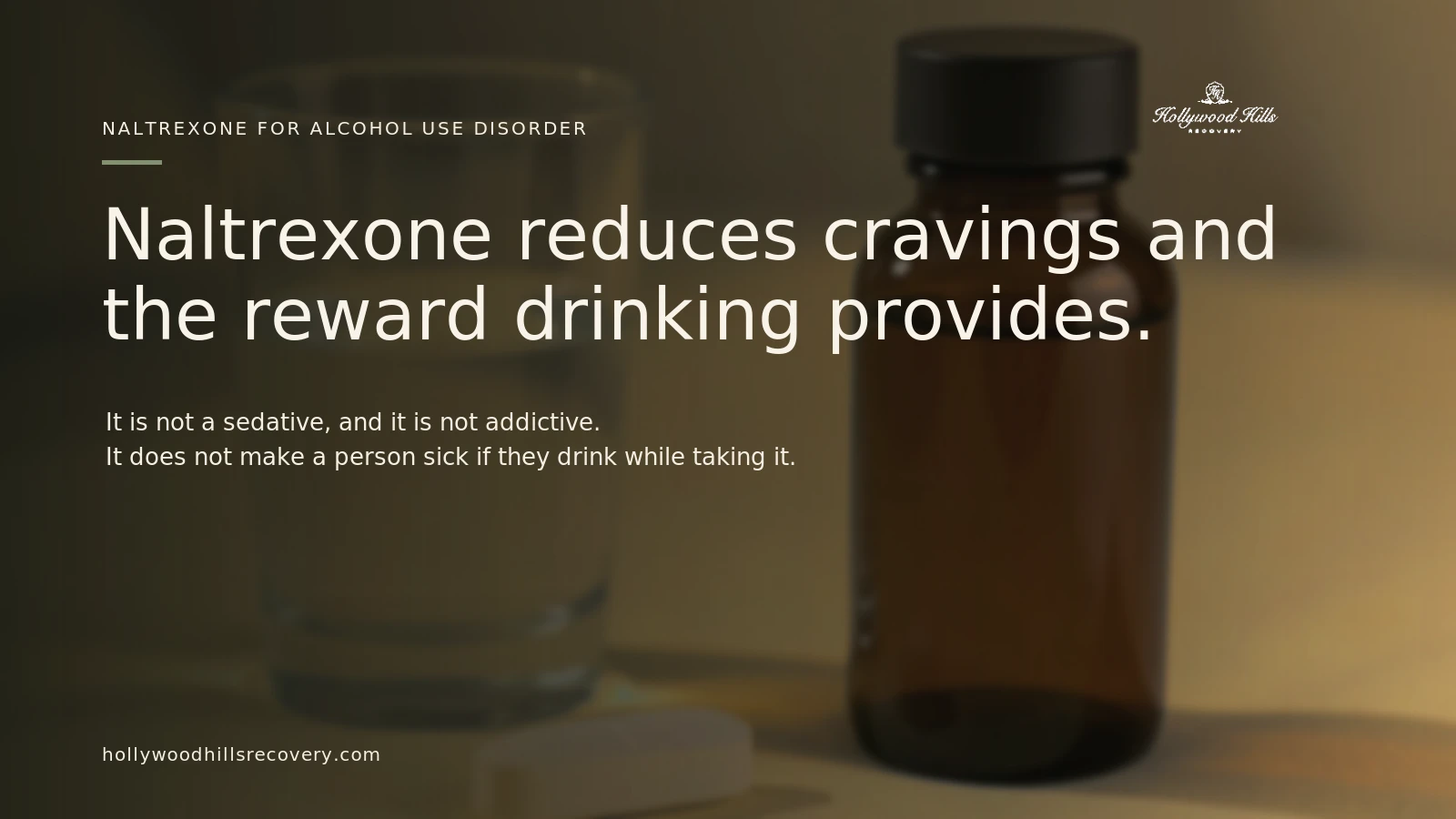
Naltrexone is an FDA-approved medication for alcohol use disorder that blocks opioid receptors involved in alcohol’s rewarding effects. It reduces cravings and the reinforcement drinking provides. It is not a sedative, it is not addictive, and it does not cause a reaction if a person drinks while taking it.
How Does Naltrexone Work?
Alcohol triggers endorphin release, and those endorphins bind to opioid receptors to produce the pleasurable effect that reinforces drinking. Naltrexone occupies those receptors and blunts the response.
The practical result is 2 changes.
-
Reduced craving intensity between drinking episodes.
-
Reduced reward from alcohol when drinking does occur.
What Are the 2 Formulations?
Naltrexone is available in 2 forms with different adherence profiles.
-
Oral tablets, taken daily, typically 50 milligrams.
-
Extended-release injection, administered monthly by a clinician.
The monthly injection removes the daily decision to take a dose, which is why it is often preferred for patients who have struggled with adherence.
Who Is a Candidate for Naltrexone?
Candidates are adults with alcohol use disorder who are not currently taking opioids. Screening covers 4 areas.
-
Current opioid use, since naltrexone can precipitate opioid withdrawal.
-
Liver function, evaluated through baseline labs.
-
Pregnancy status.
-
Current or planned use of opioid pain medication.
Patients scheduled for surgery need a plan, since opioid pain management is blocked while naltrexone is active.
Do You Have to Stop Drinking First?
Not necessarily. Some protocols start naltrexone during abstinence, while others begin it while a person is still drinking. Both approaches appear in clinical practice, and the choice depends on the treatment plan and the prescriber’s judgment.
What Are the Common Side Effects?
Five side effects are reported most frequently.
-
Nausea, most common during the first week.
-
Headache.
-
Fatigue or drowsiness.
-
Dizziness.
-
Injection site reactions with the extended-release form.
Most side effects diminish within 1 to 2 weeks. Liver enzymes are monitored periodically, particularly in patients with existing liver conditions.
How Effective Is Naltrexone?
Naltrexone reduces heavy drinking days and supports abstinence in clinical trials, with the strongest results appearing when medication is paired with counseling rather than used alone. Response varies between individuals, and some patients see little effect.
It is one of 3 FDA-approved medications for alcohol use disorder, alongside acamprosate and disulfiram, each working through a different mechanism.
What Should Patients Know Before Starting?
Four practical points come up in nearly every consultation.
-
Carry a card or wear identification noting naltrexone use, since it affects emergency pain management.
-
Tell every prescriber, including dentists and surgeons.
-
Do not attempt to override the blockade with higher opioid doses, which is dangerous.
-
Expect the effect to build over weeks rather than appear on day one.
Patients who understand these points before the first dose stay on the medication longer than those who encounter them by surprise.
How Does It Fit Into a Treatment Plan?
Medication addresses craving and reward, while therapy addresses the patterns, triggers, and underlying conditions that sustain drinking. Combining both produces better outcomes than either alone.
The broader medication-assisted treatment framework is explained in what is MAT. Craving management strategies appear in how to stop alcohol cravings in early recovery, and treatment options are outlined on our alcohol addiction page.
Frequently Asked Questions
Does naltrexone make you sick if you drink?
No. That reaction describes disulfiram, a different medication. Naltrexone reduces the reward from alcohol rather than causing an aversive physical reaction.
How long do people stay on naltrexone?
Treatment commonly continues for 3 to 12 months, and some patients remain on it longer. Duration is a clinical decision revisited at follow-up rather than a fixed course.
Can you take naltrexone with antidepressants?
Yes, in most cases. Naltrexone is frequently prescribed alongside antidepressants, and the prescribing clinician reviews the full medication list for interactions before starting.
Is naltrexone addictive?
No. Naltrexone produces no euphoria, no tolerance, and no withdrawal on discontinuation. It is an opioid antagonist, which is the functional opposite of an opioid.