Table of Contents
Kratom withdrawal usually begins 12 to 24 hours after the last dose, peaks between days 2 and 4, and resolves substantially within 7 to 10 days. Symptoms resemble opioid withdrawal because kratom’s active compounds act on opioid receptors. Severity tracks with daily amount and duration of use.
Why Does Kratom Produce Withdrawal?
Kratom contains mitragynine and 7-hydroxymitragynine, alkaloids that bind to opioid receptors in the brain. Regular use produces physical dependence, and stopping triggers a withdrawal response through the same mechanism seen with opioid medications.
Kratom is sold without prescription in much of the United States, which leads many people to assume dependence is not possible. Physical dependence develops regardless of legal status.
What Is the Kratom Withdrawal Timeline?
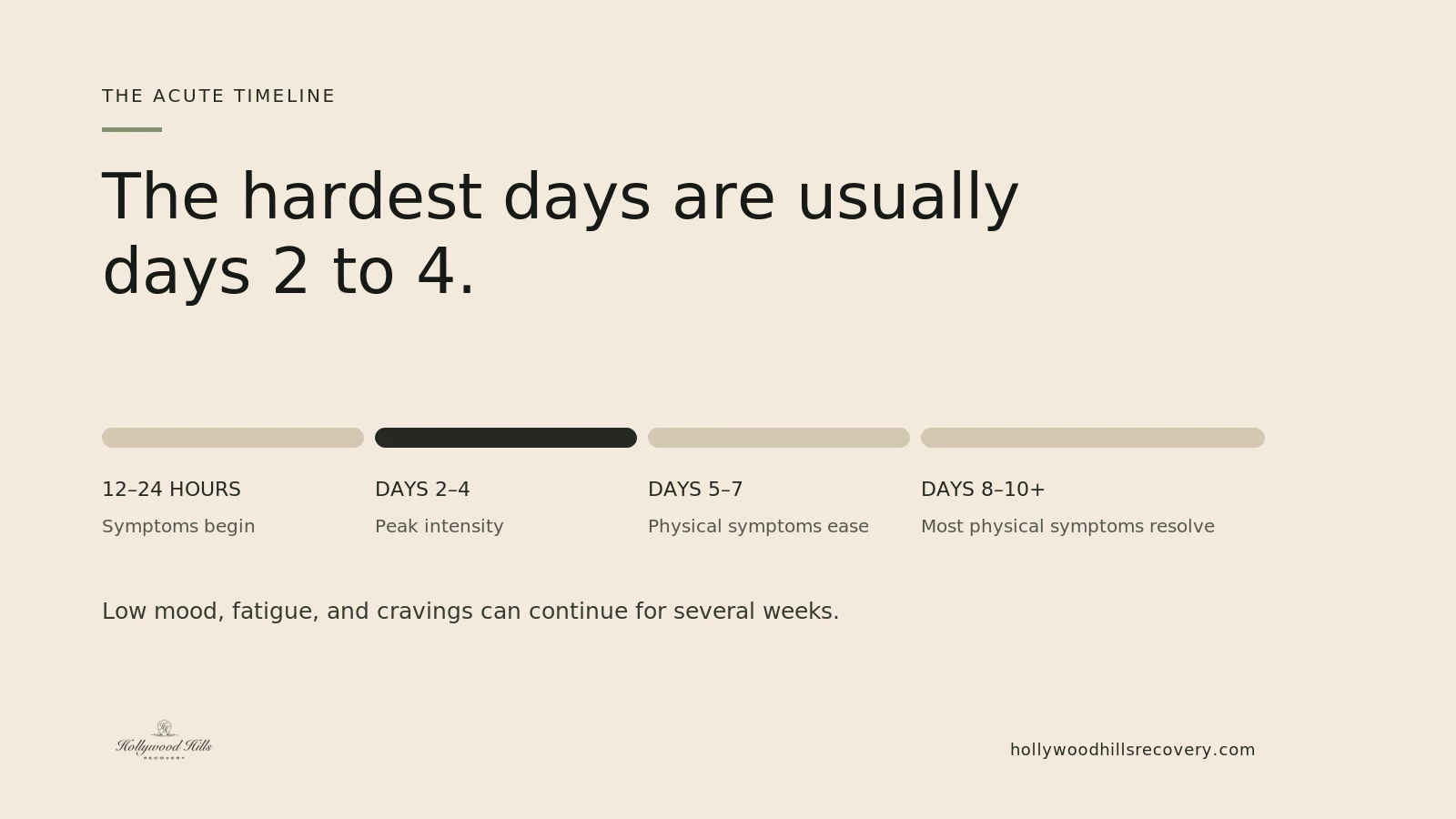
Withdrawal follows a predictable 4-stage course.
-
Hours 12 to 24: restlessness, anxiety, runny nose, and cravings begin.
-
Days 2 to 4: peak intensity, with muscle aches, sweating, nausea, insomnia, and irritability.
-
Days 5 to 7: physical symptoms ease while sleep disruption and low mood persist.
-
Days 8 to 10 and beyond: most physical symptoms resolve, and mood and energy continue recovering.
Some people experience protracted symptoms including low mood, fatigue, and cravings for several weeks after the acute phase ends.
What Are the Most Common Withdrawal Symptoms?
Symptoms fall into 3 categories.
-
Physical: muscle aches, joint pain, sweating, chills, runny nose, nausea, diarrhea, tremor.
-
Psychological: anxiety, irritability, low mood, difficulty concentrating.
-
Sleep related: insomnia, vivid dreams, restless legs.
Symptom overlap with opioid withdrawal is close enough that clinicians treat it with similar supportive protocols. Background on receptor effects appears in what are opioids and how do they affect the body.
What Factors Affect Severity?
Five variables determine how difficult withdrawal will be.
-
Daily amount used and how long use has continued.
-
Frequency of dosing throughout the day.
-
Product potency, which varies widely across unregulated products.
-
Concurrent use of alcohol, benzodiazepines, or opioids.
-
Existing mental health conditions.
Polysubstance use is the most important of the 5, since combined withdrawal carries risks that kratom alone does not.
Why Does Medical Supervision Matter?
Kratom withdrawal is rarely dangerous on its own, but 3 situations make supervision important.
-
Combined dependence on alcohol or benzodiazepines, where withdrawal can become life threatening.
-
Existing cardiac, liver, or seizure conditions.
-
Severe dehydration from prolonged vomiting or diarrhea.
Supervised withdrawal also improves completion rates, since the peak days are where most attempts fail. What that process involves is covered in what to expect in detox.
How Is Withdrawal Managed Clinically?
Clinical management is supportive and targets symptoms as they appear. Five elements are standard.
-
Hydration and electrolyte replacement.
-
Non-opioid medications for muscle aches and nausea.
-
Medications supporting sleep during the peak days.
-
Monitoring of blood pressure and heart rate.
-
Assessment for co-occurring mental health conditions.
Some clinicians use medications typically prescribed for opioid withdrawal, since the symptom profile is closely comparable.
What Comes After Withdrawal?
Withdrawal management addresses the physical dependence, not the reasons use started. Many people begin kratom to manage pain, opioid withdrawal, anxiety, or fatigue, and those drivers remain after symptoms clear.
Treatment approaches for opioid receptor dependence are outlined on our opioid addiction page. Whether dependence rises to addiction is discussed in is kratom addictive.
Frequently Asked Questions
How long do kratom cravings last?
Acute cravings ease within 1 to 2 weeks, while situational cravings can surface for months. Cravings triggered by stress, pain, or specific routines typically fade as new patterns replace the old ones.
Can you taper off kratom instead of stopping abruptly?
Tapering reduces withdrawal intensity for many people and is often done under clinical guidance. Self-managed tapers frequently stall because product potency is inconsistent, which makes accurate step-downs difficult.
Does kratom show up on a standard drug test?
Standard 5-panel and 10-panel tests do not detect kratom alkaloids. Specialized panels exist and are used in some clinical and employment settings.
Is kratom withdrawal dangerous?
Kratom withdrawal alone is generally not life threatening, though it is physically demanding. Risk rises significantly with concurrent alcohol or benzodiazepine dependence, dehydration, or untreated medical conditions.