Table of Contents
I’m Nick, co-founder and co-owner of Hollywood Hills Recovery, and I waited until I was on a floor in North Hollywood with sirens outside the door. I have been sober since July 20, 2018.
This is my account of that morning, paired with what federal data actually shows about when people enter treatment and what happens to the ones who wait.
What Happened the Morning I Decided to Get Sober
My turning point happened near Lankershim and Tuxford, directly across the street from a treatment center I did not know was there.
I was on the floor, high, when I heard ambulances and police sirens and then saw the officers walk in. Every prior version of that scene in my life had ended the same way.
My path had always been the same: I was getting arrested and going to jail.
That is not what happened. An officer crouched down, handed me a bottle of water, and asked if I was thirsty.
I looked up and told him there was no way I was not going to jail that day. But I didn’t go to jail. I took the man’s water. To me, he wasn’t a police officer in that moment. He was a man who saw a soul - a human being struggling and wanting a better life.
Why the Bottle of Water Matters More Than the Cliche
I describe that day as the moment I became sick and tired of being sick and tired, and I’m the first to admit that phrase is a cliché. What actually moved me was smaller and stranger than a dramatic collapse: someone with the power to punish me chose not to.
That distinction matters, because the popular story about addiction says people change when things get bad enough. My story taught me that people change when a door opens at the exact moment they are willing to look at it.
How Many People Actually Get Treatment When They Need It?
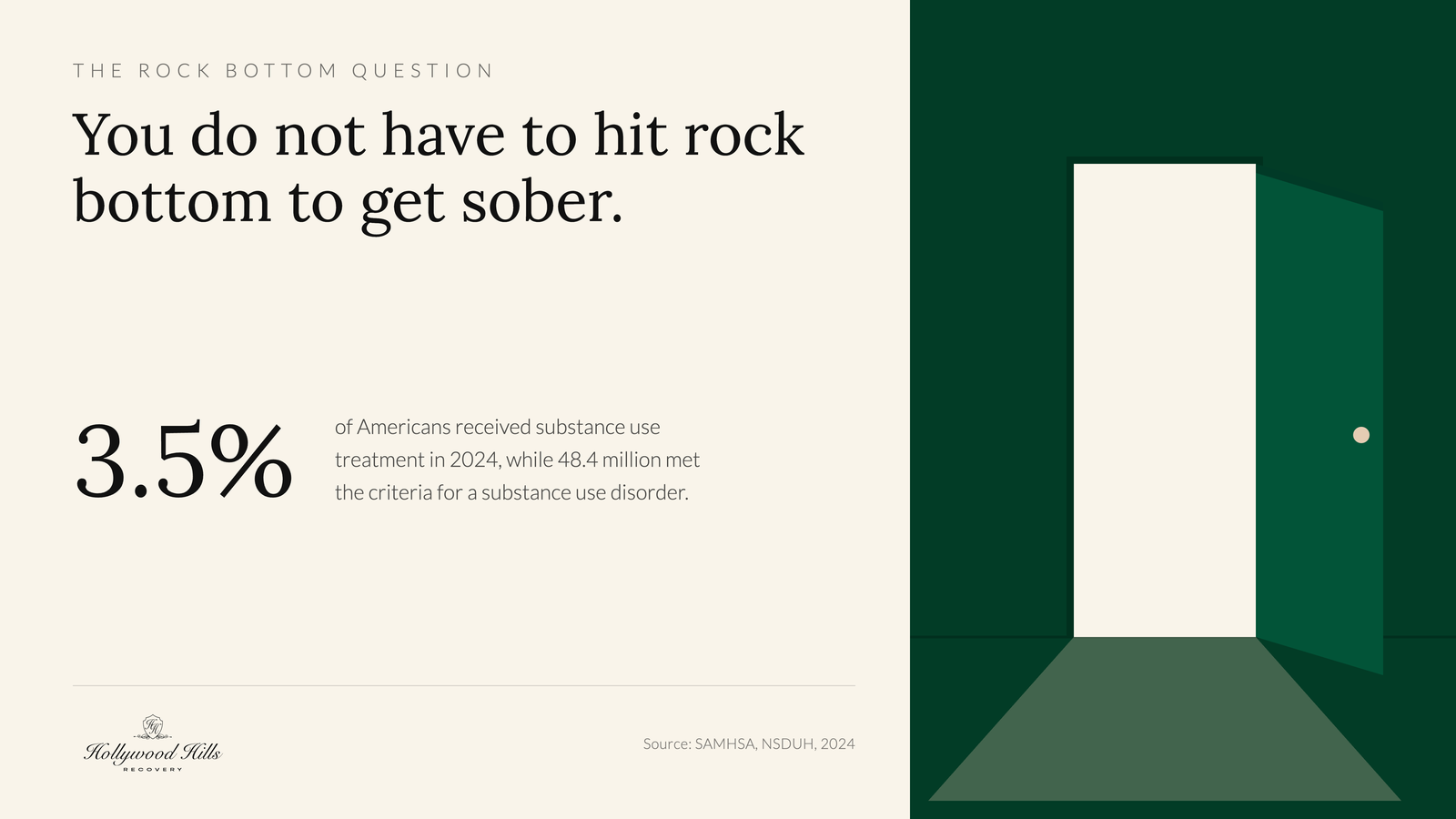
According to SAMHSA, only 3.5% of Americans aged 12 and older received substance use treatment in 2024. The gap between need and care is enormous.
The four figures below all come from the same source, SAMHSA’s 2024 National Survey on Drug Use and Health.
- 48.4 million Americans, or 16.8% of the population aged 12 and older, met the criteria for a substance use disorder in 2024.
- 10.2 million people received any substance use treatment in the past year, down from 13.1 million in 2023.
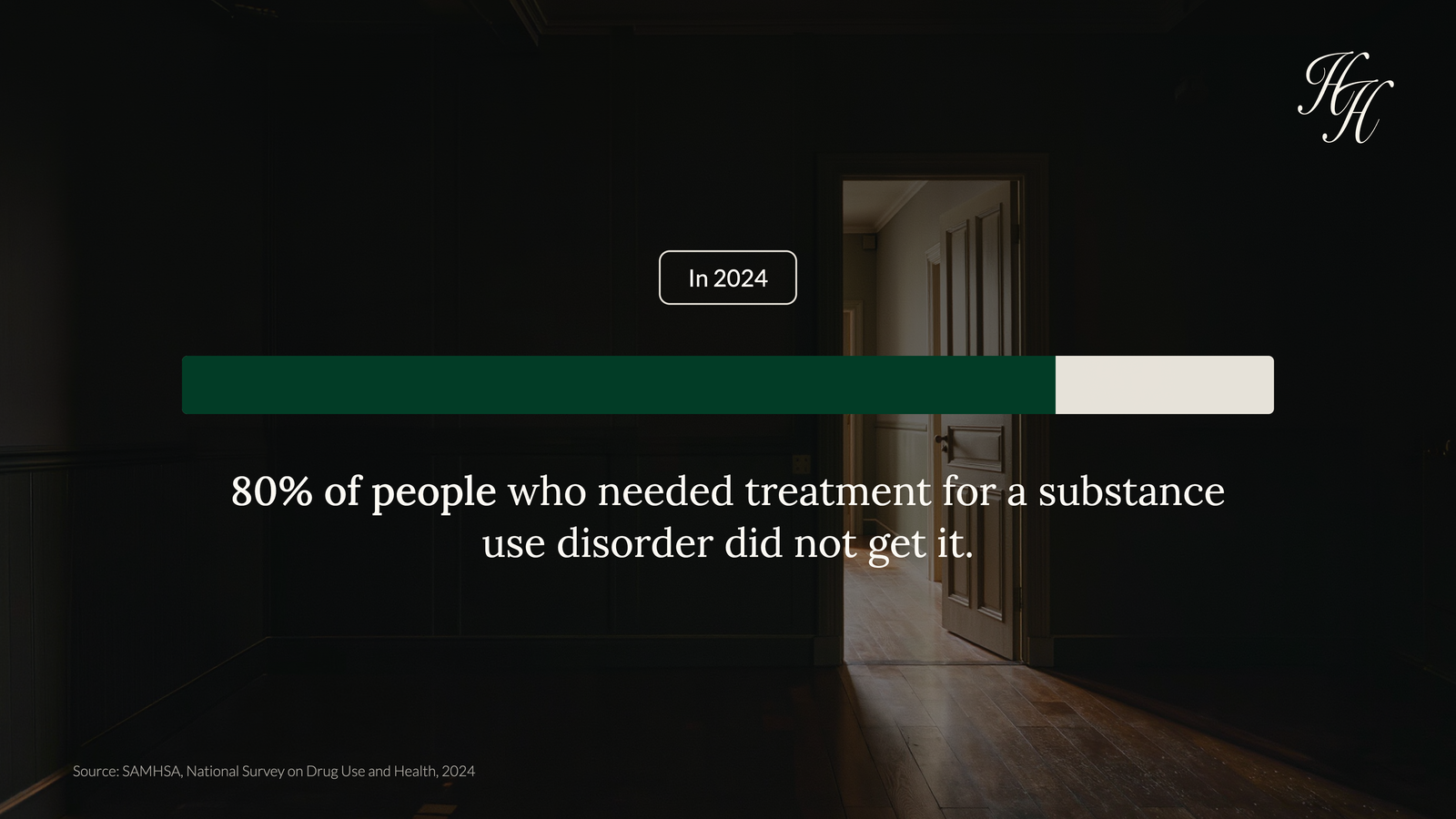
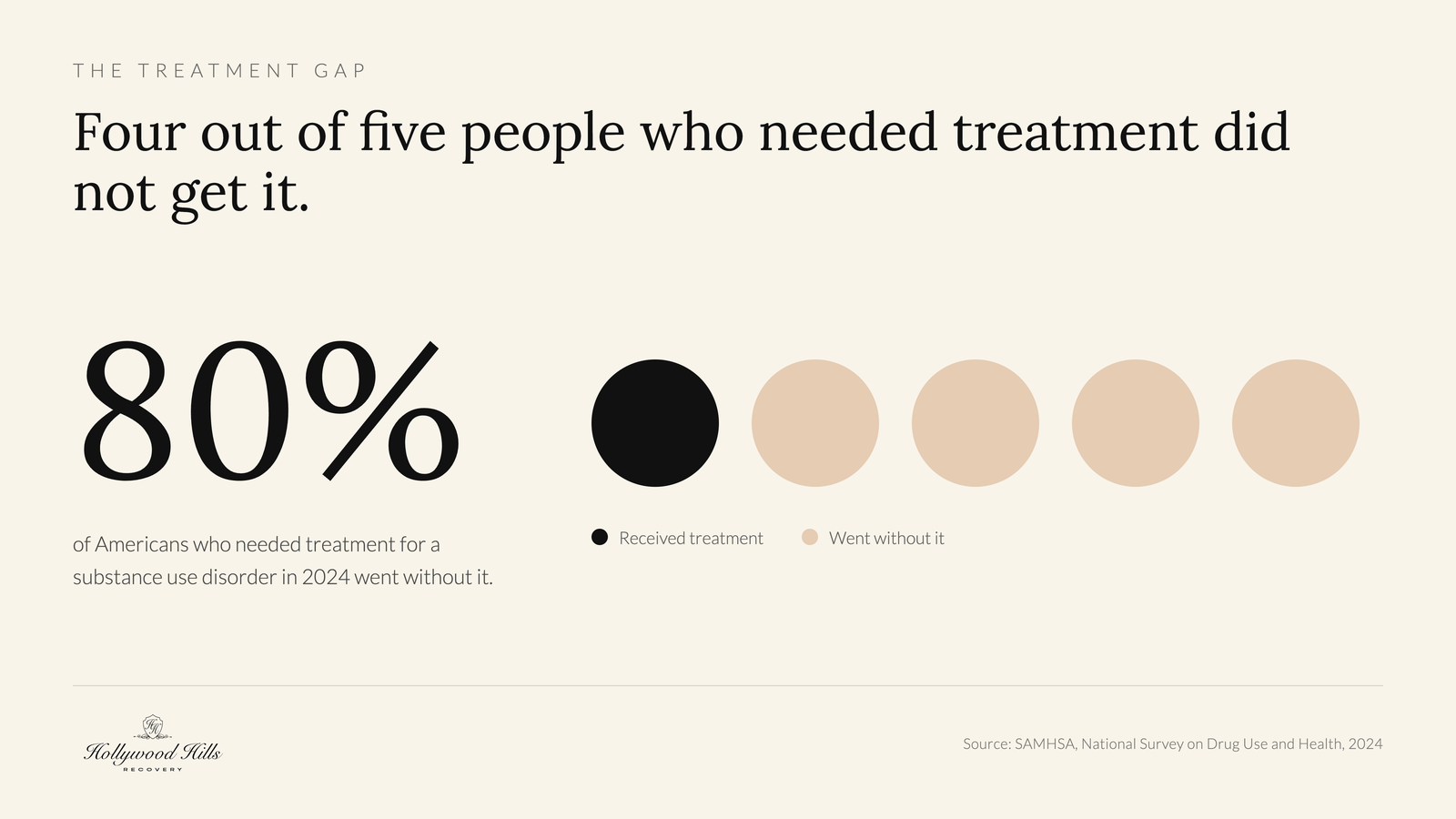
- 80% of people who needed treatment for a substance use disorder in 2024 did not get it.
- 1.8 million adults with an untreated substance use disorder said they felt they should have received help.
What Keeps 4 Out of 5 People From Getting Care
Four barriers show up repeatedly in the federal data and in the admissions calls we receive at Hollywood Hills Recovery:
- Stigma around being identified as someone who needs treatment.
- Cost, and uncertainty about whether insurance covers residential care.
- Lack of knowledge about what programs exist and how to enter one.
- Belief that the problem has not gotten bad enough yet to justify help.
That fourth barrier is the rock bottom myth doing damage in real time. If you are waiting for permission in the form of catastrophe, you are choosing a strategy with a measurable failure rate.
What Is the Actual Risk of Waiting for Rock Bottom?
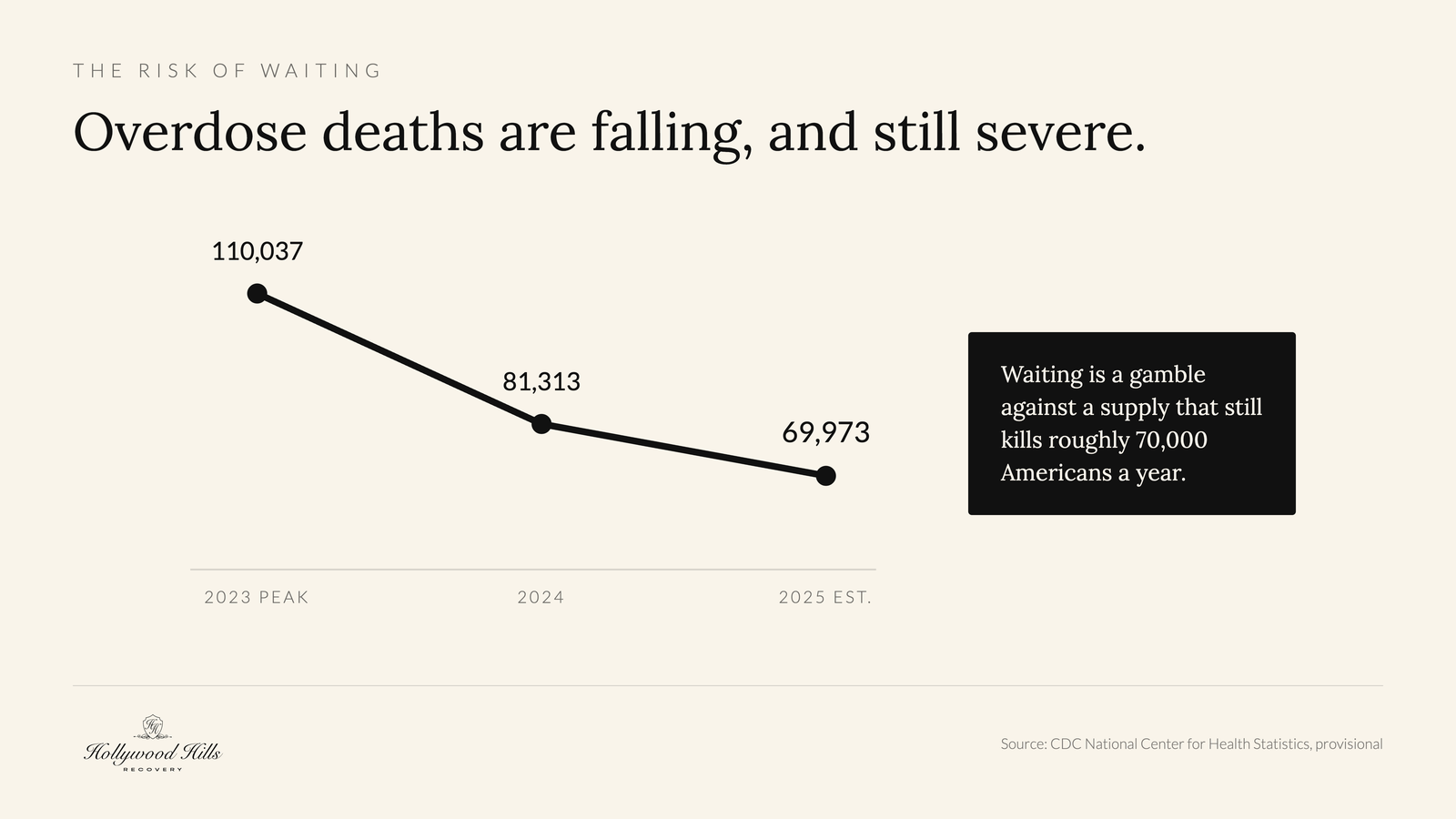
Waiting is a gamble against a drug supply that kills roughly 70,000 Americans a year. Overdose deaths have fallen sharply for three consecutive years, and the numbers are still severe.
According to the CDC National Center for Health Statistics, provisional overdose death counts break down as follows.
- An estimated 69,973 Americans died of drug overdose in 2025, down almost 14% from 81,313 in 2024.
- Overdose deaths peaked at an estimated 110,037 in 2023, the deadliest year on record.
- Opioid-involved overdose deaths fell from an estimated 55,296 in 2024 to 44,564 in 2025.
- Overdose remains the leading cause of preventable death for U.S. adults under 45.
Rock Bottom Is Not a Fixed Floor
The problem with rock bottom as a concept is that it has no defined depth. For some people it is a job loss. For others it is an overdose that ends the story. My floor happened to have a police officer standing over it who chose water instead of handcuffs. That is not a plan. That is luck.
If you are struggling with opioid addiction, the supply itself has become the variable you cannot control.
Do Turning Points Come From Punishment or From an Open Door?
Turning points come from open doors far more reliably than from punishment, and law enforcement agencies have spent the last decade building that finding into policy.
Programs that route people toward treatment instead of jail are called deflection or pre-arrest diversion. According to the Police, Treatment, and Community Collaborative, the national association for the field, six distinct deflection pathways are now in use by law enforcement agencies across the country, including self-referral, active outreach, and officer referral.
What the Deflection Research Shows
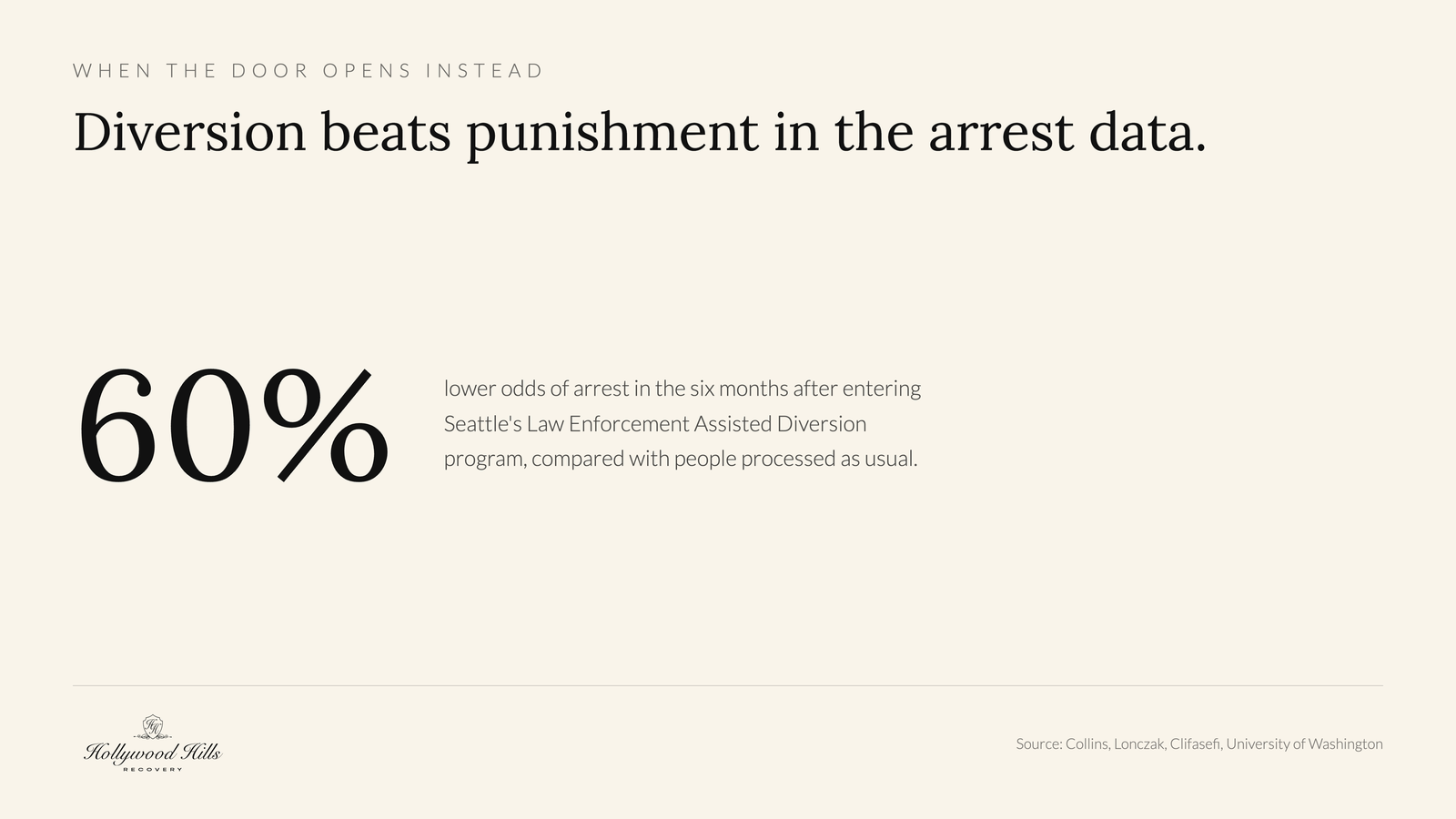
- According to the University of Washington evaluation by Susan Collins, Heather Lonczak, and Seema Clifasefi, Seattle’s Law Enforcement Assisted Diversion participants had 60% lower odds of arrest in the six months after entry.
- According to the same evaluation, LEAD participants had 58% lower odds of arrest and 39% lower odds of a felony charge over the longer term.
- According to a separate study of 176 LEAD participants by the same research team, housing, employment, and income or benefits all improved significantly after referral.
- According to the National Institute of Justice, which reviewed the LEAD evidence, the program has been formally profiled among evaluated criminal justice interventions.
- The Gloucester, Massachusetts Police Department launched the first Angel Initiative in 2015, allowing people to walk into a station and ask for treatment without fear of arrest.
I received an informal version of exactly this intervention in 2018. The officer who handed me water was practicing deflection whether or not he called it that.
6 Signs You Do Not Need to Wait Any Longer
You do not need a catastrophe to qualify for treatment. Consider entering care if any of the following are true:
- Using more, or for longer, than you intended on a regular basis.
- Hiding the amount you use from people close to you.
- Needing more of the substance to reach the same effect.
- Experiencing withdrawal symptoms when you stop.
- Losing time to obtaining, using, or recovering from use.
- Continuing to use despite consequences you can already name.
Meeting two or three of these is enough. Severity is a spectrum, not a threshold you must cross to deserve help.
What Does the First Week of Treatment Actually Involve?
Treatment starts with stabilization, not with a life overhaul. Our detox program in Los Angeles manages withdrawal safely under medical supervision, with medication available when symptoms become dangerous or unmanageable.
From there, most clients move into residential intensive treatment, where the clinical work of identifying what drives the use begins.
Choosing Where to Get Treatment
Distance from familiar triggers is one of the strongest arguments for leaving your home city. We cover the tradeoffs in should you travel to California for rehab or stay closer to home, which weighs privacy and a fresh start against keeping family nearby.
Planning for What Comes After
Discharge is the highest-risk moment in the entire process, which is why our aftercare program begins during residential treatment rather than after it. Housing questions come up early, and we addressed them directly in who pays for sober living after rehab.
When Mental Health Is Part of the Picture
According to SAMHSA, a majority of adults with a substance use disorder also experience a co-occurring mental illness. Treating one without the other rarely holds, which is why our dual diagnosis program runs both tracks simultaneously.
The Honest Answer to the Rock Bottom Question
Recovery is common, and it does not require a catastrophe first. According to the National Recovery Study, led by John Kelly of Harvard Medical School and the Recovery Research Institute, 22.35 million American adults, or 9.1% of the adult population, have resolved a significant alcohol or drug problem. According to the same study, about half of them did so with some form of professional or informal assistance and about half did so without any.
I took the water, went to treatment, and now co-own the facility. I still work my day job moving freight, and I call the decision to get sober the best investment of my life.